A meal shaped by the workweek
In New Orleans, red beans and rice is closely associated with Monday. The usual explanation begins with an older household routine: Monday was wash day. Laundry required substantial hands-on work before modern washing machines, so a meal that could cook slowly while someone tended to other tasks made sense. Dried beans fit that rhythm. They needed time in the pot, but much of that time did not demand constant attention.
This explanation captures why the dish suited a particular day, though it should not be treated as a single, documented moment when every New Orleans household adopted the same custom. Families kept different schedules and cooked with what they had. The Monday connection endured because the meal was practical, satisfying, and easy to make in a quantity large enough to share or eat again later.
Sunday leftovers and the Monday pot
Another part of the familiar story is the Sunday ham. A leftover ham bone or other bits of smoked pork could lend flavor to beans the next day. That made good use of an ingredient already on hand, turning a modest pot of beans into a deeply savory meal. Smoked sausage, ham hocks, or other meats may appear in red beans today, but they are choices rather than a required checklist.
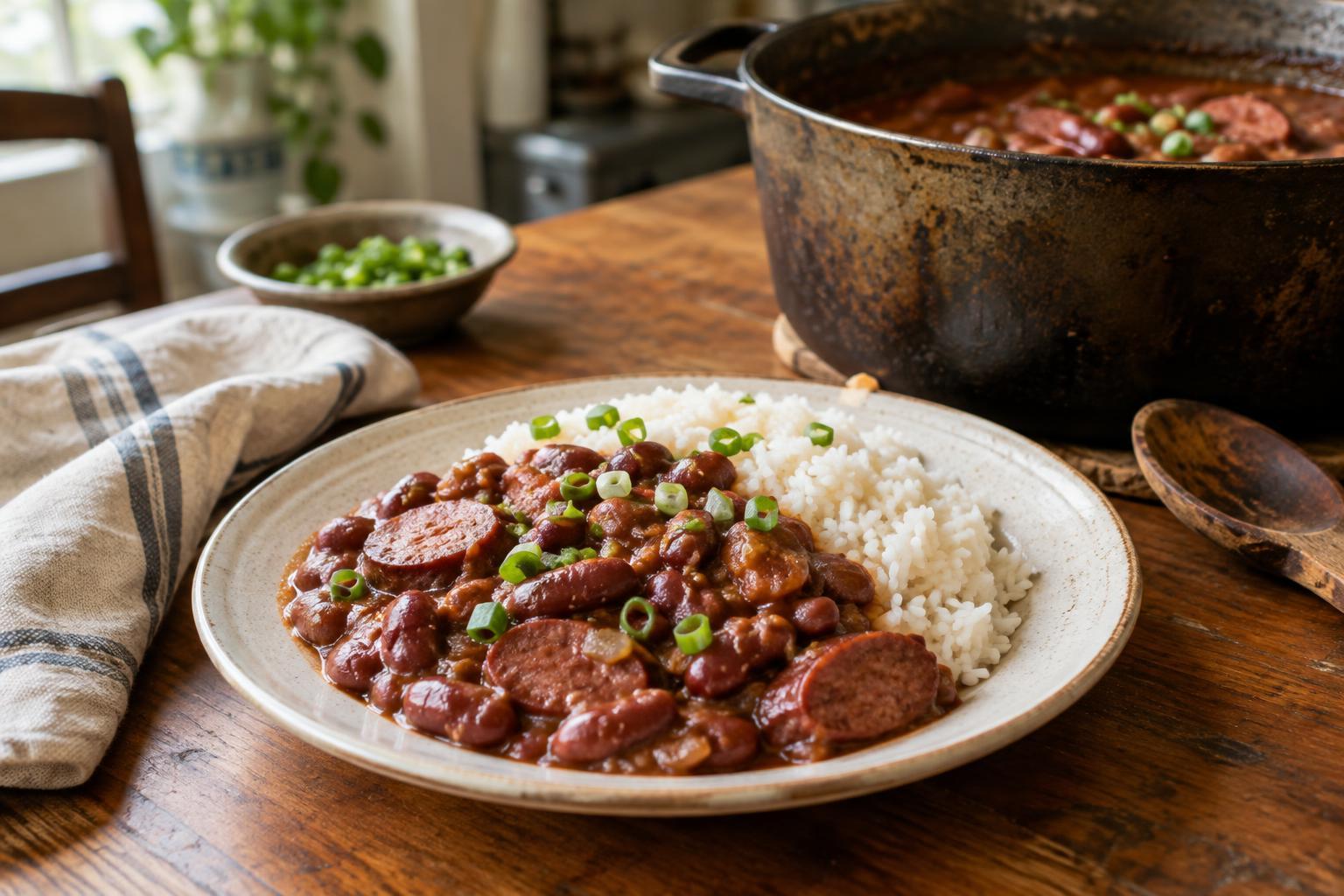
The basic method is straightforward: cook red beans with aromatics and seasonings until they are tender, then serve them over rice. Onion, celery, and bell pepper commonly form the aromatic base. Garlic, bay leaf, herbs, and pepper can add depth. Some cooks mash a portion of the beans against the side of the pot to thicken the liquid; others let the beans soften until the pot becomes creamy on its own. The rice provides a separate, mild foundation for the richly seasoned beans.
Those variations matter. Red beans and rice is a household tradition as well as a restaurant dish, and its character often comes from small decisions: how smoky the pot tastes, how much liquid remains, whether the beans are mild or assertively spiced, and what is served alongside them.
Why the tradition lasted
The old wash-day routine is no longer necessary for many households, but a useful meal can outlast the circumstances that helped establish it. Beans and rice can feed several people from one pot, and the dish rewards patient cooking without requiring an elaborate presentation. It is substantial enough to stand on its own and adaptable enough to reflect different preferences.
Monday also gives the meal a place in the week. A recurring dish removes one small decision about what to cook, while making an ordinary day feel familiar. In New Orleans, that repetition has become part of the appeal: people can recognize red beans and rice as a Monday custom without expecting every cook to follow one recipe. The tradition lives in home kitchens and in places that serve the dish, but neither setting owns its meaning.
Understanding the plate, not just the story
For a visitor, the wash-day explanation is a useful introduction, not a reason to assume the dish is frozen in the past. A plate of red beans and rice may be a simple lunch, a comforting dinner, or part of a larger spread. It might come with sausage, a pork chop, cornbread, or no meat at all. If you have dietary restrictions, ask what went into the beans rather than judging by what is visible on the plate; meat may have flavored the pot even when none is served on top.
Nor do you need to visit on a Monday to appreciate the dish. Some kitchens make it on other days, while Monday availability can vary from place to place. Check a restaurant’s current menu and hours before planning a trip around a particular serving. The better way to understand the custom is to notice its everyday quality: this is food meant to nourish people, not a performance staged for visitors.
A tradition with room at the table
Red beans and rice became linked with Monday because its slow cooking suited a busy household day and because leftover Sunday meat could help flavor the pot. Its staying power comes from more than efficiency. The dish makes familiar ingredients feel generous, and its repeated place in the week gives cooks a way to carry a custom forward while making it their own.
That combination—practical origins, flexible preparation, and a dependable Monday association—is why the tradition remains easy to recognize. Whether you encounter it across a family table or order it while exploring New Orleans, the most useful question may be not which version is definitive, but what this particular cook has brought to the pot.