One dish, more than one approach
Jambalaya is a seasoned rice dish cooked with a flavorful base that may include meat, seafood, vegetables and stock. The rice is central: unlike a plate of stew spooned over cooked rice, it generally cooks with the other ingredients and absorbs their flavor. In New Orleans, a menu might simply say “jambalaya,” or it might call out a Creole or brown version. Those labels are useful clues, but they do not describe every family recipe or restaurant pot.
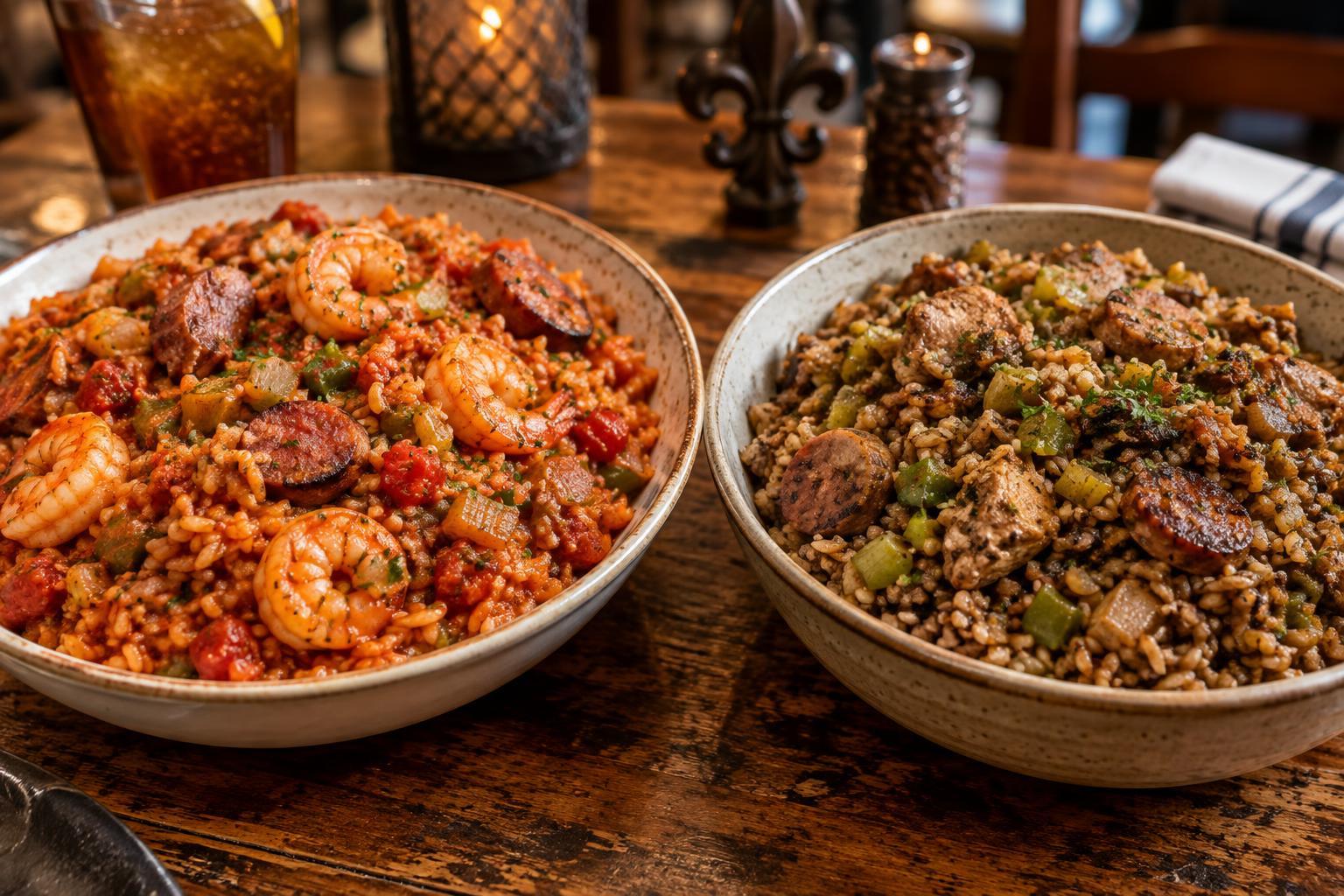
The most visible distinction is often color. Creole jambalaya commonly includes tomatoes, which can lend the finished rice a reddish hue and gentle acidity. Brown jambalaya generally skips tomatoes and develops its darker color through browning meat and vegetables before the liquid and rice go in. Either version can be mild or assertively seasoned, and neither has a single required combination of proteins.
What tomatoes bring to Creole jambalaya
In a tomato-based jambalaya, tomatoes join aromatics such as onion, celery and bell pepper to make the cooking liquid. As the rice simmers, it takes on their color and flavor. Tomato can brighten a rich pot, particularly one made with sausage or chicken, but the result need not taste like tomato sauce. The balance depends on how much tomato the cook uses, the stock, the seasoning and the other ingredients.
The word “Creole” has a broader cultural history than any one recipe, so it is best not to reduce it to a synonym for “contains tomatoes.” For a diner, though, “Creole jambalaya” is a reasonable prompt to expect a tomato-influenced version. If that detail matters to you, ask rather than assuming: a short menu description may leave out how the kitchen builds its pot.
How brown jambalaya builds depth
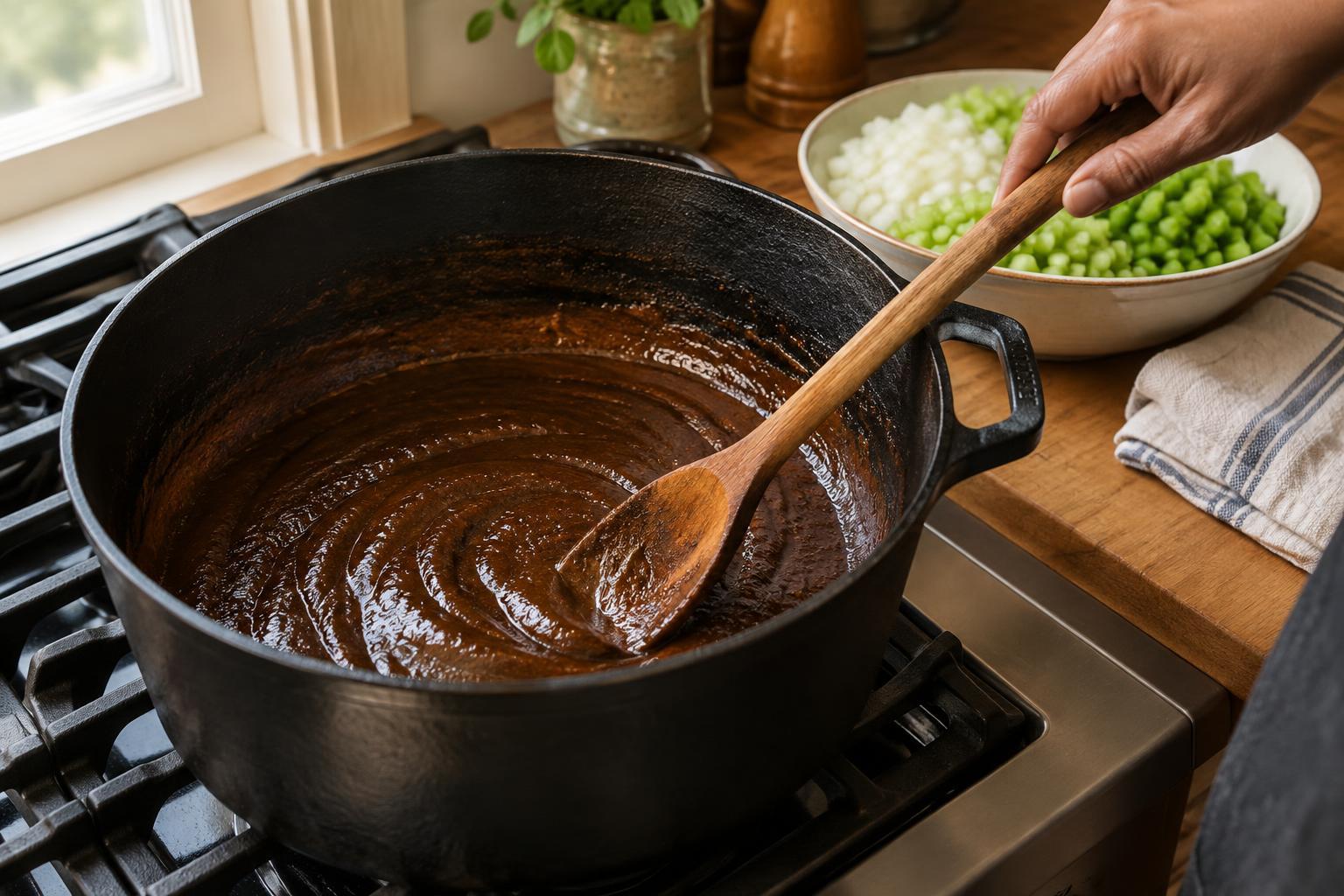
Brown jambalaya gets much of its character before the rice is added. A cook may brown sausage, chicken or another meat, then soften vegetables in the same pot. The browned bits left behind contribute flavor when stock or water is added. Rice cooks in that seasoned liquid, taking on a tan-to-brown color and a savory taste. The depth comes from the ingredients and the way they are cooked, not from a rule that brown jambalaya must be hot with pepper.
Brown jambalaya is often associated with Cajun cooking, while tomato-based jambalaya is often associated with Creole cooking and New Orleans. Those associations can help explain a menu, but they are not firm borders. Home cooks adapt to their households, and restaurants may use names that reflect their own traditions. A brown pot served in New Orleans is no less part of the city’s food experience because it lacks tomatoes.
Texture, seasoning and the ingredients in the pot
Both styles depend on a good relationship between rice and liquid. The goal is usually distinct, tender grains that have absorbed the pot’s seasoning rather than rice swimming in broth. Ingredients release moisture as they cook, so a recipe that works with one brand of tomatoes, type of sausage or size of pot may need adjustment with another. Lifting the lid repeatedly or stirring vigorously late in cooking can also affect the texture.
Sausage and chicken are familiar choices, and some versions include seafood, but an ingredient list alone does not define the style. Seasoning varies just as widely. A bowl can have herbal, smoky or peppery notes without being especially spicy. If you are ordering, look for the kitchen’s description of its proteins and preparation. If you are cooking, taste the liquid before the rice goes in, keeping in mind that sausage and stock may already contribute salt.
Choosing a bowl without looking for a winner
Choose Creole jambalaya if you want the brightness and color that tomato can bring. Choose brown jambalaya if you are curious about a pot built around deep browning and a more purely savory cooking liquid. Neither is inherently more authentic or better suited to New Orleans. The comparison is most useful as a way to notice how cooks create flavor from different starting points.
When trying jambalaya around the city, read the description before ordering and ask about tomatoes, proteins or heat level if the menu is brief. At home, begin with one approach rather than trying to combine every variation at once. Pay attention to the aroma as the base cooks, the amount of liquid the rice absorbs and the texture after a short rest. Those details will tell you more about the dish than its color alone.