What makes a gumbo a gumbo?
Gumbo is a deeply flavored dish usually served in a bowl over or alongside rice. It brings together ingredients and cooking traditions associated with Louisiana, but there is no single recipe that speaks for every New Orleans kitchen. A family’s holiday pot, a neighborhood restaurant’s lunch special and a cook’s weeknight version may look and taste quite different.
Think of gumbo as a flexible framework rather than a checklist. Most versions begin with a flavorful base, add vegetables and a protein or two, and simmer until the flavors come together. Some are thick and hearty; others have a looser broth. For a first taste, pay attention to the character of the whole bowl, not whether it matches a supposed definitive version.
The flavor base: roux and the “holy trinity”
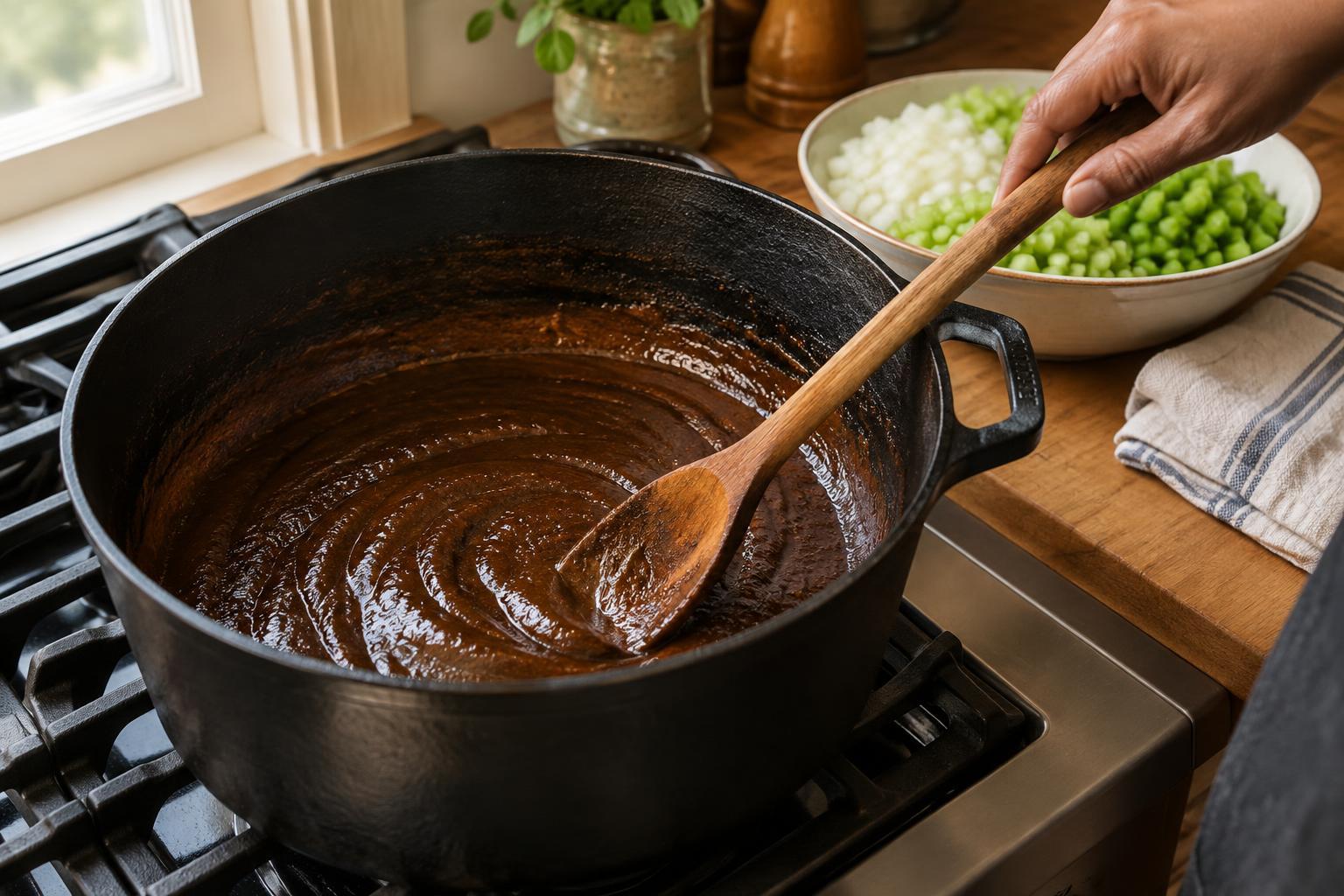
Many gumbos start with a roux: flour cooked in fat while it is stirred. As a roux darkens, it develops a deeper, toastier flavor. Cooks choose different shades depending on the result they want. A darker roux can be central to a gumbo’s color and taste, but it does not automatically make the dish better than one built on a lighter base. Because flour thickens less as it darkens, two roux-based gumbos can also have very different textures.
Onion, celery and bell pepper are often called the “holy trinity” in Louisiana cooking. They add aroma and sweetness as they cook into the base. Garlic, herbs and seasonings may follow, along with stock or another cooking liquid. The balance matters: gumbo can have warmth and spice without being intensely hot. Hot sauce at the table lets each person adjust a bowl to their taste.
Seafood, chicken and sausage: common styles
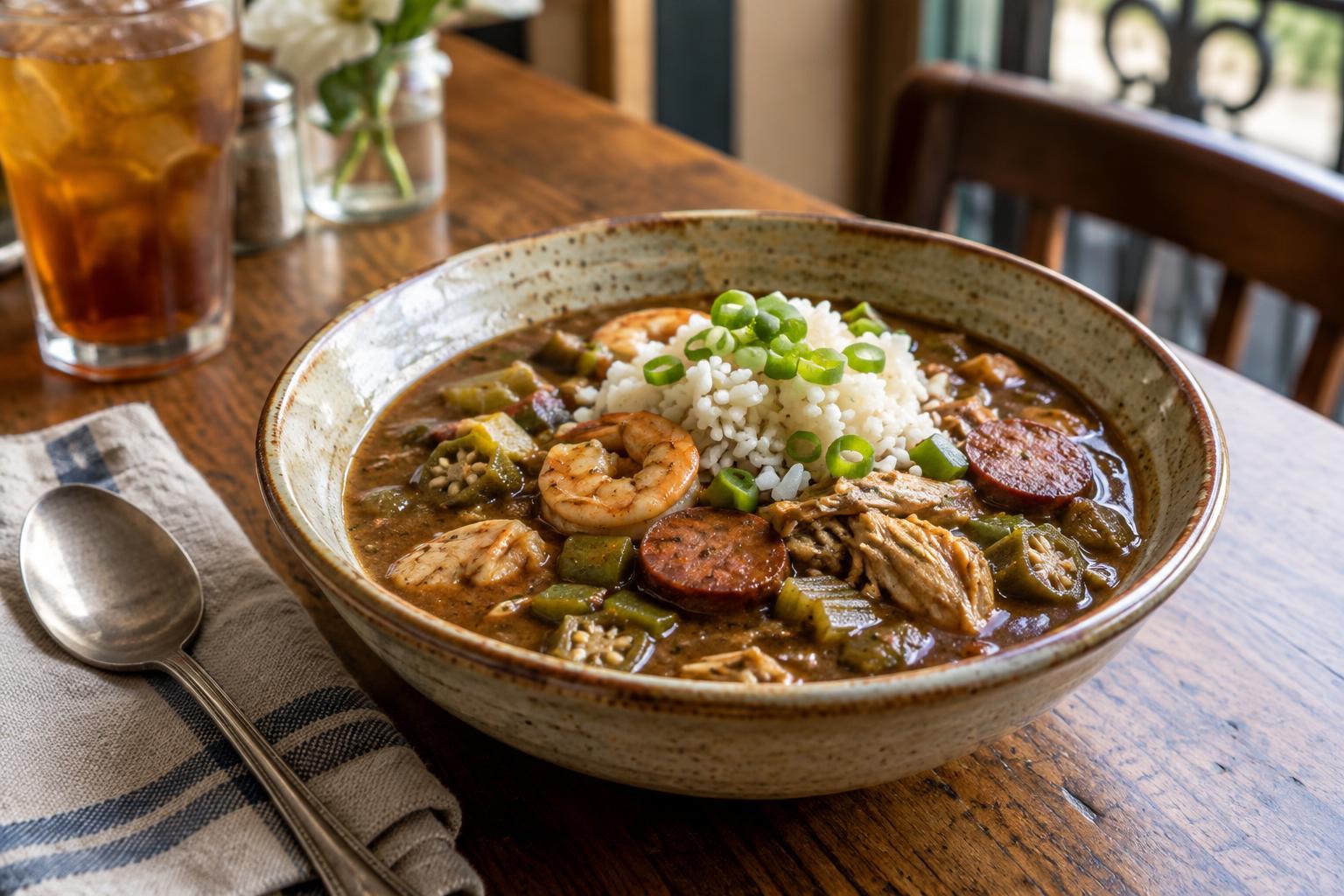
Seafood gumbo may feature shrimp, crab, oysters or a combination, depending on the cook and what is available. Its flavor can lean toward the sweetness and brininess of the seafood, supported by a well-seasoned base. Chicken-and-sausage gumbo takes a different direction, with savory meat and sausage adding richness. Andouille, a smoked sausage associated with Louisiana cooking, is a familiar choice, though not the only sausage a cook might use.
These descriptions are starting points, not strict categories. Some cooks combine seafood and meat; others keep them separate. Seafood also needs different handling from chicken or sausage, so the order in which ingredients enter the pot can vary. If you are ordering gumbo, read the description or ask what is in that particular version—especially if you have a food allergy or a strong preference about ingredients.
Okra and filé: two ways to add body
Okra is a vegetable that can help give gumbo its body as it cooks. It also brings its own flavor and texture, which some diners love and others need time to get used to. Filé powder, made from ground sassafras leaves, is another traditional thickener and seasoning. It is often added near the end of cooking or offered at the table rather than boiled for a long time.
A gumbo might use okra, filé, roux or some combination of them. Their presence—or absence—is not a simple test of authenticity. Recipes have developed through households, communities and generations, and cooks make choices based on the flavor and texture they want. If you are new to gumbo, trying versions with different thickeners is a useful way to discover what you enjoy.
How to eat and appreciate a bowl
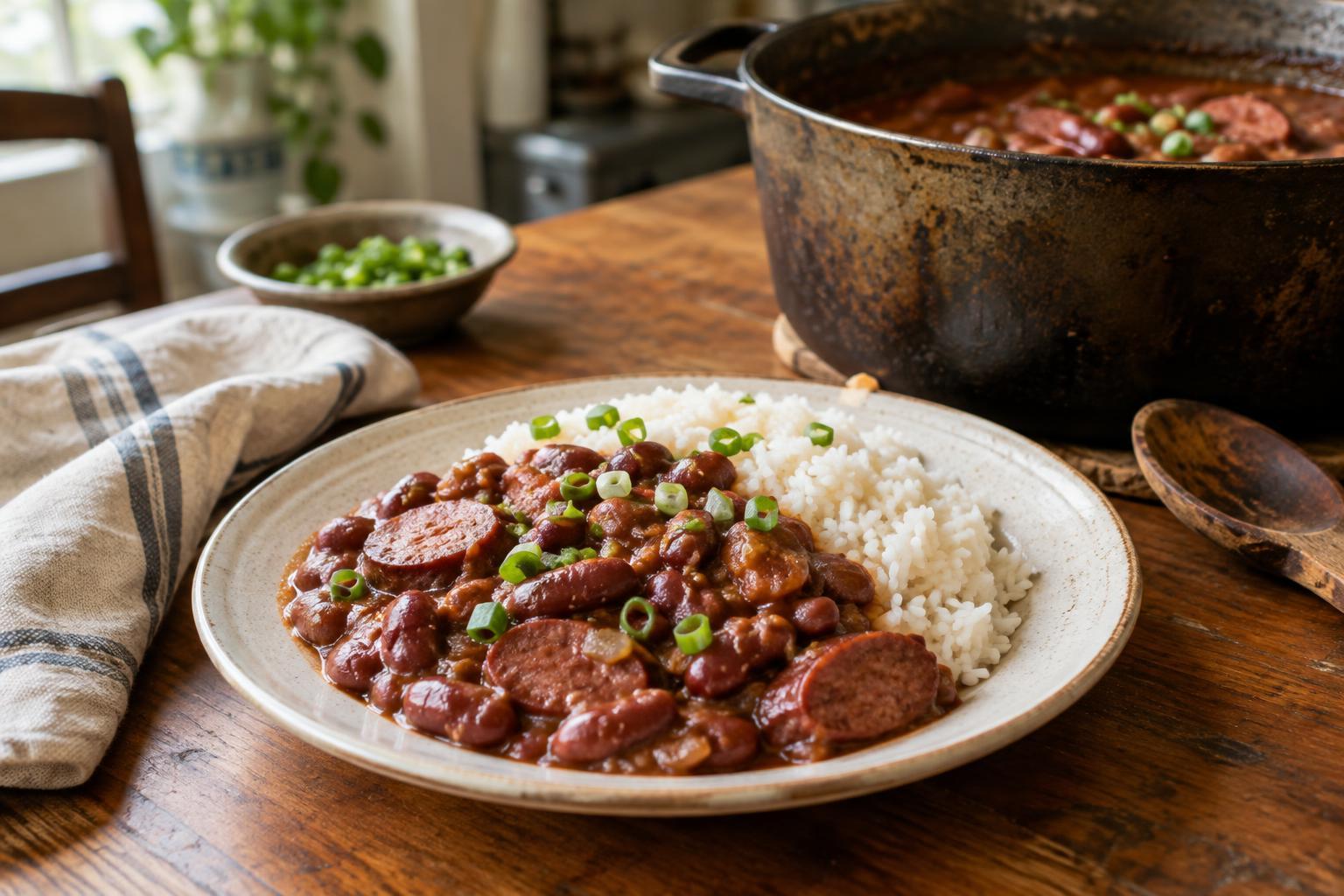
Gumbo is commonly served with cooked white rice, either placed in the bowl or offered on the side. The rice gives you a way to gather up the liquid and balance the seasoning. Some tables also offer potato salad alongside gumbo, and preferences differ on whether to eat it separately or add a spoonful to the bowl. Bread or crackers may appear, too. None of these choices requires a special technique: start with a spoon and eat it while it is warm.
For a visitor, the most rewarding approach is curiosity. Notice whether the gumbo is smoky, seafood-forward, peppery or gently herbal, and whether its texture is brothy or thick. Ask about ingredients when the description is unclear, but resist treating one bowl as a verdict on all New Orleans gumbo. The variety is part of the tradition—and a good reason to try another bowl.