What a dark roux does
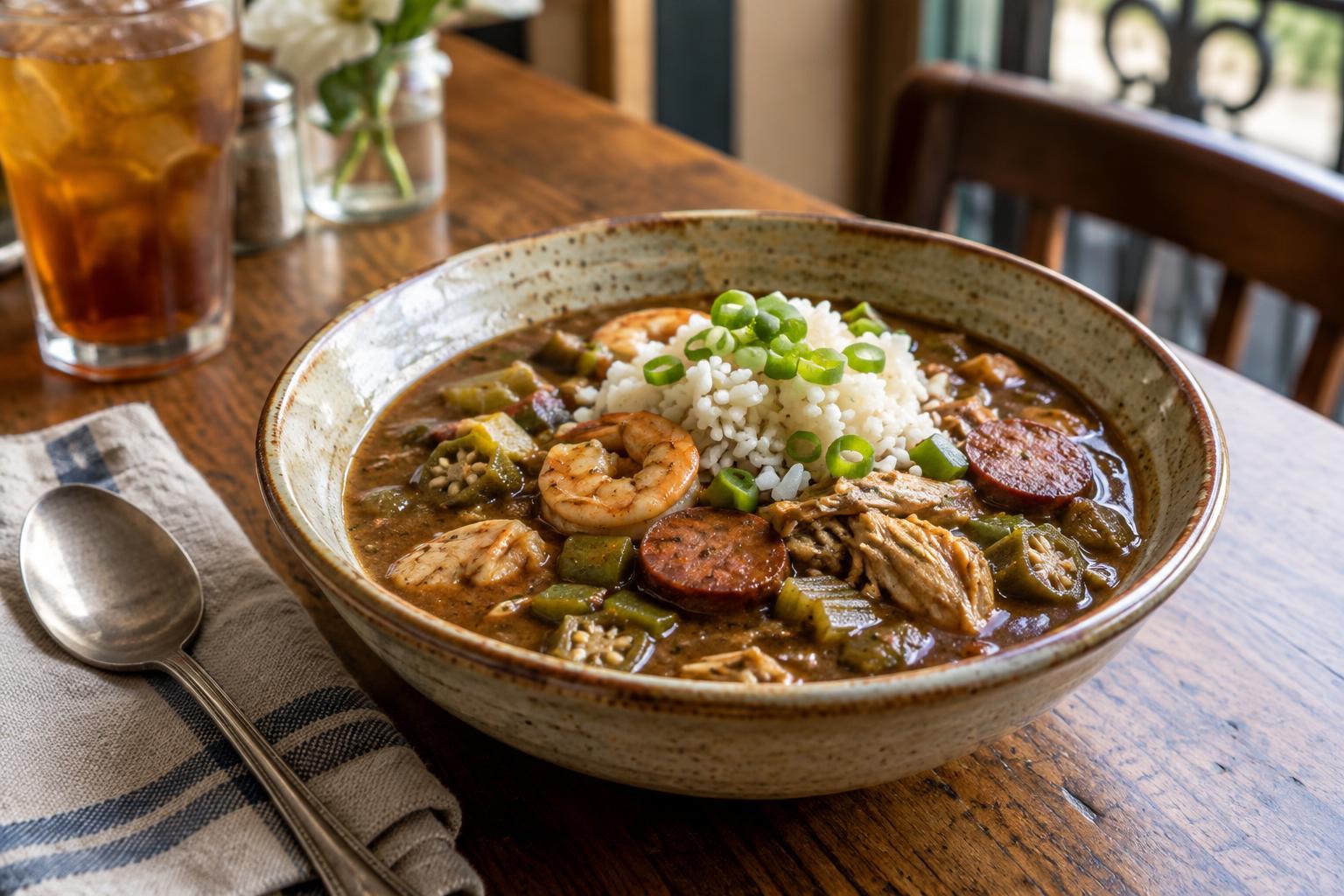
A roux is flour cooked in fat. As the flour browns, it develops a deeper, toasted flavor and loses some of its thickening power. A dark roux can give gumbo a rich foundation, though it is only one part of the dish: stock, vegetables, seasoning and the main ingredients all matter. New Orleans cooks use different methods and favor different shades, so there is no single color every pot must reach.
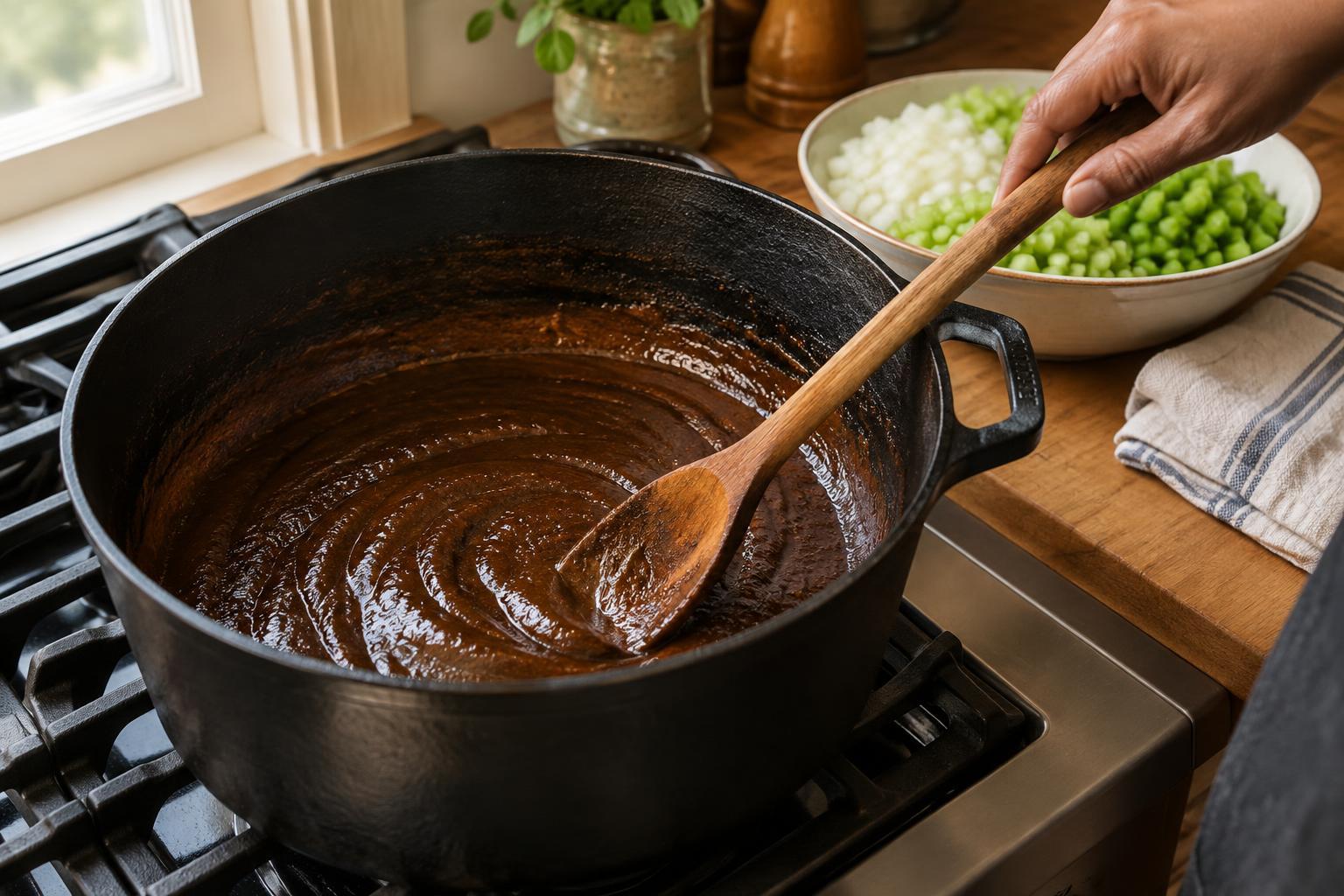
For a first attempt, aim for a deep brown that reminds you of milk chocolate rather than pushing toward black. Color can change quickly near the end, and burned flour tastes bitter. A roux that smells pleasantly nutty or toasted is on track; one that smells harsh or acrid is not. If it burns, start over rather than trying to cover the flavor with more ingredients.
Set up before turning on the heat
Start with equal measures of all-purpose flour and a neutral cooking oil, such as one-half cup of each for a manageable practice batch. Use a heavy-bottomed pot with room for stirring, a long-handled spoon or heat-resistant spatula, and a burner you can adjust easily. Keep a clear, stable work area around the stove. Roux becomes extremely hot and can cling to skin, so keep children and pets away from the cooking area and use dry oven mitts when touching the pot.
Measure the flour and oil, then prepare any vegetables the recipe calls for before you begin. In many gumbos, chopped onion, celery and bell pepper go into the finished roux. Having them ready means you will not need to leave a browning roux unattended. Pat particularly wet vegetables dry: water hitting hot fat can produce a sudden burst of steam and splattering. Keep water and other liquids out of the pot while you are making the roux.
Brown it slowly and watch the pot
Combine the oil and flour in the pot over medium-low to medium heat, stirring until smooth. Continue stirring, scraping the bottom and sides so flour does not settle in one spot. The mixture should bubble gently and brown progressively. If it smokes heavily, smells sharp or darkens in patches before you can stir them in, lower the heat or move the pot off the burner briefly. Do not rely on a fixed cooking time: the pot, burner, batch size and heat setting all affect the pace.
The roux will generally move from pale to golden, then through brown shades. Pay especially close attention once it begins to look like peanut butter; the shift to dark brown can be faster than the earlier stages. Stir from the bottom and check the color against the spoon, where it may be easier to see than in a deep pot. Resist the urge to raise the heat to finish sooner. A moderate pace gives you more control and leaves less room for scorching.
Stop the browning without getting splashed
When the roux reaches the shade you want, reduce the heat or take the pot off the burner. It will continue cooking from retained heat, so do not wait until it looks darker than your target. If your recipe calls for chopped onion, celery and bell pepper at this stage, add them carefully in small portions while stirring. The mixture may sizzle and release steam. Keep your face and hands back from the pot, and do not drop the vegetables in from a height.
Follow the recipe’s order for adding stock or other liquid, pouring carefully and stirring to combine. Hot roux can splash when liquid is introduced, so use a vessel that lets you pour with control. If you are not adding vegetables or liquid right away, move the pot off the heat and keep stirring as it cools; a dark roux left in a hot pot can keep browning.
Dark roux rewards preparation more than speed. With your ingredients ready, the heat under control and your attention on the pot, you can build that toasted flavor without rushing through the stage when burns and scorching are most likely.