A foundation, not a formula
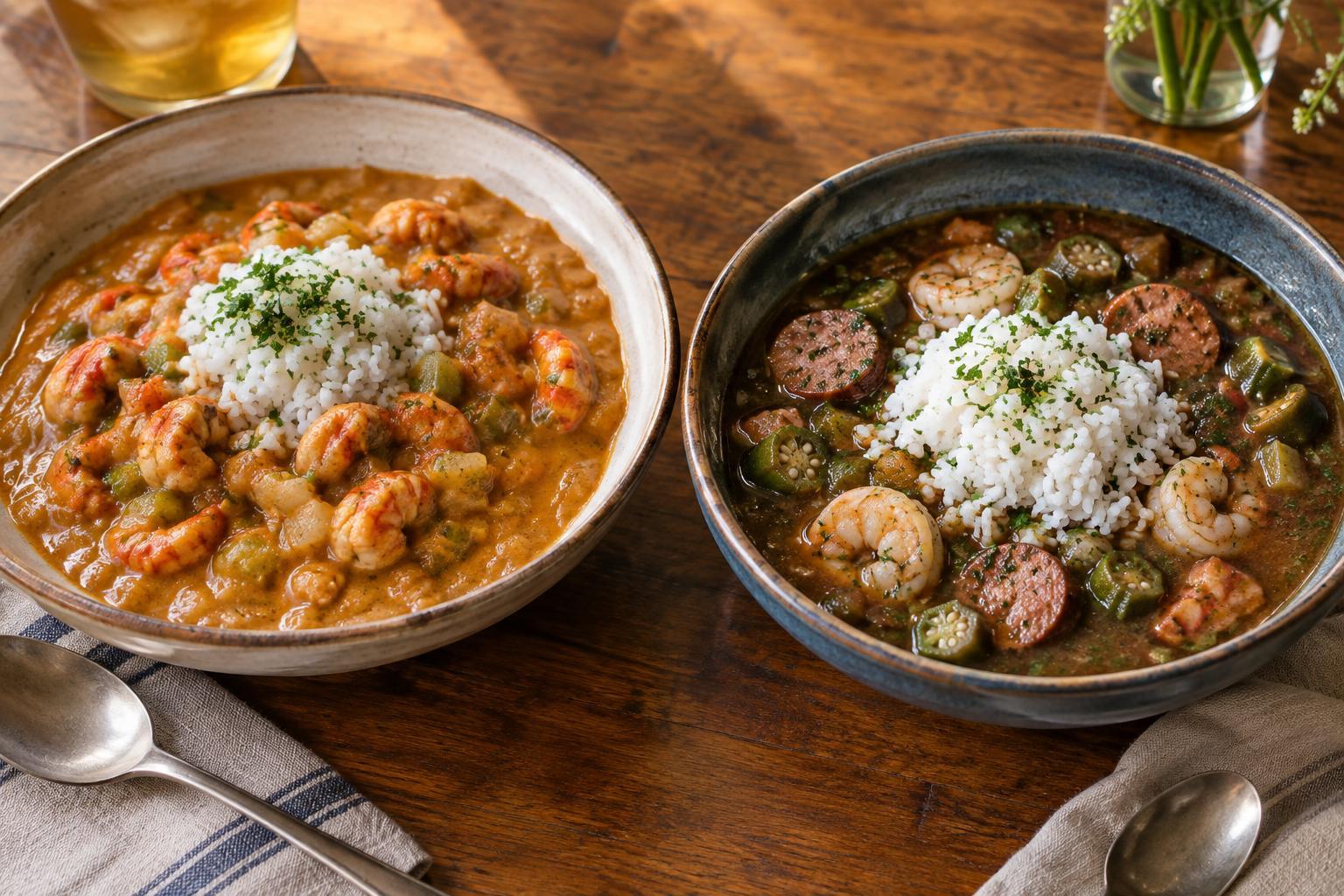
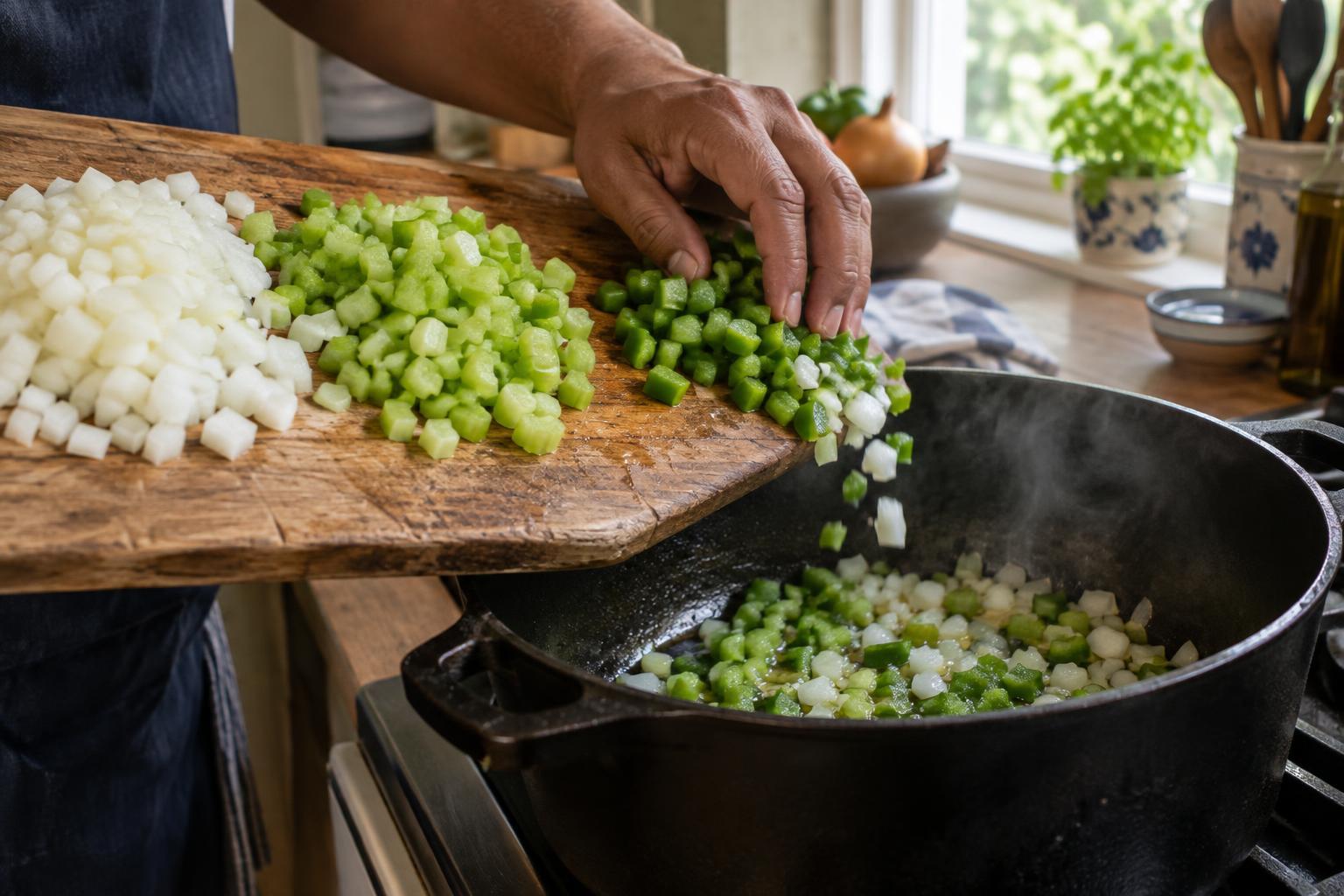
In New Orleans cooking, “the trinity” means onion, celery and bell pepper, usually chopped and cooked together near the start of a dish. You may encounter it in gumbo, jambalaya, red beans and other savory preparations. The vegetables give a cook a way to build flavor before adding stock, beans, rice, seafood or meat. Onion brings sweetness and depth, celery contributes a fresh, slightly earthy note, and bell pepper adds a gentle vegetal flavor.
Calling the trinity a foundation is more useful than calling it a rule. New Orleans food draws on many traditions, and no three ingredients can explain every dish. Recipes vary across families, restaurants and home kitchens; some use less celery, add garlic or leave the trinity out altogether. Its importance lies in what it helps a cook do: create a flavorful starting point that can support many different ingredients.
What happens when the vegetables hit the pot
The trinity changes as it cooks. Given moderate heat and a little fat, the vegetables soften, release moisture and begin to taste more integrated. Cooking them longer can deepen their flavor; cooking them briefly leaves a brighter, more distinct vegetable character. Neither approach is automatically better. The right choice depends on whether the finished dish should taste slow-simmered or keep some freshness.
Cut size matters, too. A fine dice can nearly disappear into a sauce or pot of beans, while larger pieces remain noticeable in the finished dish. Cutting the three vegetables to roughly similar sizes helps them cook evenly. Green bell pepper is a familiar choice, with a slightly sharper flavor than a ripe red or yellow pepper. A different color can work, but it will change the balance of sweetness and flavor.
Its place in gumbo, beans and rice dishes
In a roux-based gumbo, the trinity often enters after the roux has reached the cook’s desired color. The vegetables help stop the roux from darkening as quickly while beginning the next layer of flavor. Timing still matters: a dark roux is hot, and the vegetables can release steam when added. Stirring with care and allowing the mixture to cook before adding liquid helps bring the base together. Other gumbo styles use different methods, so this sequence is common rather than universal.
For a pot of red beans, cooks often soften the trinity before adding beans and cooking liquid, giving the vegetables time to become part of the creamy base. In jambalaya, the order may shift with the recipe: meat or other ingredients might brown first, with the vegetables cooked in the same pot afterward. In each case, the trinity does not make the dish by itself. It works with seasoning, cooking liquid, the main ingredients and time.
How to use it at home
For a first attempt, start with more onion than either celery or bell pepper, then adjust to your taste. There is no single proportion you must follow. Chop the vegetables before heating the pot so they are ready when needed, especially if you are working with a roux. If a recipe calls for the trinity to soften, use enough heat to make it sizzle gently without scorching. Stir from time to time and watch for the onion to become less opaque.
Think about what comes next. Garlic, if you are using it, can burn faster than the other vegetables, so many cooks add it later. Stock, tomatoes or another liquid can then carry the softened vegetables through a longer simmer. Taste the finished dish before deciding it needs more salt or heat; those additions serve a different purpose from the aromatic base. If you substitute an ingredient, expect a change in flavor rather than an exact match.
A way to understand the dish, not define the city
Knowing the trinity can make a menu or a recipe easier to read. It helps explain why a spoonful of beans can taste layered even when the vegetables are no longer visible, or why a gumbo develops flavor before the pot is filled with liquid. It also gives home cooks a useful question to ask: what role should the vegetables play here, and how long should they cook to achieve it?
The best lesson may be to pay attention rather than follow a fixed template. New Orleans cooking is shaped by individual cooks and by the particular dish in front of them. The trinity is a widely used technique within that larger food culture, not a test of authenticity. Understanding what onion, celery and bell pepper contribute makes it easier to appreciate both the dishes that use them and the ones that take another path.