A cake tied to the Carnival season
In New Orleans, king cake is closely associated with Carnival, the season that begins on January 6, also called Twelfth Night, and ends on Mardi Gras. You might encounter it at an office gathering, a school event, a parade-day party or a kitchen table. The point is not simply to admire a decorated dessert: a king cake is meant to be cut, passed around and enjoyed with other people.
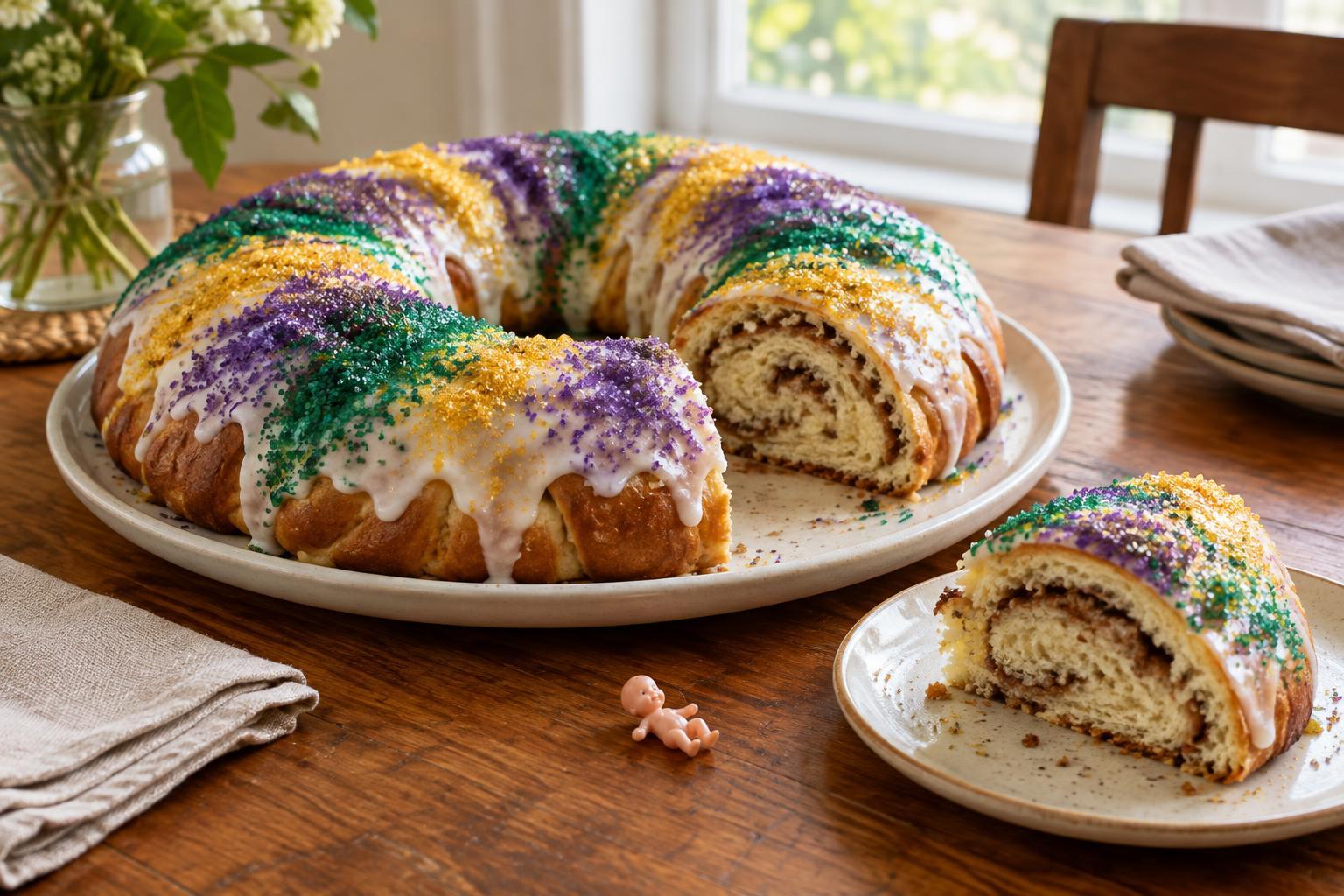
A familiar local version is a ring of sweet, yeast-raised dough, often flavored with cinnamon and finished with icing or sugar in Carnival’s purple, green and gold. Shapes, textures and decorations vary, however. Some cakes are soft and breadlike; others lean toward pastry. There is no need to treat one bakery’s version as the definition of every New Orleans king cake.
Choosing between plain and filled cakes
A traditional cinnamon king cake is a good starting point if you want to taste the dough and topping without much else competing for attention. “Plain” usually means no added cream or fruit filling, not an absence of sweetness. If you prefer a richer dessert, common options include cream cheese, fruit or combinations of the two. Chocolate and other flavors may also appear, depending on the baker.
When buying for a group, think about the people eating it rather than searching for a single most authentic flavor. A cinnamon cake may be easier to share with mixed tastes; a filled cake can feel more like a special dessert. Ask what is inside before ordering, particularly if someone has a food allergy or dietary restriction. Labels and ingredients can differ, and you should not assume a cake is safe based on its appearance.
What the hidden baby means
Many king cakes come with a small plastic baby associated with the custom of choosing who brings the next cake. In one common version, whoever finds it in their slice supplies a king cake for the next gathering. That turns dessert into a playful way of keeping a Carnival get-together going. It is a social custom, not a rule enforced across the city, and hosts may explain their own variation before serving.
Do not assume the baby is baked into the cake. A bakery may package it separately so a host can place it in the cake, while another cake may already contain it. Check the box or ask the seller, then tell guests what to expect before anyone takes a bite. Cut carefully and keep an eye on slices served to children. The figurine is not edible and can pose a choking risk.
How to be a considerate king cake guest
If you find the baby, let the host know rather than quietly setting it aside. If the group follows the bring-the-next-cake tradition, ask when and where that next cake would be welcome. You do not have to guess at an obligation: some gatherings treat the discovery as a lighthearted moment, while others plan a series of cakes throughout the season.
When you are bringing a cake, find out roughly how many people will share it and whether the host has preferences. Bring the ingredient information if you have it, especially for a filled cake. If a baby is packaged separately, hand it to the host and let them decide how to handle it. A plate, napkins and a way to cut the cake can be as useful as choosing an elaborate flavor.
Sharing the tradition without overthinking it
King cake is easy to enjoy as a visitor because its basic invitation is simple: take a slice and join the conversation. You can ask a local host about their favorite style, but expect different answers. Family habits, workplace rituals and individual tastes all shape what people call their usual cake.
If you are planning to buy one during Carnival, confirm a bakery’s ordering and pickup details directly rather than assuming every shop offers the same flavors or availability. Once the cake reaches the table, the essentials are less complicated: explain the baby, make room for everyone who wants a slice and enjoy the small shared ritual that comes with it.