The difference starts with the ice
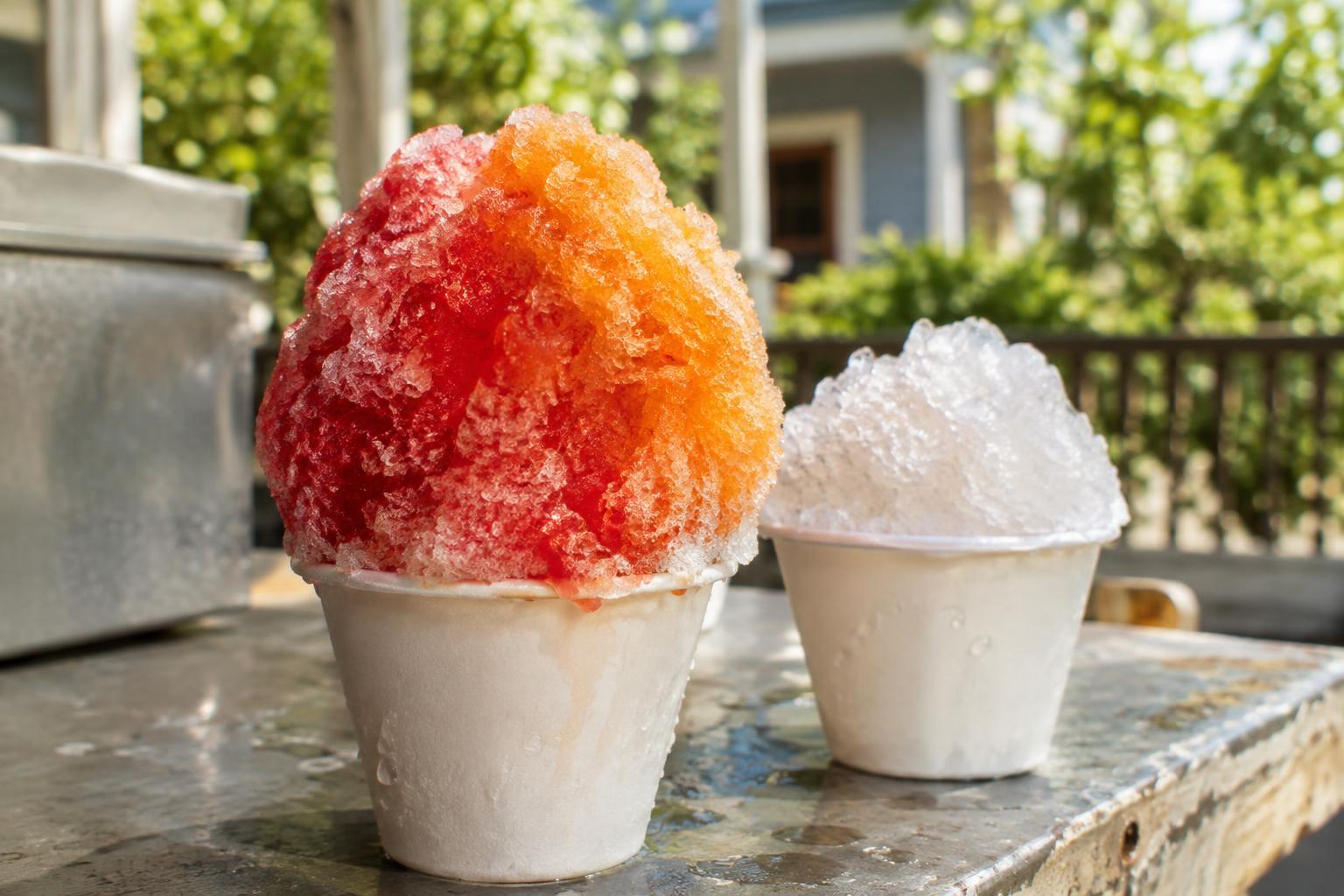
A snow cone and a New Orleans snowball share a simple idea: ice served with flavored syrup. The difference you are most likely to notice is texture. A typical snow cone is made with coarser crushed ice, which can feel crunchy and leave syrup pooling near the bottom of the cup. A New Orleans snowball is associated with ice shaved into much finer, softer pieces. It has a light texture that can absorb syrup throughout rather than merely wearing it on top.
That distinction is a useful guide, not a rule for every frozen treat you will encounter. Equipment, preparation and even the time between pouring and eating can change the texture. Still, if you are trying a snowball for the first time, pay attention to the spoonful itself. The pleasure is in how the fine ice yields easily while staying cold and full of flavor.
Syrup is part of the experience
Snowball stands often offer a wide range of syrups, from familiar fruit flavors to dessert-like choices. The selection can be part of the fun, but you do not need to find the most elaborate combination to understand the tradition. A single flavor lets you notice how evenly the syrup moves through the ice. Mixing two flavors can be appealing if you already know you like them together; piling on several may make it harder to taste any one of them.
Sweetness varies by flavor and by how generously a stand pours. If you prefer a lighter taste, you can ask whether a less-syrup option is possible. If you want something richer, ask about toppings or add-ins. Condensed milk is one option you may see: poured over the snowball, it adds a creamy sweetness. Offerings differ from stand to stand, so treat the menu in front of you as the best guide.
Why it is more than a different name
In New Orleans, a snowball is not simply a snow cone with a local label. The name points to a particular expectation about soft shaved ice, syrup and a cold treat made to order. You may also see the spelling “sno-ball” on a sign or menu. Whatever the spelling, texture is a better clue to what is in the cup than the name alone.
Snowball stands also have a social rhythm. They can be an easy stop with family or friends, or a small break while exploring a neighborhood. Ordering is usually straightforward: choose a size, pick your flavor and decide whether you want any extras. There is no need to master a list of supposedly essential flavors before you go. Choosing what sounds good, then eating it before the ice melts, is enough.
How to order one you will enjoy
If you are undecided, start with a flavor you already recognize. Fruit syrups make a refreshing first choice; creamier or dessert-inspired flavors may suit you better if you want something closer to a sweet treat after a meal. For a first snowball, a modest size is practical: it gives you a chance to appreciate the texture without racing a large cup in warm weather.
Once it is served, use a spoon to try some ice from the top and then a little deeper in the cup. A well-saturated snowball should offer flavor beyond the first layer, though the experience will vary. Keep napkins handy, especially if you have added a topping. If you are taking it away from the stand, remember that the soft ice changes quickly as it melts; a snowball is best enjoyed soon after it is made.
Finding a stand without overplanning
A snowball fits naturally into an unhurried New Orleans outing. Rather than planning a trip around a long list of flavors, look for a stand that works with the neighborhood you are already visiting. Hours and seasonal availability can change, so check a stand’s current details before making a special journey. A posted menu will also tell you more about its flavors and extras than a general guide can.
The simplest way to understand the snowball-versus-snow-cone question is to taste the difference. Expect soft, finely shaved ice carrying syrup through the cup, and make room for individual variation. Whether you keep your order plain or add something creamy, the point is a refreshing pause—not a test of how much you know about New Orleans food.