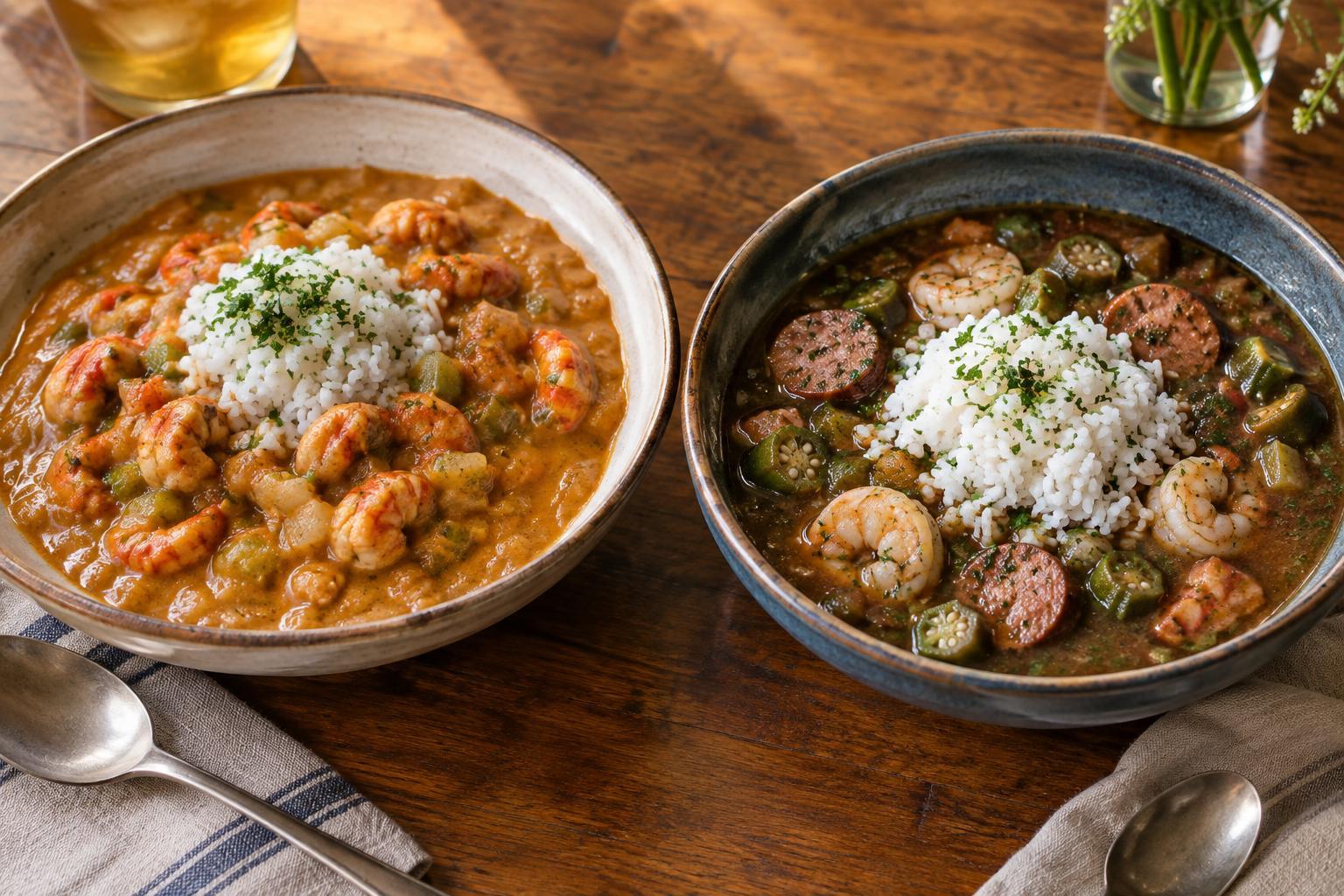
The difference you can see in the bowl
Étouffée and gumbo share some Louisiana ingredients and often arrive with rice, but they are not two names for the same dish. Étouffée is typically a thick, spoonable preparation in which seafood is coated in a seasoned sauce. Gumbo is generally looser: a soup or stew with enough broth to ladle into a bowl. If you are deciding between them at a restaurant, texture is the quickest clue.
The names hint at different approaches. Étouffée comes from a French word meaning “smothered,” an apt description of seafood gently cooked in a flavorful base. Gumbo is a broader category, with recipes that vary widely among households, cooks and parts of Louisiana. Neither dish has one definitive version, so a menu description can tell you more than a general rule.
What goes into étouffée
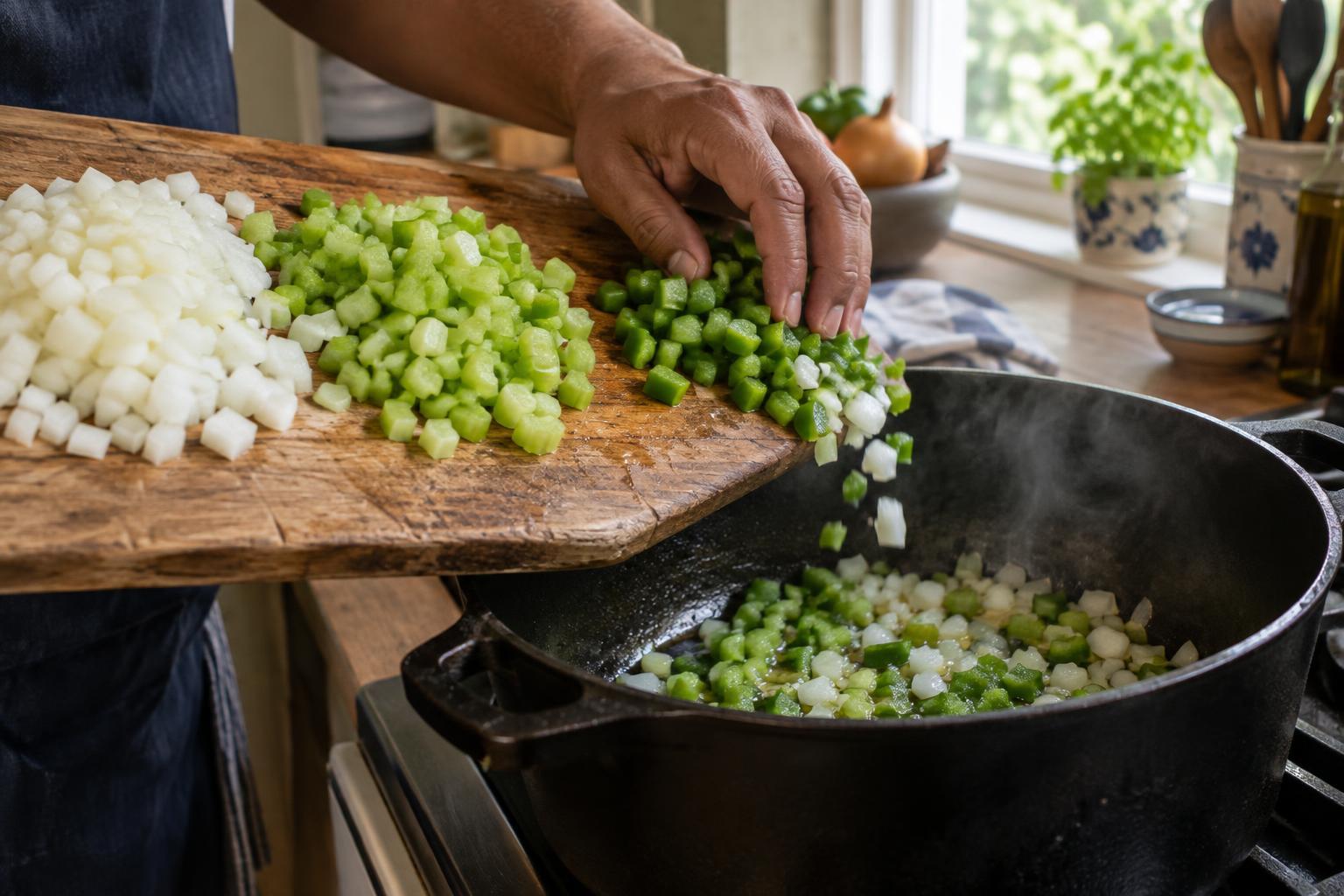
Crawfish étouffée is especially associated with Louisiana cooking, though shrimp étouffée is also common. The seafood is usually paired with onions, celery and bell pepper, a combination often called the “holy trinity.” Butter or another fat, seasonings and stock help bring the sauce together. Some cooks use a light roux, while others build body through the vegetables and cooking liquid. The result should be saucy rather than soupy.
Because the seafood is central, the sauce tends to support its flavor rather than disappear behind a large assortment of meats. A plate or shallow bowl commonly holds rice with the étouffée spooned over or alongside it. Recipes can lean buttery, peppery or rich with stock; they can also differ in color. A darker appearance does not, by itself, make a dish more authentic.
Why gumbo offers more possibilities
Gumbo begins with a flavorful liquid and can take several directions. You might encounter seafood gumbo, chicken-and-sausage gumbo, or a version built around vegetables. Onion, celery and bell pepper frequently appear here too. Many gumbos use a roux, sometimes cooked until it is quite dark, to develop flavor. Okra or filé powder, made from dried sassafras leaves, may contribute body and character in other versions. These ingredients are not a mandatory checklist for every pot.
Gumbo is usually served in a bowl with rice, though the amount of rice varies. Unlike étouffée, the liquid remains a defining part of the meal: you can eat it with a spoon and expect broth in most bites. One cook may favor a thick gumbo, while another makes a lighter one, but even a hearty gumbo generally eats differently from seafood coated in étouffée sauce.
Shared roots, different traditions
The overlap between the dishes makes sense. Both draw on Louisiana’s long history of adapting ingredients and cooking techniques across communities. They may use the same aromatic vegetables, similar seasonings and rice as a companion. Those shared elements can make the first few bites feel familiar, especially when both are served hot and generously seasoned.
Still, it is worth resisting a tidy rule such as “gumbo always has a dark roux” or “étouffée always contains crawfish.” Louisiana food traditions are not uniform, and family recipes often differ from restaurant versions. Crawfish availability can also shape what a kitchen offers. Treat the names as useful guides to how a dish is built, not as promises of a single ingredient list.
How to choose what to order
Choose étouffée if you want a concentrated, seafood-forward sauce with rice. Choose gumbo if you want a bowl you can linger over, with broth and a wider range of possible proteins or vegetables. If a menu offers both, its descriptions may reveal whether the étouffée is made with crawfish or shrimp and whether the gumbo features seafood, chicken, sausage or another combination.
If ingredients matter to you, ask before ordering rather than relying on the dish name. Stocks, fats, seafood and meats vary by kitchen, and a vegetable-forward gumbo is not necessarily vegetarian. The most satisfying comparison may be to try each on its own terms: one a smothered dish, the other a ladled stew, both shaped by the cook making it.