First, look at what holds it up
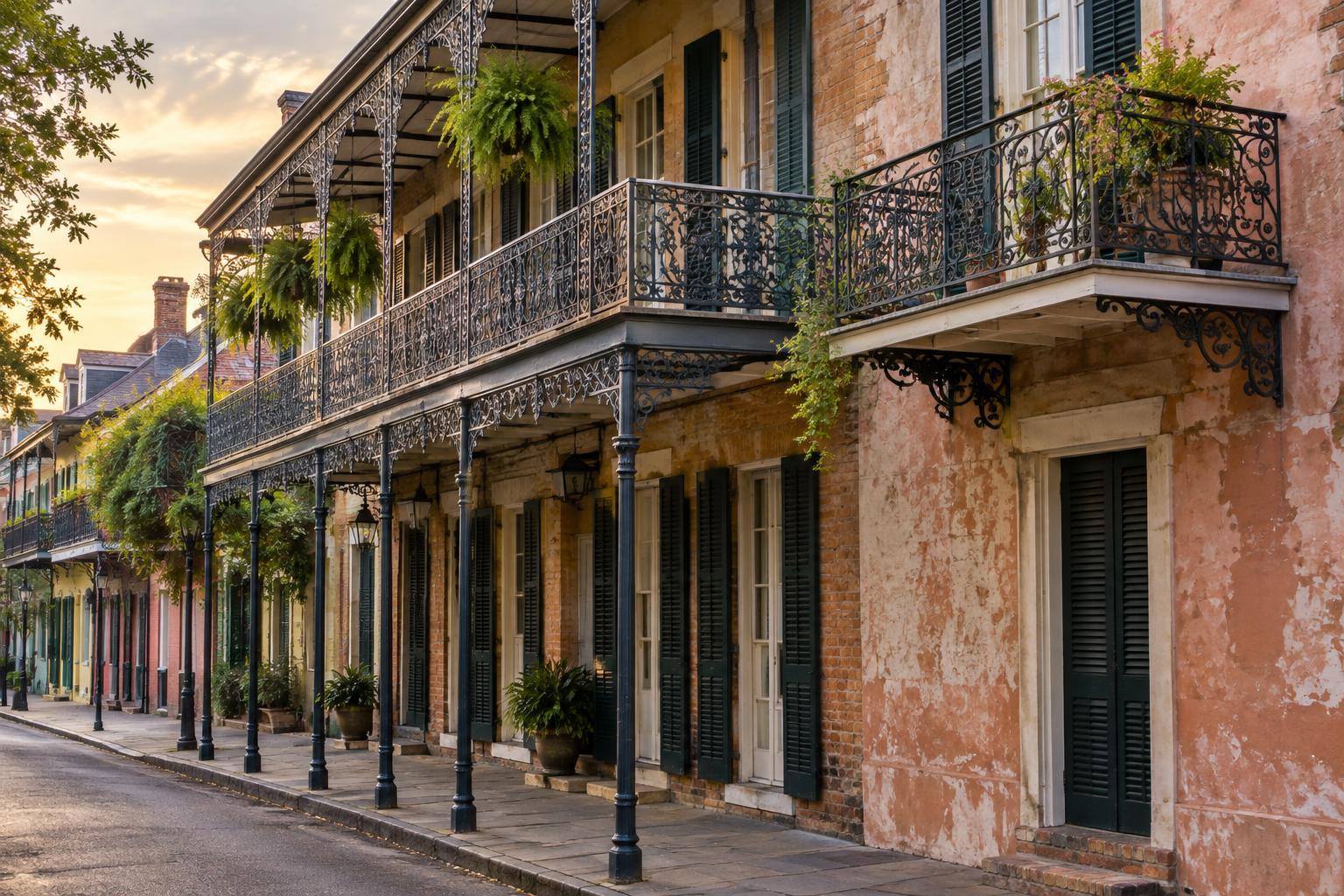
Iron railings are among the most recognizable details on New Orleans streets, but the railing is only part of the story. Look below it, and you can usually tell whether you are seeing a balcony or a gallery. A balcony projects from a building without posts reaching the ground. A gallery extends over the sidewalk or the space below and is supported by columns or posts. In everyday conversation, people may call both “balconies,” but the distinction helps explain their different shapes and uses.
A narrow balcony can offer a place to step outside without changing the sidewalk beneath it. A gallery creates a larger covered area, shading the building and offering some shelter from sun and rain. These forms make sense in a warm, often wet city, though no single climate feature explains every building. Lot size, construction methods, fashion and the needs of occupants also influenced what was built.
A streetscape built in layers
It is tempting to describe ornate French Quarter ironwork as a single, unchanged inheritance from the city’s earliest years. The streetscape is more layered than that. Buildings have been constructed, altered and repaired across generations, and their visible details do not always date to the original structure. Much of the elaborate cast-iron work visitors associate with the Quarter reflects nineteenth-century tastes and building activity rather than one uniform colonial style.
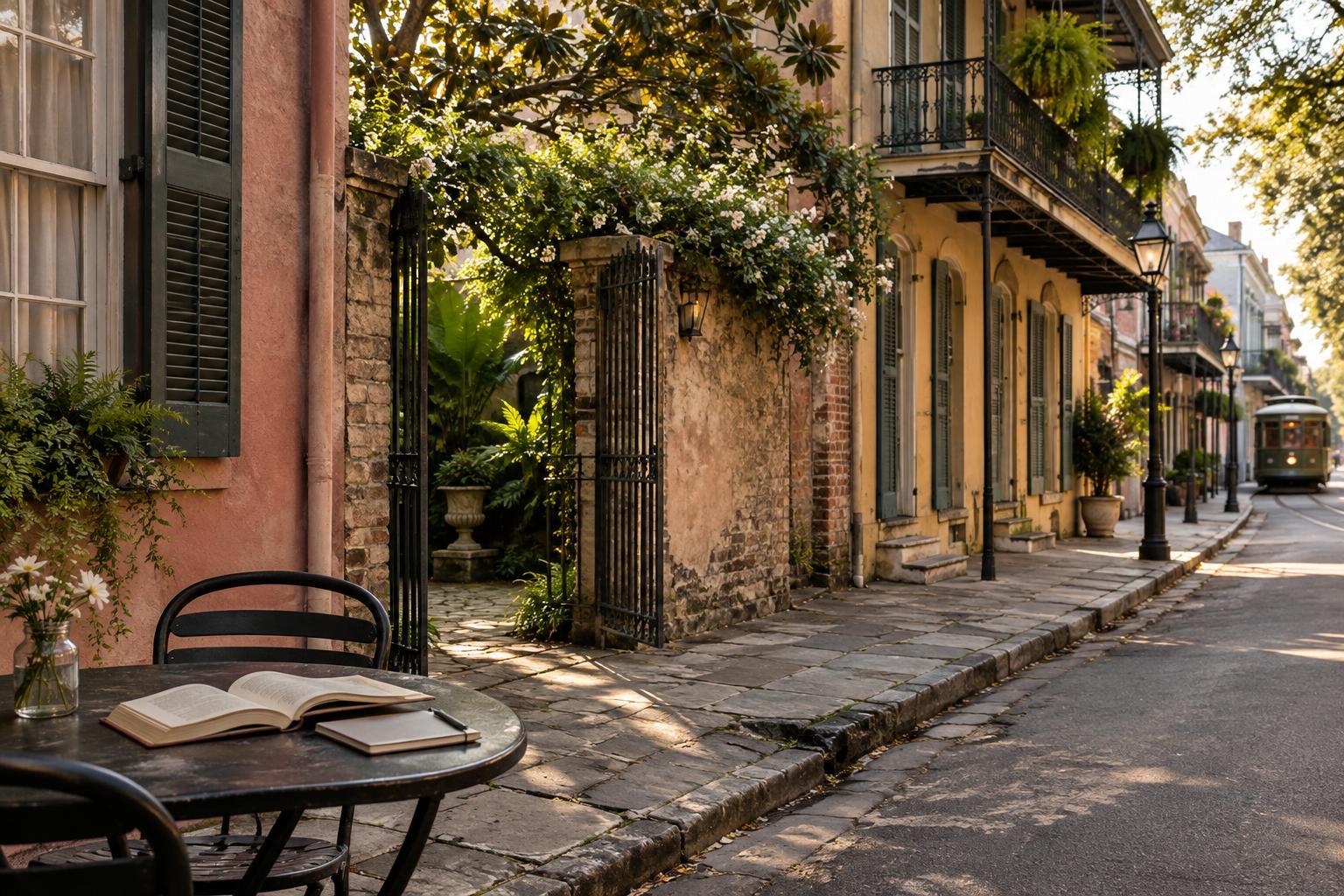
Those layers are visible beyond the Quarter, too. Iron railings, gates and supports appear on buildings of different ages and purposes in neighborhoods across New Orleans. They also sit alongside wooden galleries, masonry walls and simpler metalwork. Looking at a whole block, rather than searching only for the most elaborate railing, reveals how varied the city’s architectural character can be.
Cast iron, wrought iron and the maker’s hand
Two terms help make sense of the patterns. Wrought iron is shaped by working the metal, allowing a craftsperson to form bars, curves and joints. Cast iron is made by pouring molten metal into molds. Casting made it possible to repeat intricate pieces, so a railing could be assembled from patterned sections with a regular rhythm. Not every railing is easy to identify from the sidewalk, and some incorporate different metals or later replacement parts.
The distinction also changes how you look. In a cast railing, notice repeated leaves, scrolls or geometric forms and the points where sections meet. In worked iron, look for the way individual bars turn, cross or connect. Neither method automatically makes a piece more authentic or more valuable as a record of the city. Each reflects materials, skills and choices available to its makers and owners.
Why the patterns feel so distinctive
New Orleans ironwork often combines practical boundaries with visual display. A railing marks an edge and offers a measure of safety while remaining open to light and air. On a gallery, a long run of repeated pattern can tie together doors and windows across an entire façade. Posts, brackets and railings may work as a composition, making the building’s upper level feel connected to the street.
Scrolls, plant-like shapes and other ornaments can invite a closer look, but it is worth resisting the urge to assign every motif a fixed local meaning. Designs could follow broader decorative fashions, be selected from available patterns or be adapted during repairs. A familiar-looking symbol does not, by itself, tell you who made a railing or when it was installed.
How to look closely without losing the bigger picture
Start from a comfortable place on a public sidewalk and compare two neighboring buildings. Does one upper level rest on columns while the other projects without them? Are the railing patterns repeated in identical units, or do the bars appear individually shaped? Look at how the metal meets the building, then look up at the roofline and down at the ground floor. Those relationships often tell you more than a close-up of ornament alone.
Ironwork is also something people maintain, not just something visitors admire. Paint, corrosion, repairs and replacement pieces can change its appearance over time, especially in a humid environment. Treat galleries and balconies as parts of occupied buildings: leave entrances clear, respect residents’ privacy and do not lean on a railing to test its strength. The best view of New Orleans ironwork includes both its craft and its continuing place in everyday street life.