Start with the person behind the object
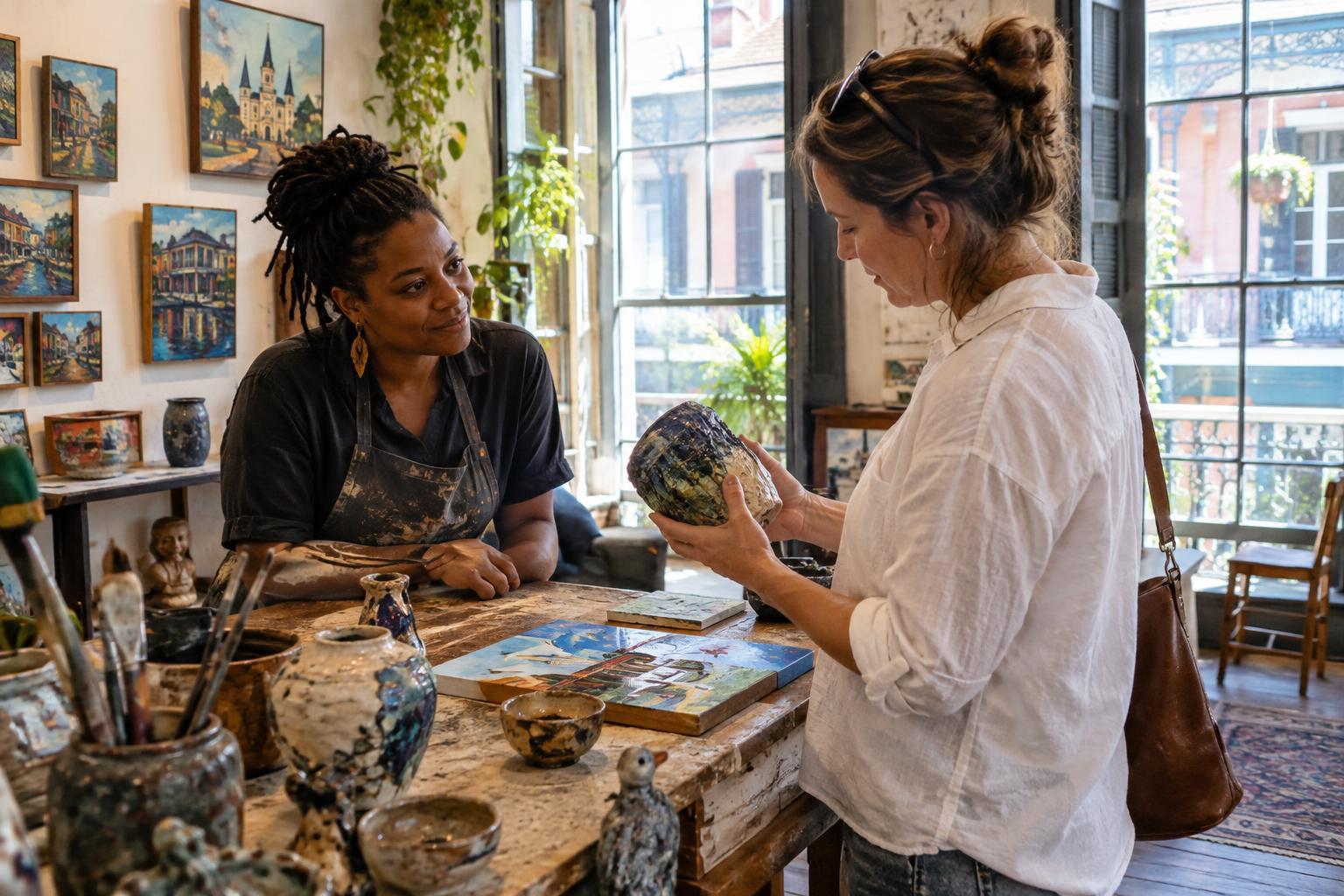
New Orleans inspires plenty of souvenirs, but an image of the city on a product does not necessarily mean a New Orleans artist made it. If you want your purchase to support local creative work, look for a named maker and a clear connection between that person and the piece. A print, ceramic cup, photograph or piece of jewelry can offer a more personal reminder of your visit than a generic trinket.
Ask simple, friendly questions: Who made this? Is it an original, a reproduction or a design printed on a manufactured item? Where was it produced? None of those categories is automatically bad. An affordable print, for example, may be a useful way to support an artist whose originals are beyond your budget. The point is to understand what you are buying rather than assume every item with a New Orleans motif was made locally.
Look in places that let makers tell their stories
Artist-run shops, galleries, studios, craft markets and neighborhood events can give you a chance to learn about the work directly. Small shops that identify their artists are worth exploring, too. Browse beyond the most familiar souvenir displays: locally made work may reflect daily life, family histories, architecture, humor or an artist’s own imagination, not just the symbols visitors expect to see.
Before making a special trip, confirm a shop’s or market’s current hours and location through its own channels. Events and vendor lineups can change. If you meet an artist, give them room to explain their work without expecting a free lesson or an immediate purchase. A thoughtful conversation may help you choose something you will keep, but browsing respectfully is fine as well.
If a piece appeals to you and costs more than you planned, ask whether the artist offers smaller works, prints or other editions. Avoid treating a handmade price as an invitation to bargain. Materials, equipment, selling fees and time can all be part of what a maker needs to cover.
Buy with curiosity and cultural respect
New Orleans traditions are living practices, not a set of designs available for anyone to claim. Some objects draw on family craft, community history or ceremonial life. When a maker explains the meaning of a piece, listen to how they describe it rather than assigning your own story. If an item seems to imitate a culturally specific tradition, ask who created it and whether the seller can explain its origin.
Photography calls for the same care. Ask before photographing an artist, their workspace or a work in progress, especially in a small studio or at a booth where the maker is present. Do not copy a design for your own merchandise or repost an image without credit. If you share a purchase online, naming and tagging the artist when they welcome it can help others find the source.
Support performances and creative work beyond shopping
You do not need to take an object home to support an artist. Paying admission to a performance or exhibition, buying work directly from a performer, or contributing where tips are invited can be meaningful options. Check the event’s guidance before recording or photographing: a ticket gives you a chance to experience the work, not an automatic right to distribute it.
If luggage space or your budget is limited, consider a small publication, an artist-approved digital purchase or a later order through the maker’s own sales channel. You can also follow an artist and share their work with accurate credit. Those actions are not substitutes for payment when payment is possible, but they can help you maintain a connection after your trip.
Choose something you can care for and remember
A good purchase fits both your life and the maker’s terms. Before buying, check whether a delicate piece needs special packing, whether a print is signed or numbered if that matters to you, and what the return or shipping policy is. Keep the artist’s name or card with the object so you can remember its story without inventing one later.
There is no single correct way to spend on art in New Orleans. The useful habit is to slow down: find out who made the work, decide whether it speaks to you and pay a price you are comfortable with. That approach leaves more room for the city’s artists to represent themselves—and gives you a keepsake connected to a real creative practice rather than a mass-produced idea of New Orleans.