The parade is a public moment, not the whole story
A New Orleans second line can make a social aid and pleasure club visible to an entire neighborhood. Club members dress for the occasion, a brass band plays, and a crowd follows the route. For a visitor, it may look like the club’s main purpose is to organize a joyful day in the street. The parade matters deeply, but it is only one expression of relationships built throughout the year.
Social aid and pleasure clubs are member-led organizations with their own histories, customs and priorities. The words “social aid” point to traditions of helping one another; “pleasure” makes room for celebration, company and shared pride. Those aims belong together. A club can be a place where members plan an event, check on one another, mark a milestone and keep friendships active across many years. No single description fits every club, so it is worth paying attention to how each group describes its own work.
Mutual support begins with showing up
The clubs’ traditions are rooted in a practical idea: people need dependable networks, especially when formal institutions do not meet every need. Historically, mutual aid could include support around illness, hardship and death. Today, the help a particular club offers may be formal, informal or both. It would be a mistake to assume that every club provides the same benefits, or that its role can be reduced to a financial safety net.
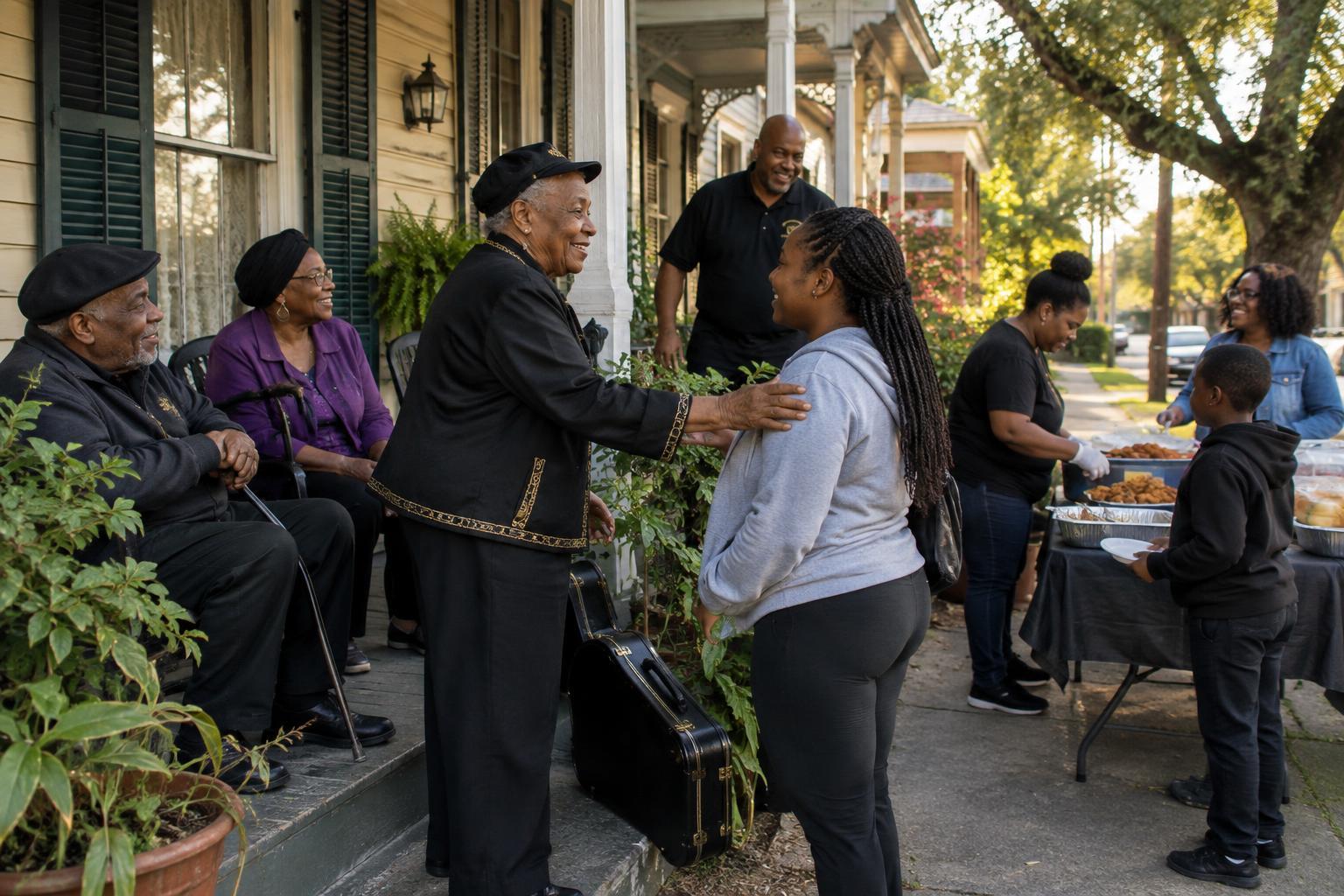
Support may also mean visiting someone who is grieving, helping with a fundraiser, offering a ride or making sure a member is not facing a difficult week alone. These acts can be hard to see from the sidewalk, but they explain why a parade is more than a performance. When a club steps out together, it brings those ongoing commitments into public space.
Fellowship takes work
The social side of a club is not incidental. Meetings, planning, shared meals and celebrations give people reasons to spend time together beyond a single annual event. Members decide how they want to represent their club and divide the labor needed to do it. The striking suits and coordinated colors seen at a parade are the visible result of preparation, expense and personal effort.
That work can build trust. People learn who will follow through, who needs help and what the group wants to carry forward. Membership can offer a sense of belonging that stretches beyond one age group or household. At the same time, clubs are made up of individuals, and their traditions can change as members bring new ideas to them. Treating them as living organizations, rather than relics of an earlier New Orleans, leaves room for that growth.
Clubs help carry neighborhood culture forward
A second line connects club members, musicians, neighbors and followers through a shared route. Long before the music starts, a club has made choices about how it will gather and present itself. After the parade ends, the relationships that made it possible remain. That continuity helps sustain a tradition in which music, movement, dress and neighborhood ties all matter.
Clubs may also take part in community gatherings or support causes important to their members. What that looks like varies by organization. Their cultural role is not limited to preserving a familiar scene for an audience: members create the occasion on their own terms. For visitors, that distinction matters. A parade may be open to the public, but it is not an attraction staged solely for people passing through.
How to appreciate the work respectfully
If you encounter a club’s second line, make room for its members and the band, follow directions from people managing the route, and avoid stepping between participants for a photograph. Ask before taking a close-up portrait, especially during a personal moment. You can enjoy the music and movement without treating anyone’s clothing, grief or celebration as a prop.
To learn more beyond parade day, look for information the club chooses to share through its own public channels or at events it announces. If you want to contribute, use a method the organization identifies rather than assuming an unofficial collection represents it. Above all, remember that the street celebration is an invitation to witness something larger: people choosing, year after year, to make community together.