Start with the sound, not the label
For a first-time listener, “traditional” and “modern” jazz can be useful signposts, but they are not firm boundaries. New Orleans musicians work across styles, and a band may move between older tunes, newer compositions, familiar dance rhythms and unexpected improvisation in one set. Rather than trying to classify every song, listen for how the players share the melody, keep time and respond to one another.
Traditional New Orleans jazz often emphasizes an ensemble sound: several instruments have distinct parts, yet the music moves as a group. A modern jazz performance may give more space to extended individual solos or explore different harmonies and rhythms. Neither approach is automatically louder, quieter, simpler or more difficult. The room, the players and the particular tune can change what you hear.
What you might hear in traditional jazz
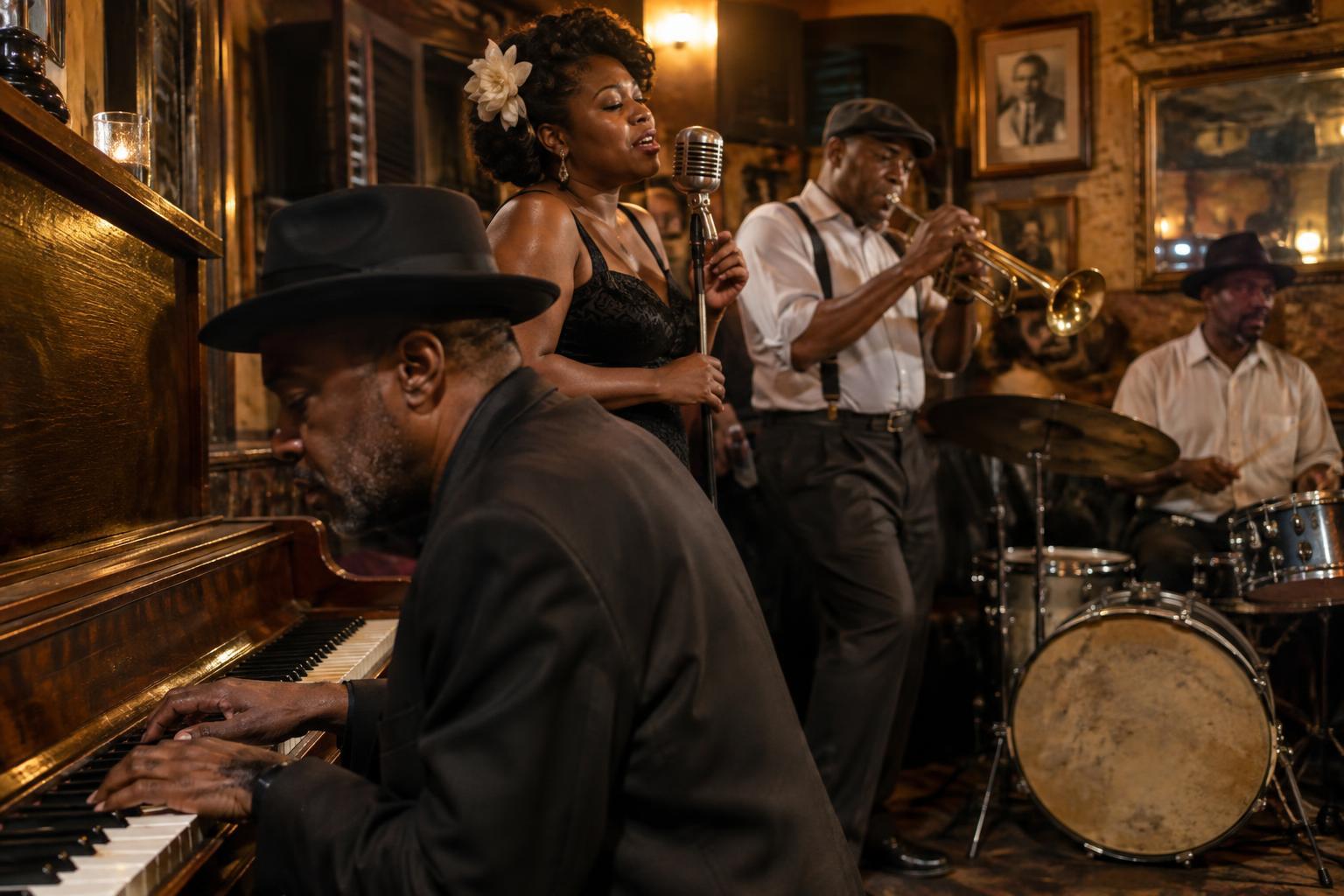
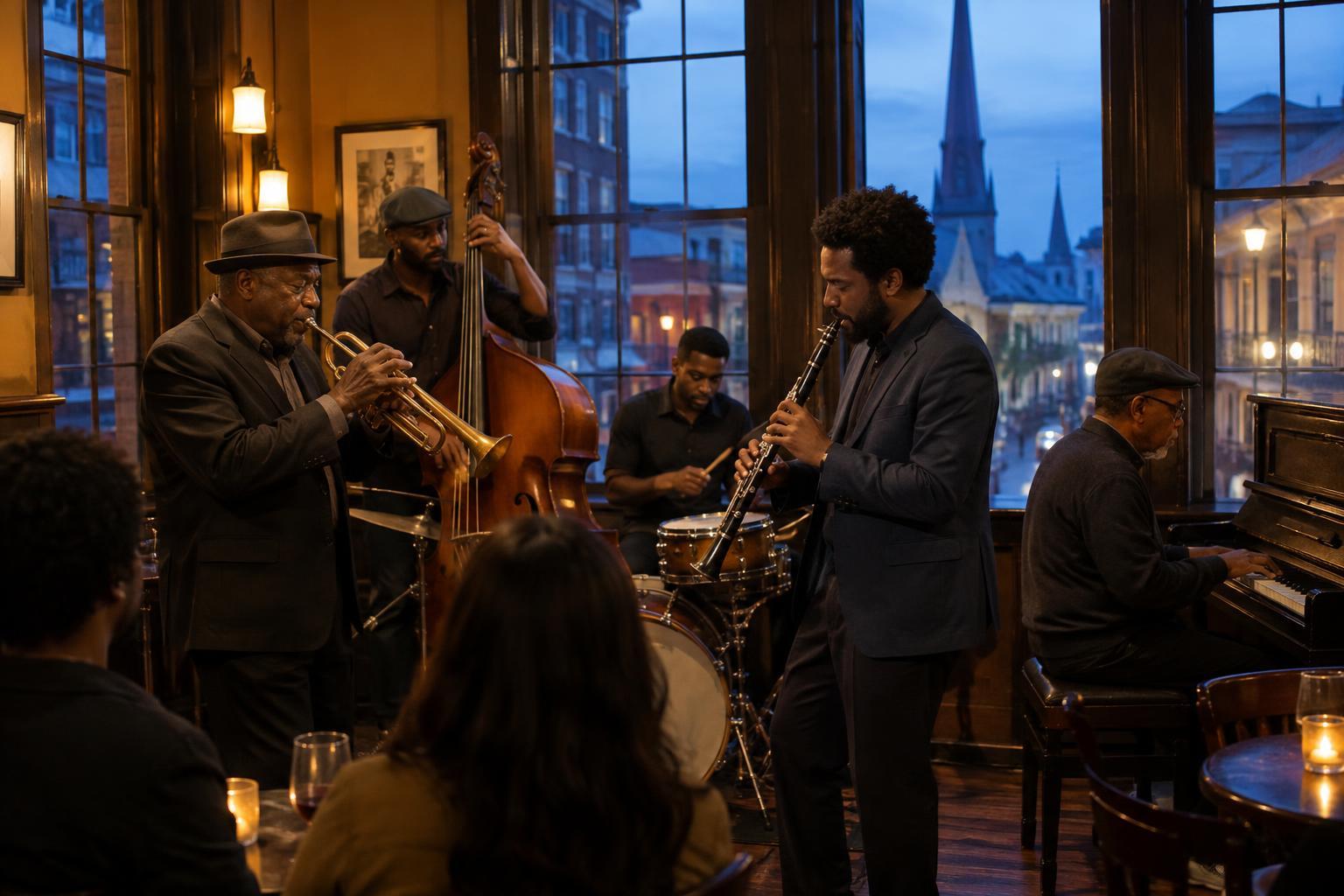
In a traditional-style group, listen to the front line. A trumpet or cornet may state the melody, a clarinet may curl around it with quick, higher lines, and a trombone may answer from below with slides or shorter phrases. When all three vary their parts at once, the result is called collective improvisation. It can sound busy at first; try following just one instrument for a chorus, then listen again to how the parts fit together.
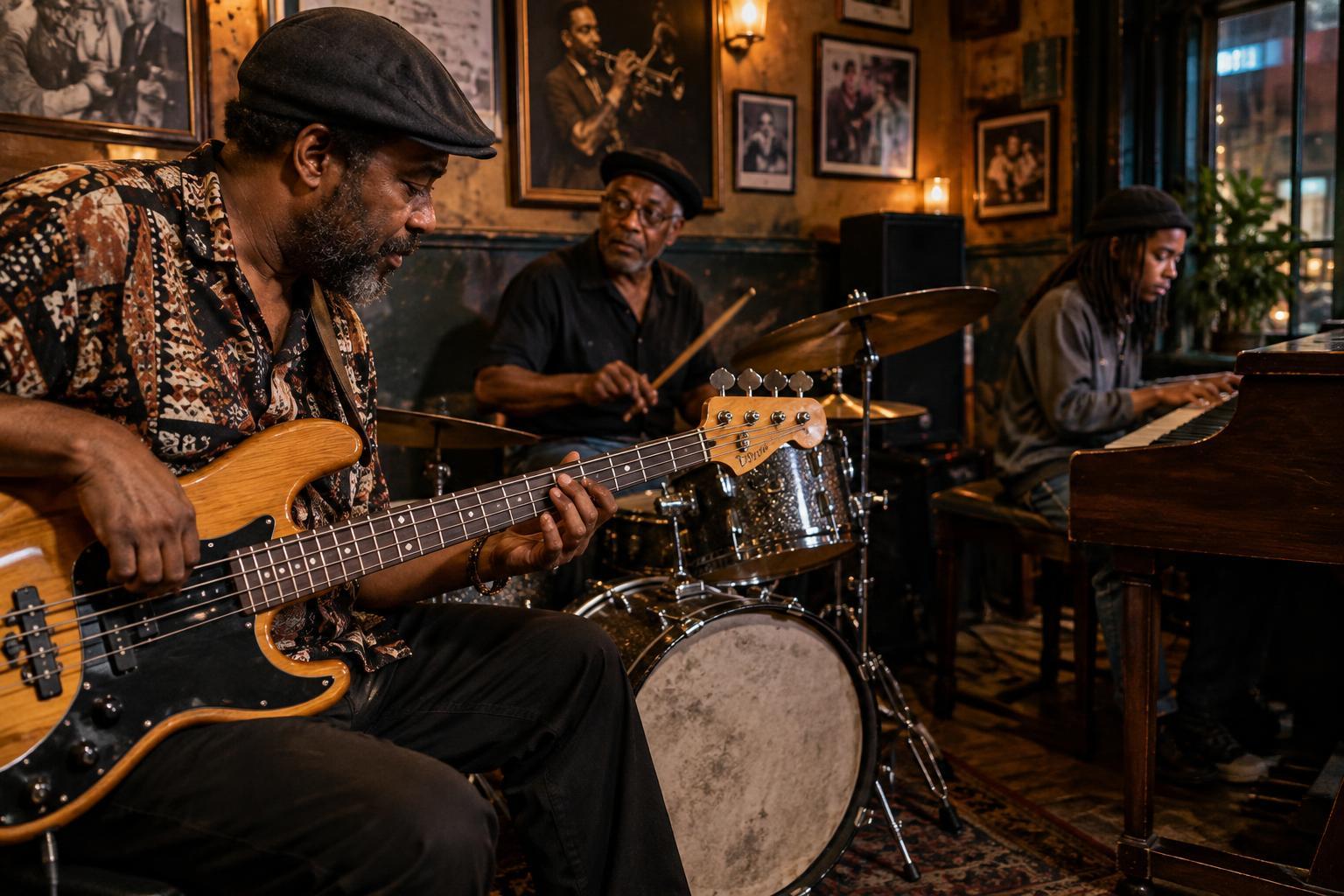
The rhythm section helps make that conversation feel grounded. Depending on the band, you might hear tuba or bass marking a pulse, banjo or piano supplying chords, and drums adding accents. Some performances draw on the feel of a march or a dance tune, but traditional jazz is not one fixed beat. Its energy often comes from musicians changing emphasis together—leaning into a phrase, leaving a gap or returning to a melody the whole group recognizes.
What “modern” can mean here
Modern jazz is an especially broad term. You may hear small groups in which a player takes a long solo while the others support, challenge or reshape the rhythm underneath. A tune might move through less familiar chords, shift its groove or leave more open space than a traditional ensemble arrangement. Piano, bass, drums, horns, guitar and other instruments can all take prominent roles; the lineup alone will not tell you what style the band is playing.
In New Orleans, modern approaches can also carry traces of funk, blues, brass-band music and other sounds that matter to the city’s musical life. That does not make traditional jazz a museum piece or modern jazz a break from local culture. Musicians can draw from inherited practices while finding their own way to phrase a melody or build a solo. Listen for the exchange: even when one person is featured, the band is still making decisions together.
Three easy things to listen for
First, notice who carries the tune. Is a clear melody passed between instruments, played by several musicians at once or used as a starting point before the band ventures elsewhere? Next, find the pulse. You might hear a steady walking bass line, a two-beat feel, a syncopated groove or a rhythm that seems to stretch and tighten. Tapping quietly along can help, but it is fine if you lose your place; finding it again is part of listening.
Finally, listen for endings and returns. A band might come back to the opening melody after a run of solos, trade short phrases between players or arrive together at a final accent. These moments reveal how much attention the musicians are paying to one another. If a passage sounds unfamiliar, focus on a small detail—the drummer’s response to a horn, for instance—instead of trying to understand every note.
Choosing a performance and being a good listener
When deciding where to listen, a description such as “traditional jazz,” “contemporary jazz” or “brass band” is a starting point, not a guarantee of one exact sound. Look at how a venue describes the group and its setting, and check current details directly before heading out: lineups, start times, admission and seating arrangements can change. A listening room, a lively bar and a street performance offer different experiences even when the musicians share influences.
Give the performance a little time before deciding what you think. A familiar melody can open into surprising improvisation, while an abstract passage may settle into an inviting groove. Keep conversation low when the setting calls for close listening, leave space for other people to enjoy the music, and follow the venue’s guidance on photos or recording. You do not need to know jazz history to participate: curiosity and attention are enough.