A groove made from many conversations
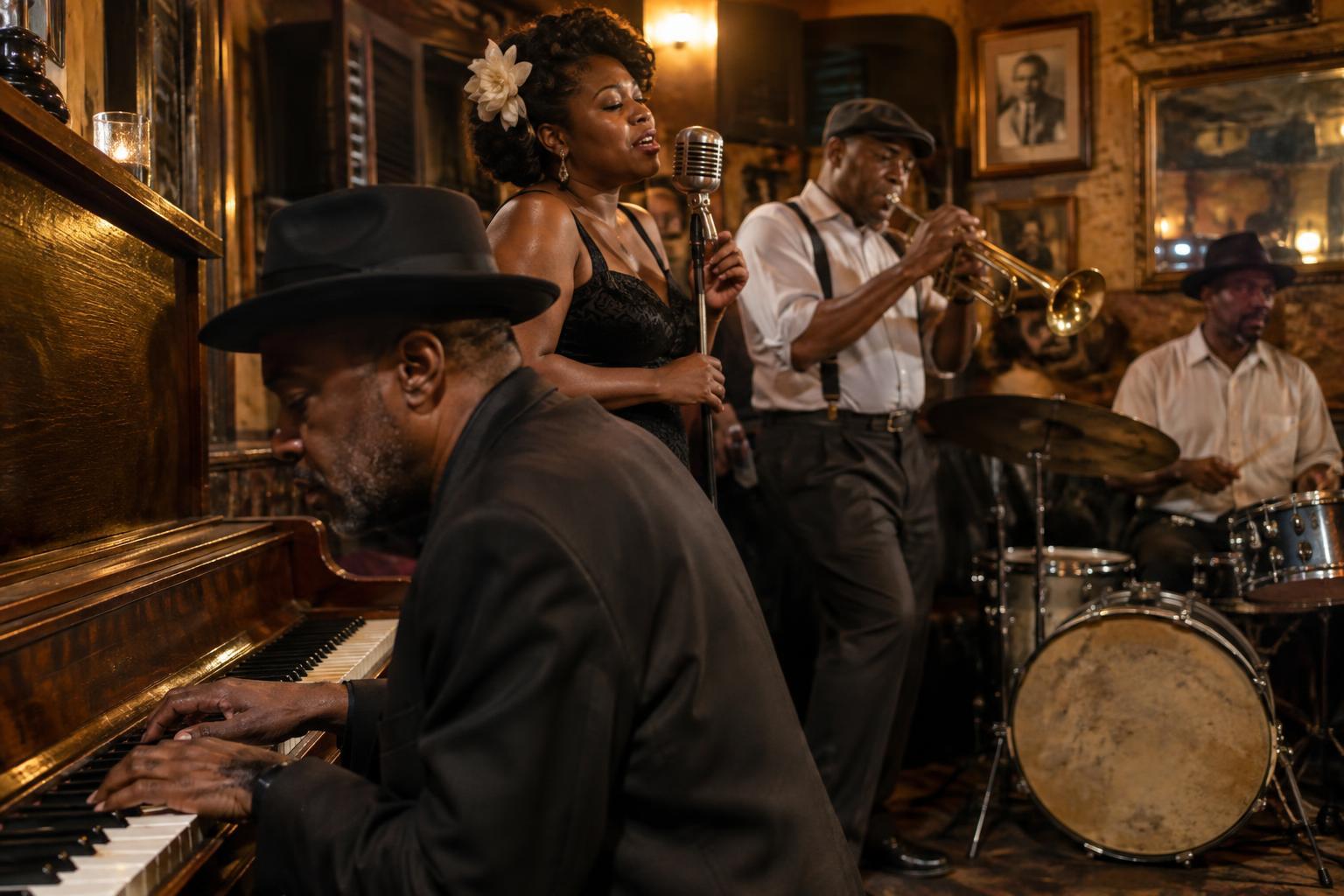
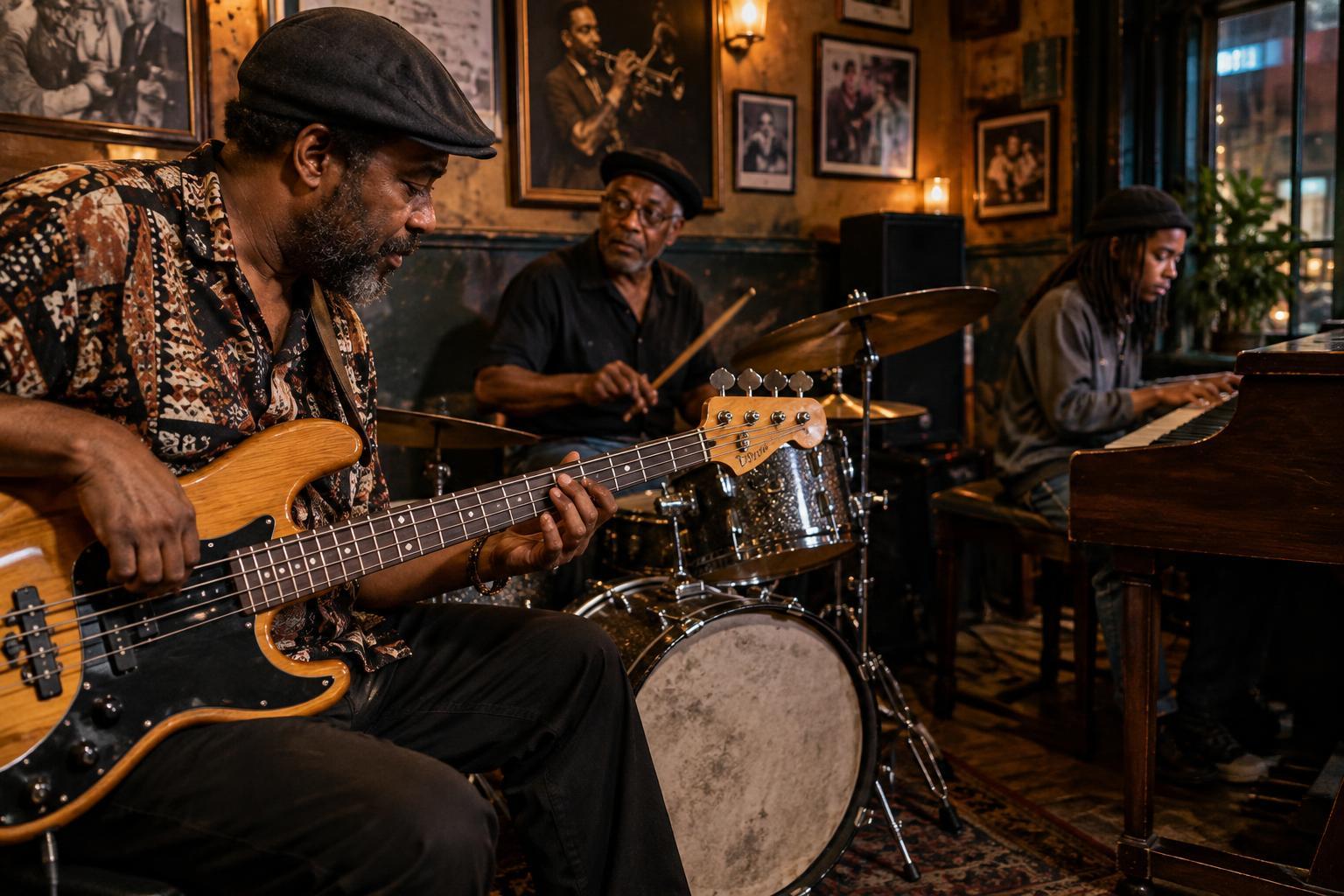
New Orleans funk is less a single beat than a way of putting rhythms together. A bass line might repeat a short phrase while the guitar answers it with a clipped chord. The drummer leaves space, then fills it with a snare accent or a quick turn around the kit. Horns, keyboards and voices enter the same conversation. The result can feel loose and festive, even when every player is making a precise choice.
The sound draws from the city’s Black musical traditions, including rhythm and blues, jazz, gospel, brass-band music and the parade culture of social aid and pleasure clubs. It also reflects a wider exchange with soul and funk beyond New Orleans. No one tradition or musician explains it all. Part of the pleasure is hearing how an older rhythmic idea can take on a new shape in a small band, a studio recording or a street procession.
The rhythms beneath the beat
In a straight-ahead rock beat, the instruments often mark the pulse together. New Orleans funk frequently gets its momentum from the spaces between those marks. The bass may land just ahead of or behind an expected accent; the guitar may play only a few short notes; the drums may suggest a parade rhythm without copying a marching cadence. These interlocking parts make the groove feel alive.
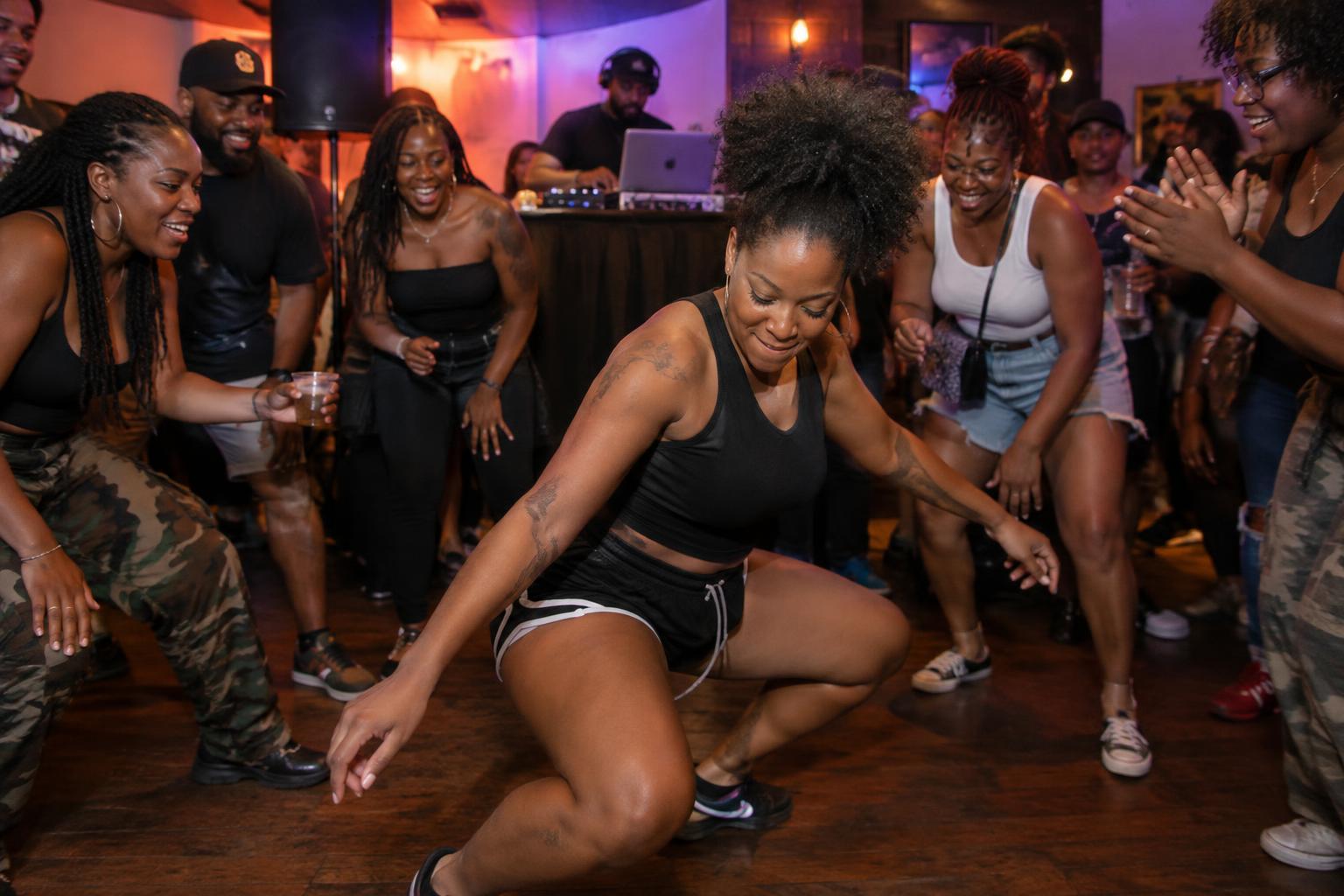
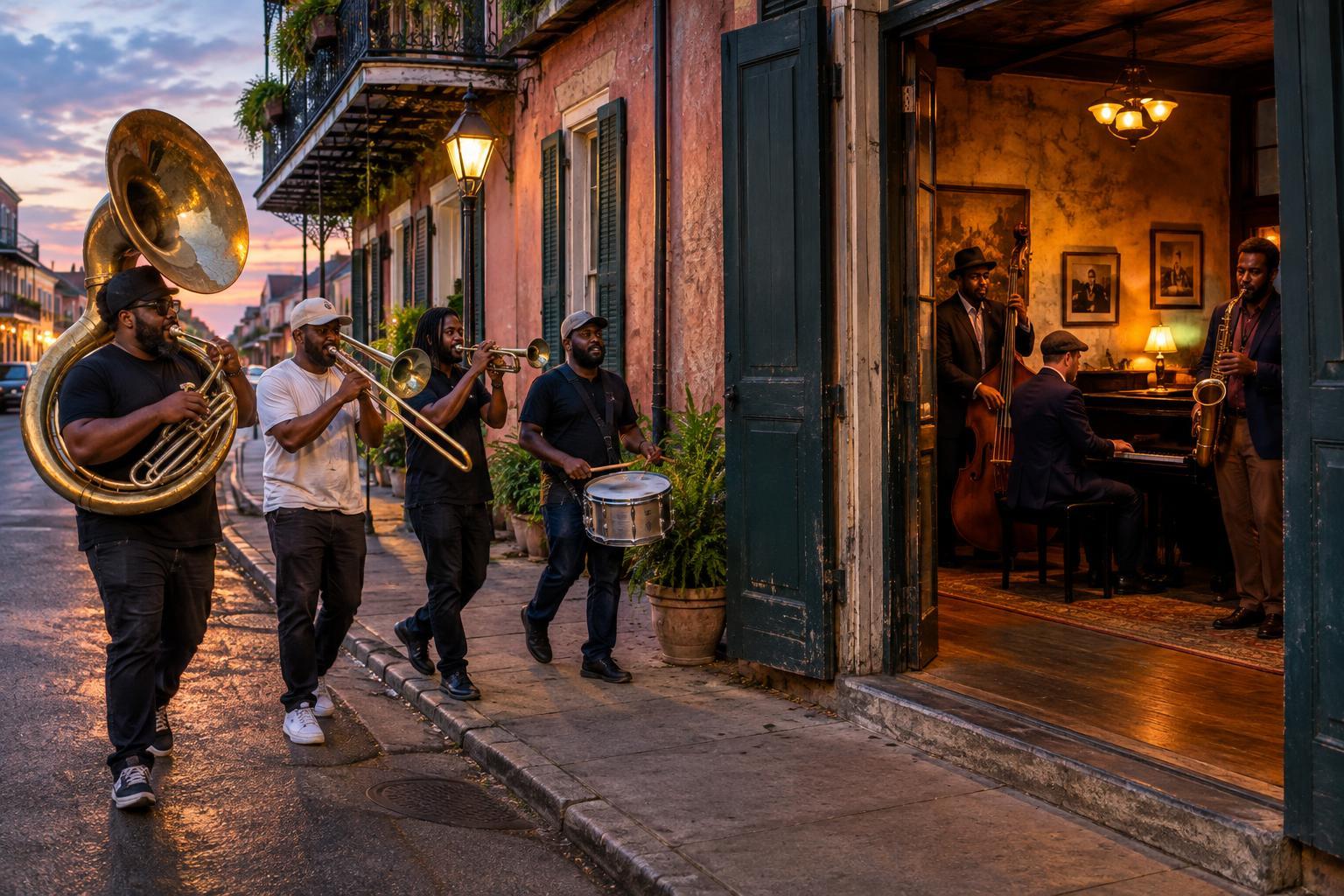
Second-line parades offer one important point of connection. In that setting, a brass band’s rhythm moves with the people following it: feet, claps and dancers all contribute to the feel. New Orleans funk is not simply parade music played indoors, but musicians have long carried ideas between those settings. Mardi Gras Indian, also called Black Masking Indian, chants and percussion are another distinct part of the city’s musical life. Their call-and-response energy has influenced performers, while the tradition itself deserves attention on its own terms rather than being treated as a source of samples.
From piano rolls to studio grooves
Pianist Professor Longhair was an important bridge between earlier New Orleans rhythm and blues and the music that followed. His rolling piano figures and playful shifts of emphasis show how much motion one player can create without a crowded arrangement. Listening to his piano alongside later funk recordings can reveal a shared delight in syncopation, even though the songs belong to different moments and styles.
Producer, songwriter and pianist Allen Toussaint helped give New Orleans music another distinctive studio language. His work often paired memorable songs with arrangements that made room for rhythmic detail. Rather than treating the backing band as a frame for the singer, many of his recordings invite listeners to notice a small guitar figure, a horn response or the way the drums change the feel of a chorus. His influence reaches well beyond records usually labeled funk.
The Meters and the power of restraint
The Meters are an essential place to hear New Orleans funk as a band sound. Keyboardist Art Neville, guitarist Leo Nocentelli, bassist George Porter Jr. and drummer Joseph “Zigaboo” Modeliste developed grooves in which each part has a clear role. Their instrumental recordings make the mechanics easy to hear: a spare guitar line can be as important as a busy drum fill, and a bass phrase can carry a tune without crowding it.
Their music also shows why funk is not just a matter of playing loudly or quickly. A repeated figure gains force when the players agree on where to leave air around it. Art Neville later brought his voice and keyboard playing to the Neville Brothers, whose music connected funk with other strands of New Orleans rhythm and blues. Dr. John likewise mixed the city’s piano traditions, blues, soul and funk into a sound of his own. These artists did not all make the same kind of music; their differences are part of the story.
How to listen—and how to hear it in the city
To get inside a funk recording, follow one instrument at a time. Listen first to the drummer’s hi-hat and snare, then replay the track for the bass. Notice whether the guitar doubles the bass line or replies to it. On another listen, pay attention to what happens when a player stops. Silence, however brief, can be the moment that makes the next note land.
If you hope to hear this music in New Orleans, keep an open ear rather than looking for one definitive show. Funk’s influence can turn up in brass-band performances, rhythm-and-blues sets and groups that resist easy labels. Check a venue’s own listings before making plans, since performers and schedules change. At a live show, give dancers and musicians room, follow the setting’s etiquette and remember that the city’s musical traditions are living practices, not just a soundtrack for a visit.