What makes a song bounce?
Bounce is a style of dance music that grew from New Orleans’ Black neighborhoods and party culture around the late 1980s and early 1990s. It is built for movement and participation. A DJ or performer might repeat a short, propulsive beat while an MC calls out instructions, names, neighborhoods or phrases for the room to answer. The crowd is not just an audience; its voices and dancing help make the performance.
Listen for a quick, insistent rhythm, repeated vocal hooks and a call-and-response flow. Some tracks draw on familiar breakbeats and samples, but bounce is more than a particular drum pattern. The way an MC works a crowd—and the way dancers respond—are central to its character. You do not need to recognize a sample to feel when a chant is inviting you in.
A local sound with many voices
Bounce is often introduced to visitors as party music, and it is joyful music. But treating it as a novelty misses its roots. The sound developed through neighborhood gatherings, clubs, DJs, dancers and performers who made space for their own styles of expression. Its chants can carry local references that may be unfamiliar to a first-time listener. Rather than pretending to know every shout-out, enjoy the energy and stay curious about what you are hearing.
Women and LGBTQ+ performers and dancers have helped shape bounce’s sound and visibility. There is no single type of bounce show or audience: one set might emphasize an MC’s rapid-fire crowd work, while another leans into a DJ’s transitions and a packed dance floor. That variety is part of the appeal.
The dance floor is part of the music
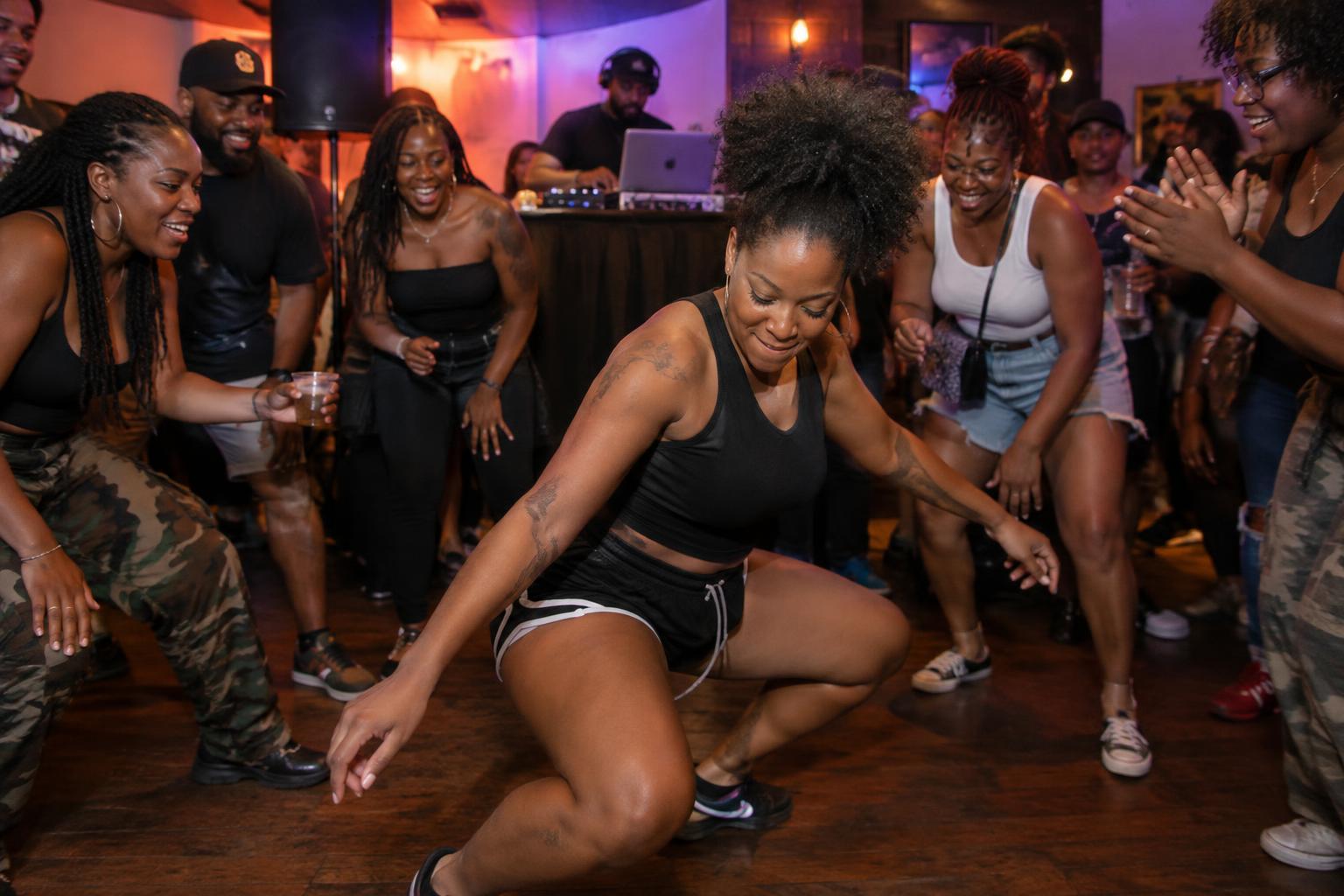
Bounce dancing is frequently associated with hip and lower-body movement, including twerking, but there is no required routine for joining a crowd. You might see dancers move close to the floor, follow a chant’s directions or trade gestures with friends. A skilled dancer can make the simplest repeated beat feel newly animated. Watching the exchange between performer and crowd is a good way to understand why repetition in bounce feels exciting rather than static.
If you want to dance, start where you are comfortable and give others room. Follow the energy of the space without copying someone’s moves as a joke or turning their dancing into your entertainment. You can participate by moving to the beat, responding to a call when you understand it or simply cheering someone on. Enthusiasm matters more than knowing a step.
How to be a good guest at a bounce night
A bounce event may feel informal and welcoming, but basic dance-floor courtesy still matters. Do not touch someone or enter their dance space without an invitation. Ask before filming or photographing people, especially dancers in the crowd. A public performance does not make every person in the room part of your video. If a venue or host has rules about cameras, follow them.
Expect volume and movement, and plan accordingly. Comfortable shoes and a place to keep your belongings secure will help you focus on the music. If you are looking for an event, check a venue’s or organizer’s own details before heading out: lineups, start times, entry policies and locations can change. Bounce is not confined to one street or one kind of venue, so leave room in your plans for a night that does not match a tourist brochure.
Keep listening beyond your first night
A live room is an excellent introduction, but it cannot explain the whole culture in one evening. Afterward, revisit songs you heard and notice how different performers use similar rhythmic foundations in different ways. Pay attention to the MC’s timing, the crowd’s replies and the moments when a small change in the beat shifts everyone’s movement.
The most rewarding approach is straightforward: recognize bounce as a New Orleans creation with living community roots, support the people making and presenting it, and let yourself learn without claiming expertise overnight. Come ready to listen as well as dance. That combination will take you further than any checklist of moves.