Two traditions from the same musical city
New Orleans rhythm and blues and jazz are easier to understand as overlapping traditions than as opposing sounds. Both grew within a city where Black musicians shaped musical life through neighborhood gatherings, dance halls, parades, churches and clubs. Both draw on blues feeling, syncopation and the give-and-take between players and listeners. A pianist, singer or horn player might also move between styles rather than stay inside one label.
The broad distinction is one of emphasis. New Orleans jazz often puts the interaction of an ensemble—or a soloist improvising over that ensemble—at the center of the listening experience. New Orleans rhythm and blues more often centers a song: its vocal, repeating groove, memorable piano part and rhythmic push. These are useful listening clues, not rules that every performance must follow.
Listen to what carries the rhythm
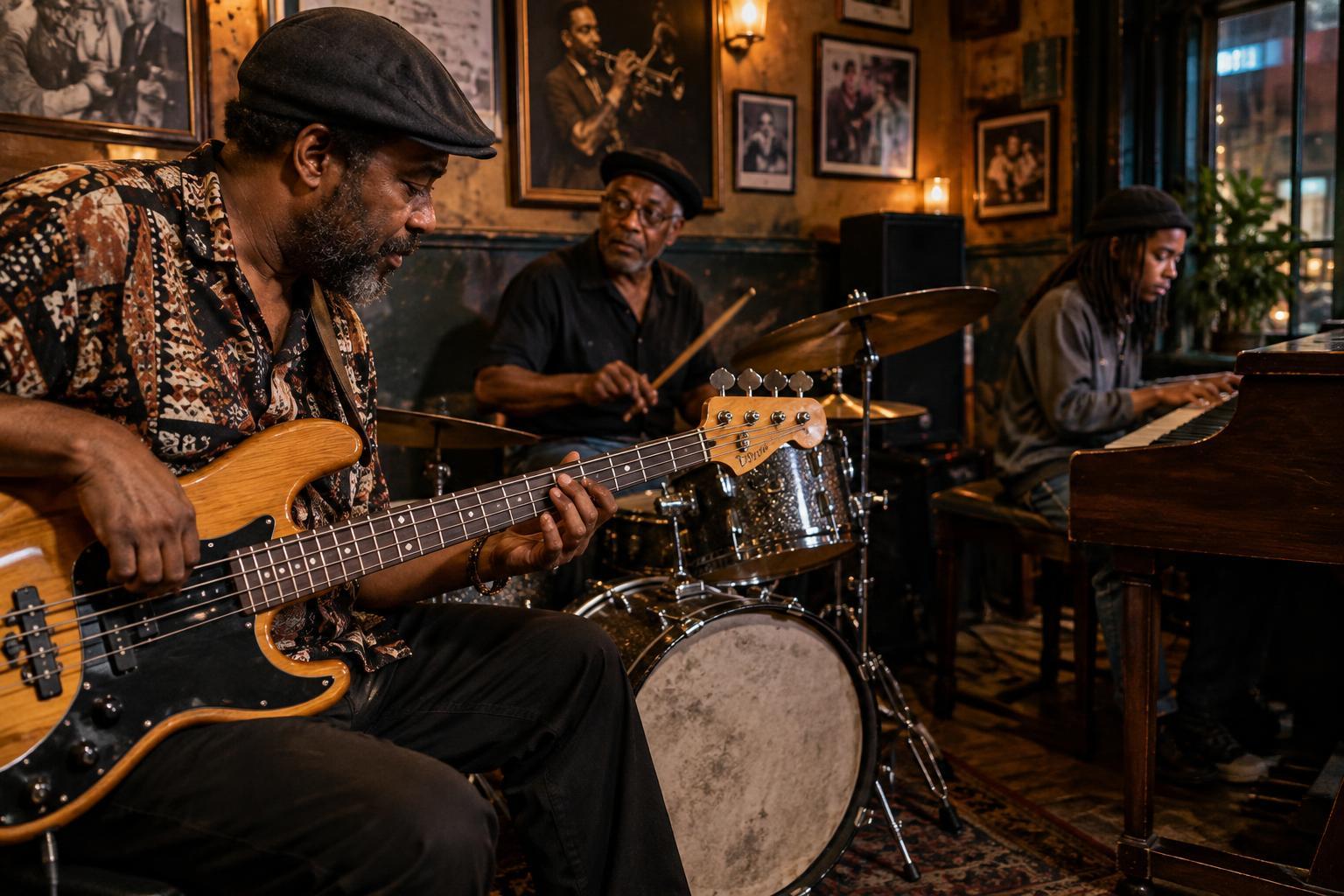
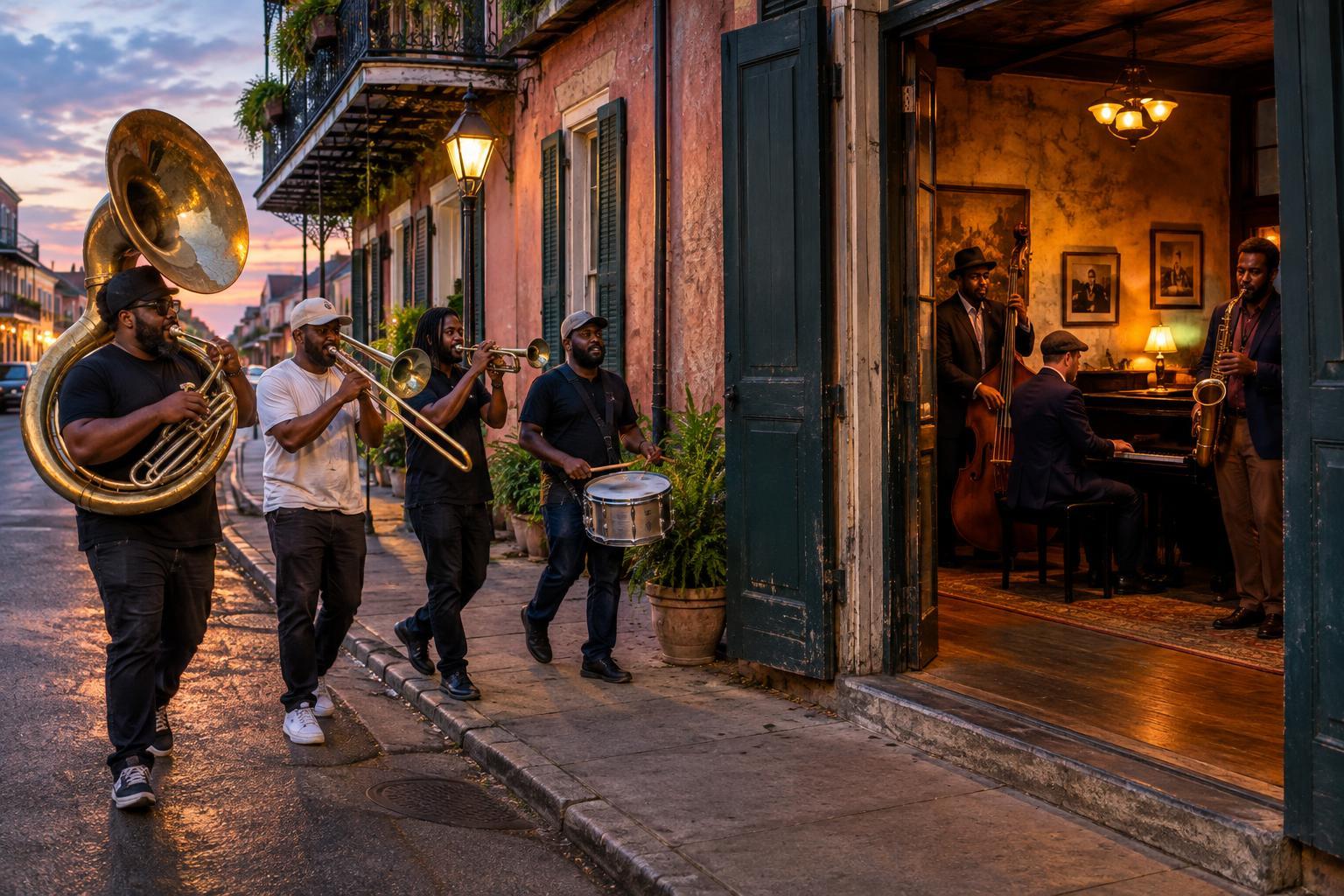
In many New Orleans jazz performances, the rhythm can feel conversational. Drums, bass, piano or banjo may support a pulse while horns play melodies, responses and variations around one another. In a traditional jazz setting, several instruments may be active at once without playing the same line. A later small-group jazz performance might instead give one player a longer solo while the others respond and keep time.
Rhythm and blues tends to make the groove more immediately repeatable. Listen for a firm backbeat, a bass line that returns throughout the song, and short instrumental figures that reinforce the vocal. The piano can be especially revealing: rolling figures, accented chords and a strong left-hand pattern may make the whole band feel as if it is leaning into the beat. Horns, when present, can punctuate a lyric or answer a singer rather than carry an extended collective improvisation.
Neither style owns swing or syncopation. A jazz band can lock into a steady dance rhythm, and an R&B band can play with timing in subtle ways. The question is where your attention keeps going: toward evolving lines and solos, or toward the groove and the return of the song’s hook.
Songs, voices and room to improvise
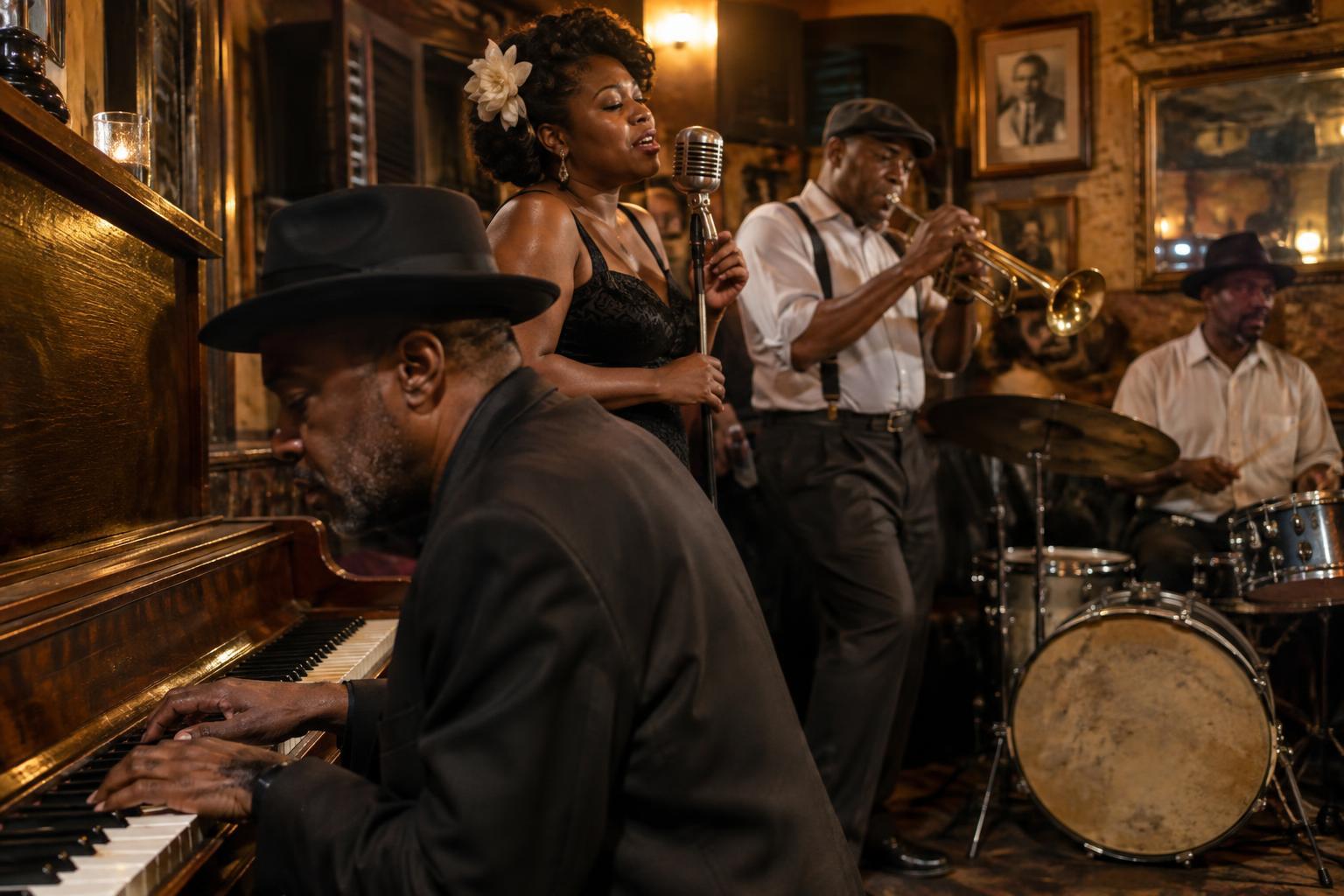
Vocals offer another clue. Many rhythm and blues performances use a lead singer to tell a compact story or deliver a phrase the audience can remember and sing back. Verses and refrains give the band a structure to repeat, even when the singer bends a note or delays a line. The result can be playful, tender or forceful without losing its direct connection to the lyric.
Jazz also has a rich vocal tradition, so the presence of a singer alone tells you little. Listen instead to how the song is treated. A jazz performance may stretch its melody, change its phrasing or open substantial space for instrumental solos. An R&B performance may include a striking solo too, but the players often return quickly to the vocal, riff or danceable pattern that anchors the track. In both traditions, the most interesting moments may be small departures from what you expected to hear.
Why the boundary stays porous
The same musical resources run through both traditions: blues phrasing, call-and-response, expressive horns and a feel for rhythm that resists being reduced to notation. New Orleans piano playing, in particular, can draw together blues, boogie-woogie and jazz touches within a single performance. Rhythm and blues also helped shape the sound of early rock and roll, while jazz continued developing along many paths of its own.
Labels can describe a recording or help a visitor choose a show, but they cannot account for everything happening onstage. Musicians adapt to their bandmates, the song and the room. A horn section might sound jazzy over an R&B beat; a jazz group might play a blues so directly that it invites dancing before analysis. Hearing those crossings is part of hearing New Orleans music clearly, not a failure to sort it into categories.
A practical way to listen in New Orleans
When you hear a band, start with four questions. What keeps the time: a repeating bass-and-drum pattern, a piano figure, or several parts moving together? Does the music keep returning to a sung refrain? How much space do individual players take to reshape the melody? And how do the musicians respond to one another between the main phrases?
You do not need to settle on a genre before enjoying a set. Notice whether a song pulls you toward its words, its groove or the surprises in its instrumental lines. If you are planning a night out, treat genre descriptions as a starting point and check a venue’s own listings for the lineup and schedule. Once the music begins, let the performance—not the label—tell you what is happening.