Two flexible traditions, not two sealed categories
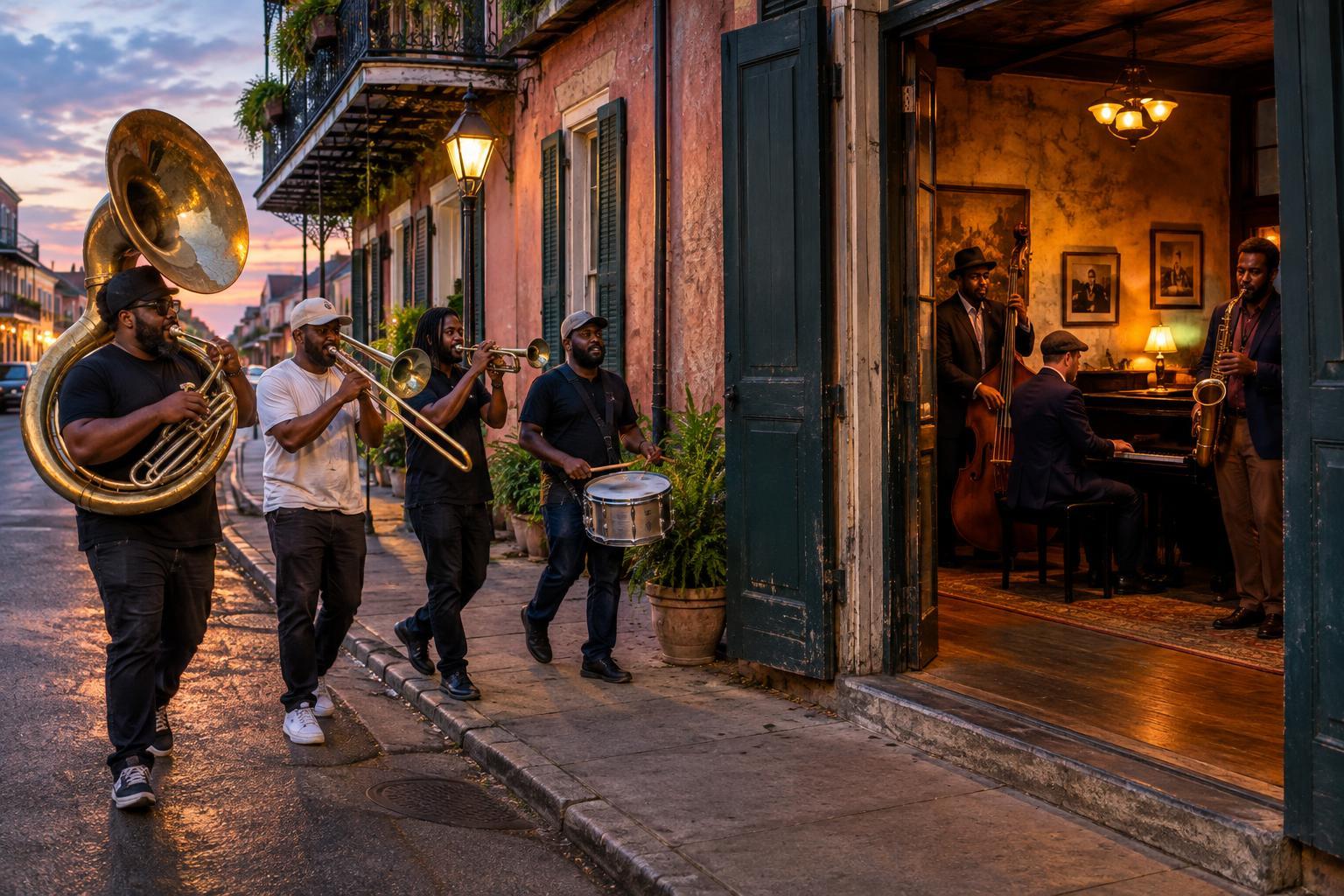
In New Orleans, “brass band” usually suggests a group built around horns and portable percussion. Trumpets, trombones, saxophones, sousaphone and drums are familiar ingredients, though the lineup varies. A small jazz combo might have just a few players: perhaps a horn with piano, bass and drums, or a guitar-led group with no horn at all. Neither label guarantees a particular repertoire, volume or mood.
The traditions also overlap. Brass-band players improvise, and small combos may play tunes associated with parades. Musicians can move between the two settings, drawing on shared rhythms and musical vocabulary. The most useful distinction for a listener is not that one is “real jazz” and the other is something else. It is how the instruments work together, how the music occupies a space and what kind of exchange the setting makes possible.
What carries the groove
A brass band needs a way to keep the music moving without relying on a stationary bass or piano. A sousaphone often supplies the low, repeating foundation, while bass and snare drums give the rhythm its weight and snap. Horns can state a melody together, answer one another, stack short riffs or leave room for a soloist. When those parts lock in, the sound can feel broad and physical even before anyone steps forward to improvise.
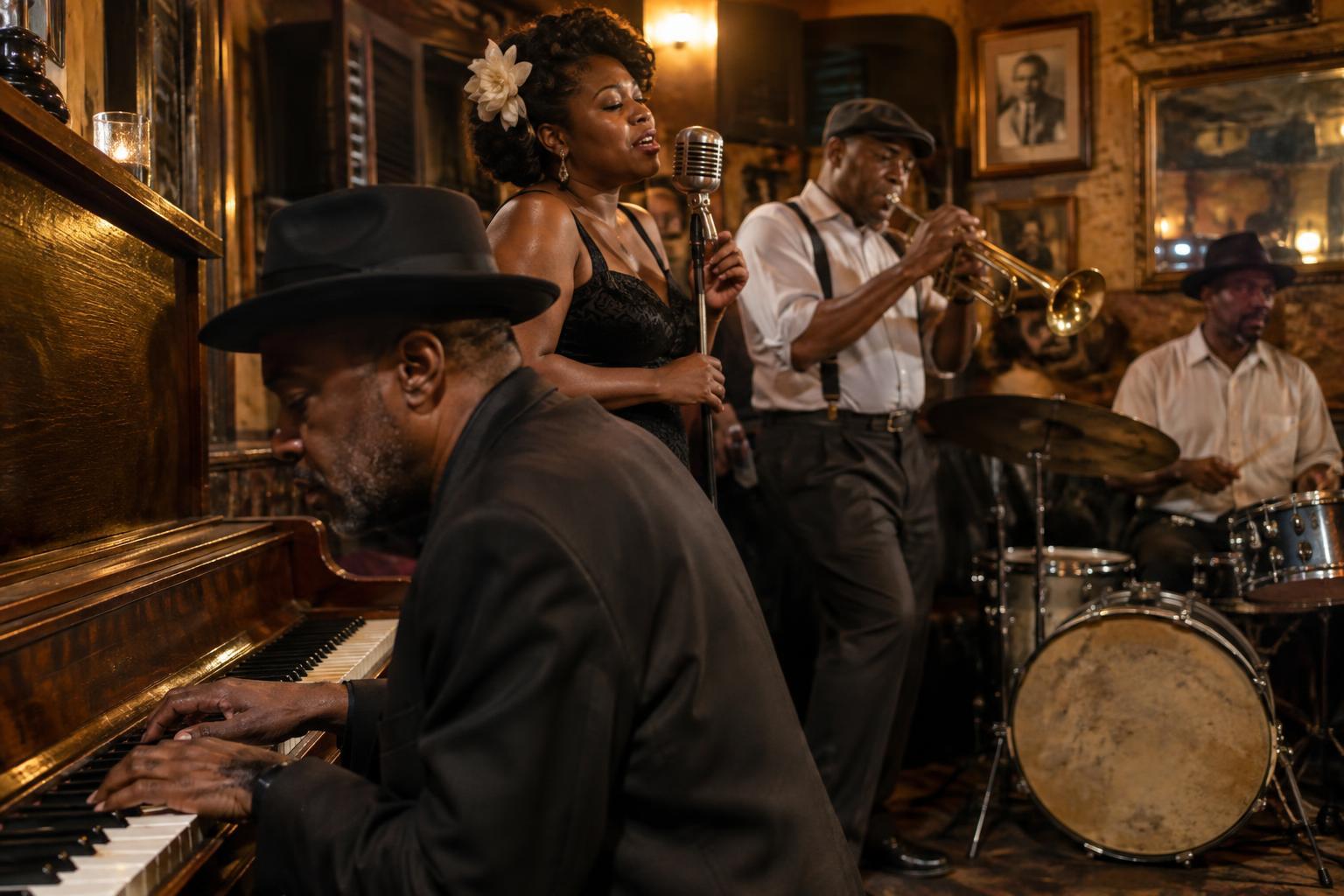
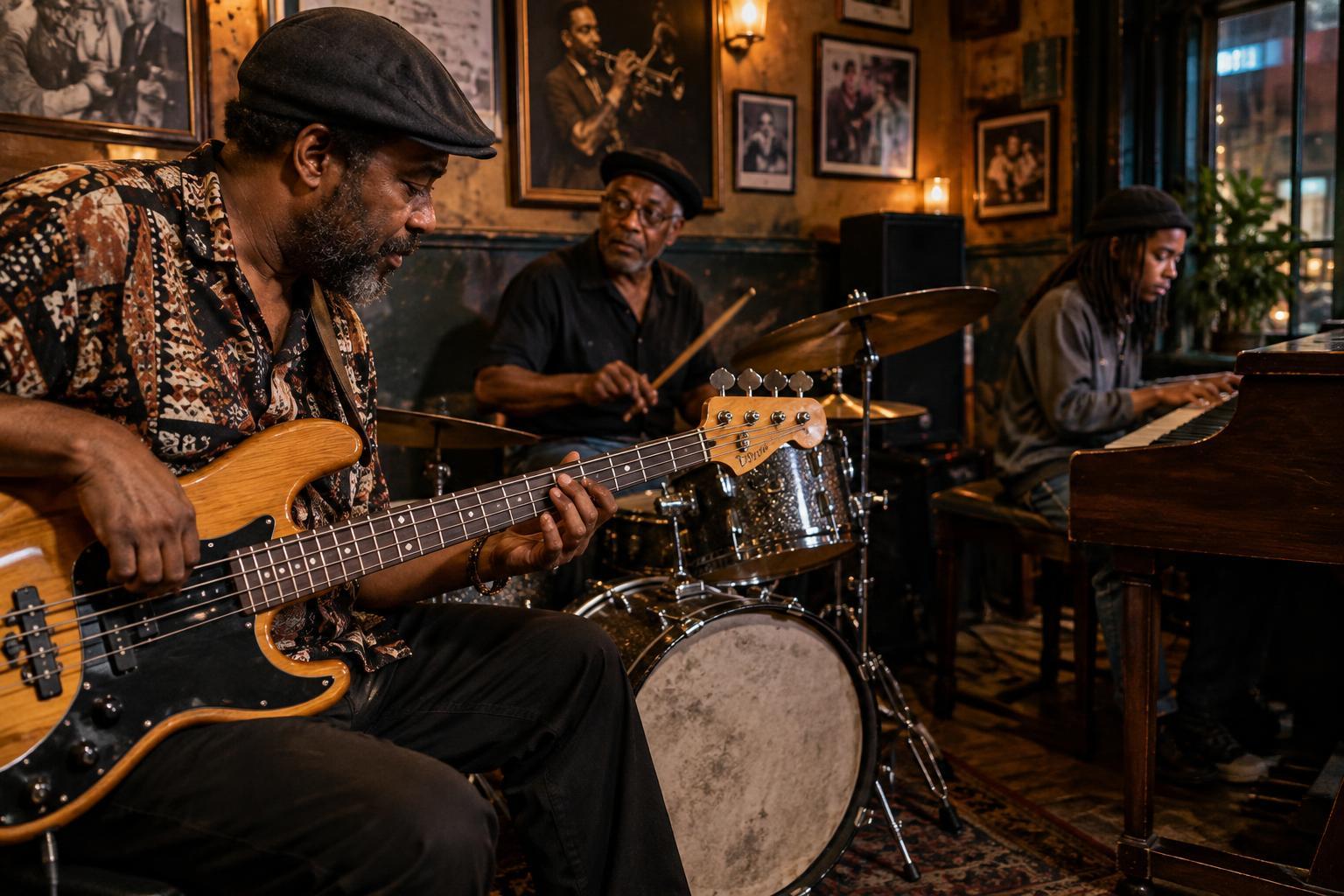
In a small combo, the foundation is often less conspicuous but just as active. A bassist may shape the pulse, a drummer may mark it lightly or break it apart, and a pianist or guitarist may add chords in conversation with the soloist. With fewer instruments sharing the space, a quiet note, a pause or a change in touch can become a major event. The groove may be strong enough to dance to, but it does not have to announce itself at full volume.
How the players share attention
Listen to the way a brass band balances a collective sound with individual voices. Several horns may deliver a theme at once, then one player may bend the melody while the others hold a riff underneath. A drummer’s accent can cue a turn, and a low-brass line can change the feel of the whole passage. The excitement often comes from hearing many parts push in the same direction without becoming identical.
A small combo can make the exchanges easier to isolate. You may hear a soloist test an idea, the drummer respond, and a chord player adjust the harmony or leave a gap. The group might stretch a tune over several solos, or keep the arrangement compact. Try following one instrument for a minute, then switch your attention to another. That simple exercise reveals how much of a performance is being shaped in real time.
Why the setting changes the experience
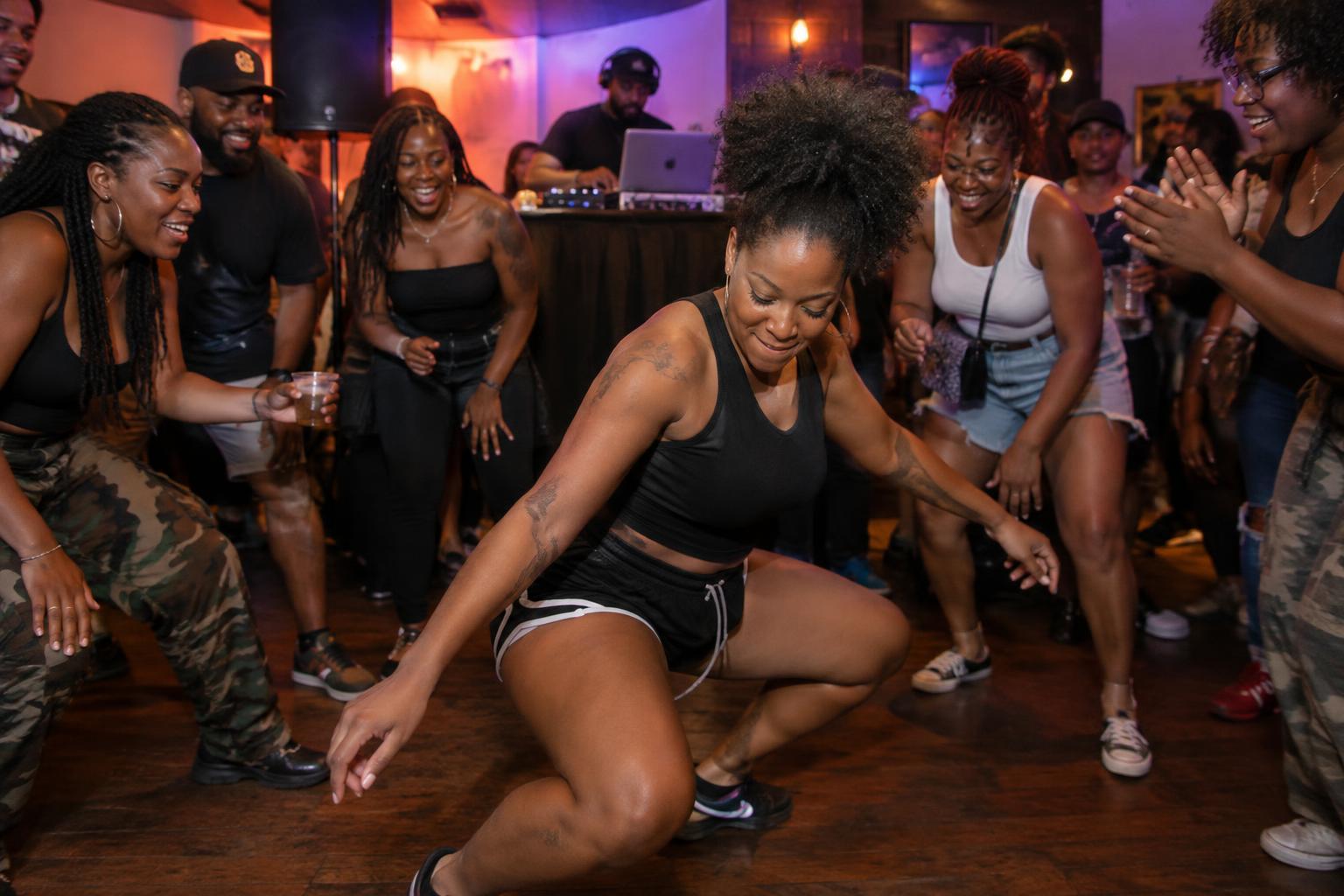
Brass bands are well suited to movement: their instruments can project without the setup a piano-led group needs. That portability is part of why brass music is closely associated with New Orleans parades and second lines. But brass bands also perform on stages and in clubs, where amplification, a fixed audience and a longer set can change the dynamics. A crowd may dance, sing along or respond to musical cues; there is no single prescribed way to enjoy the music.
Small combos are often heard in rooms where listeners can catch fine details, though they perform outdoors and at lively events too. A seated set might reward close attention to softer passages. In a busier room, conversation and dancing may be part of the atmosphere. If you are choosing a night out, think less about which format is “better” and more about what you want: the sweep of a horn section, the intimacy of a few players trading ideas, or a chance to hear both.
Listening with curiosity and respect
For a first listen, notice what repeats and what changes. Is the low end holding a steady pattern or moving through a tune’s chords? Do the horns play as a section, or does one instrument lead? Does the drummer reinforce the pulse or challenge your sense of where it falls? These questions work for either kind of group and leave room for musicians to surprise you.
If you encounter a parade, remember that it may be part of a community tradition rather than an attraction staged for visitors. Give participants room, follow the lead of the people involved and avoid blocking the route for a photo. For any performance, check venue details and event information before heading out; lineups, locations and admission practices can change. The best preparation is to arrive ready to listen to the particular musicians in front of you, not to demand that they fit a label.