What makes a muffuletta a muffuletta?
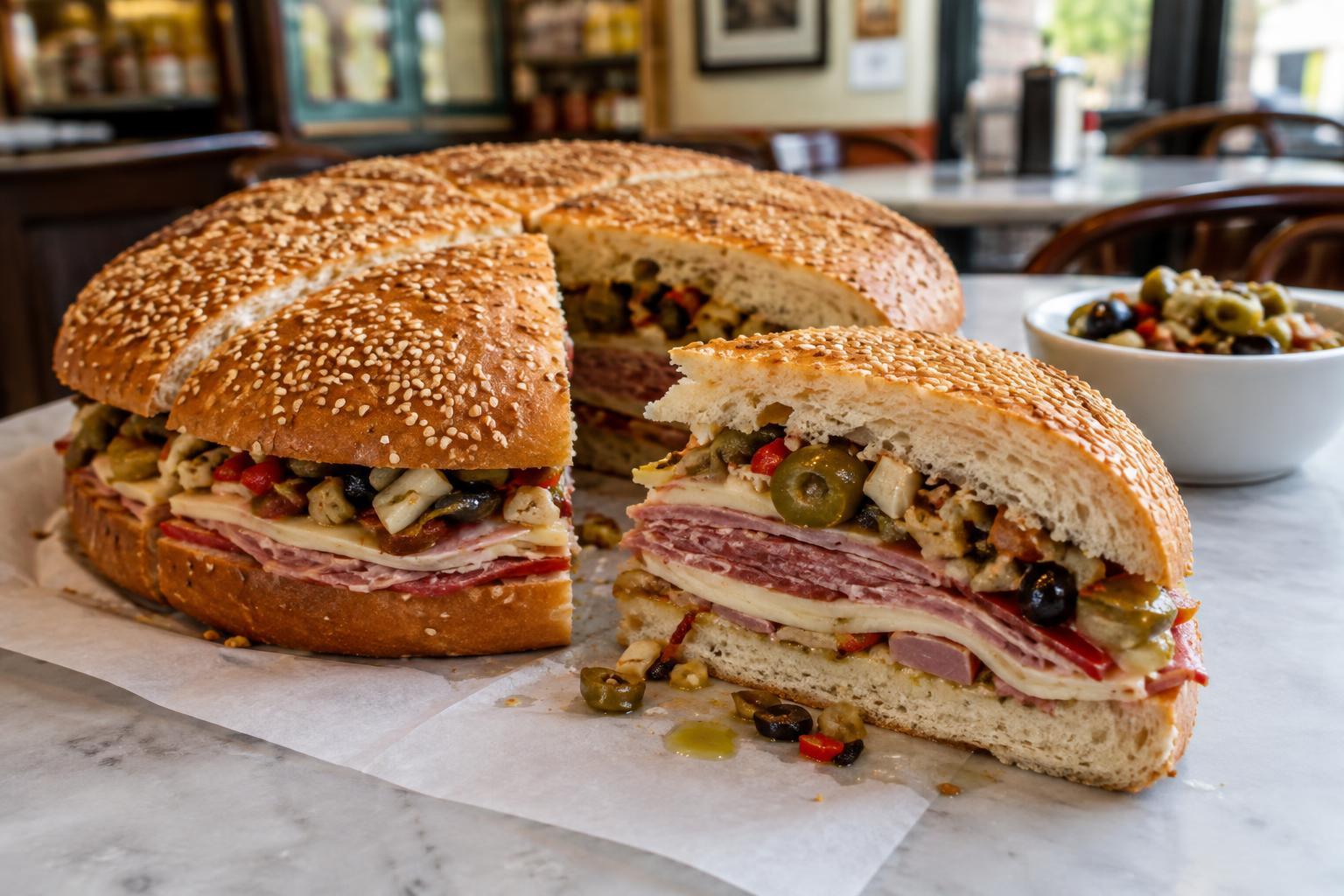
The New Orleans muffuletta is a round sandwich associated with the city’s Italian food traditions. It typically brings together sliced cured meats, cheese and a generous layer of olive salad inside a wide, sesame-topped loaf. The finished sandwich is often cut into quarters or smaller wedges. Its size makes it easy to share, though appetites and portions vary.
Common fillings include salami, ham, mortadella and cheeses such as provolone or Swiss. There is no need to treat one combination as the only authentic version: shops and home cooks make different choices. What gives the sandwich its recognizable character is the balance of savory fillings, chewy bread and bright, oily olive salad in nearly every bite.
Olive salad does the heavy lifting
Olive salad is not simply a few sliced olives tucked beside the meat. It is usually a chopped mixture of olives and pickled vegetables, often including ingredients such as cauliflower, carrots or celery. Garlic, herbs, peppers and oil may also be part of the mix. Recipes range from finely chopped and mellow to chunky and sharply briny.
The salad contributes salt, acidity and moisture. Its oil spreads through the bread, while the pickled vegetables cut through the richness of the meat and cheese. That contrast is why leaving it out changes the sandwich so much. If you are making a muffuletta at home, drain a very wet salad slightly before assembling it; you want the loaf seasoned, not soaked to the point that it falls apart.
Many people like a muffuletta after it has rested long enough for the flavors to meet. A short rest also makes a large sandwich easier to slice neatly. It can be served at room temperature, and some versions are warmed. Neither approach requires a special rule: the useful test is whether the bread still holds its shape and the olive salad remains prominent.
Why the bread matters
A traditional muffuletta-style loaf is broad and round, with sesame seeds on top and enough structure to support several layers of filling. It is generally sliced across its middle to make a top and bottom. The loaf’s width creates a different eating experience from a narrow sandwich: each wedge has a cross-section of bread, salad, cheese and meat.
The bread should be sturdy without being tough. If it is too airy or delicate, oil from the salad can overwhelm it; if it is too dense, the fillings struggle to stand out. When the exact loaf is unavailable, a round sesame loaf with a reasonably firm crumb can get you closer to the intended balance than a soft burger bun or a long roll.
Muffuletta versus po’ boy
Both sandwiches belong to New Orleans food culture, but they are built differently. A po’ boy uses a long, light French-style loaf, often with a crisp exterior and soft interior. Familiar fillings include fried seafood and roast beef with gravy, though menus offer many others. Ordering a po’ boy “dressed” commonly means adding lettuce, tomato, pickles and mayonnaise; what is included can vary by shop.
The muffuletta, by contrast, is round, layered with meats and cheeses, and defined by olive salad rather than the usual po’ boy dressings. A roast beef po’ boy may be deliciously messy from gravy, while a muffuletta’s moisture tends to come from its oil-dressed salad. The difference is not a contest over which is more New Orleans. Each sandwich has its own bread, texture and way of bringing its fillings together.
If you are choosing between them, think about what sounds good at that moment. Choose a muffuletta for briny, tangy flavors and a sandwich that is easy to divide into wedges. Choose a po’ boy when you want a long roll built around a particular filling, whether fried, saucy or otherwise. Either way, pay attention to the bread: it tells you a great deal about the sandwich you are about to eat.