Start with the table, not the technique
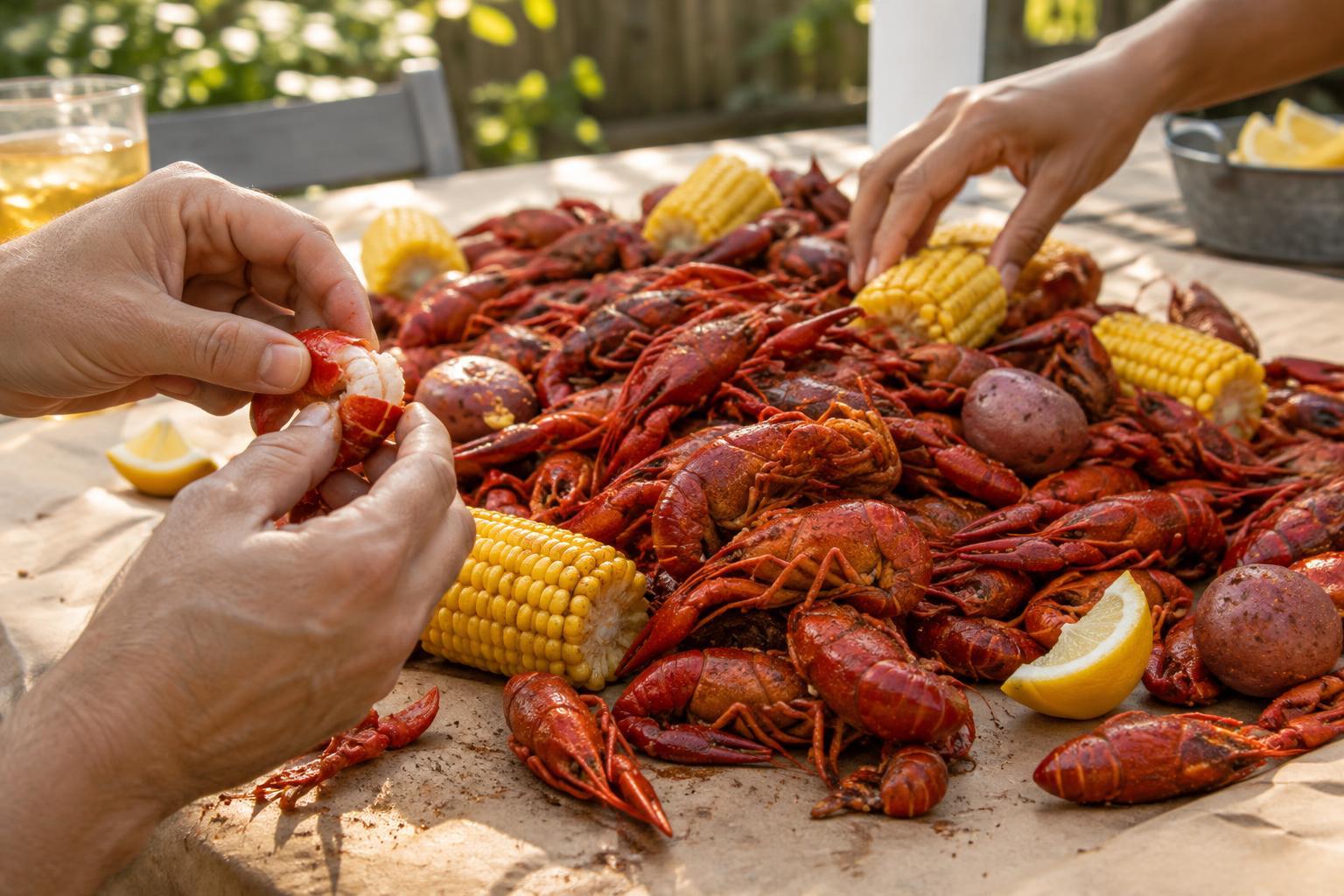
Boiled crawfish is meant to be hands-on. A serving may arrive on a tray or at a table covered for easy cleanup, often with corn, potatoes or other additions from the pot. Before you begin, find out where shells go and whether any sides are meant for the whole table. Keep a napkin nearby, and expect your fingers to get seasoned.
There is no single correct pace. At a casual boil, people often eat, talk and return to the pile for another crawfish. If you are a guest, follow the host’s lead on serving yourself and passing shared food. If you are ordering, you can ask how the crawfish is seasoned and how much to order; portions and accompaniments vary by kitchen.
Peel a crawfish tail step by step
Choose a crawfish and hold its head in one hand and tail in the other. Gently twist the two sections apart. Set the head aside for the moment and look at the tail. Grasp the first ring of shell near the exposed meat, peel it away, then continue removing enough shell to pull the tail meat free. A light pinch near the end of the tail can help release a piece that is holding on.
The first few may be slow. If the meat tears, peel back another ring rather than squeezing harder. You may notice a dark line along the tail; some diners remove it, while others eat the tail as served. Once you have the motion, peeling becomes a rhythm: twist, peel, eat, and put the empty shell in the designated spot.
Some people also sip the seasoned juices from the head after separating it from the tail. That is optional, not a test of whether you are eating crawfish properly. If you are curious, try it; if not, set the head with the shells and enjoy the tail.
Understand where the flavor comes from
Crawfish boils are seasoned in different ways. Flavor may come from the cooking liquid, from seasoning added after draining, or from both. As a result, the shell can taste saltier or spicier than the tail meat. A coating of seasoning on the outside does not necessarily tell you how hot the first bite will be.
Start with a tail before adding sauce or extra seasoning. Then adjust to your taste. Corn and potatoes may carry plenty of flavor from the pot, and a drink or a bite of a side can provide a break between spicy bites. If heat is a concern, ask about the seasoning before ordering rather than assuming one boil will taste like another.
Share the pile thoughtfully
At a shared table, keep your empty shells separate from uneaten crawfish and sides. Use serving utensils if they are provided, and avoid returning a crawfish to the common pile after handling it. Passing napkins, making room for someone else to reach the food and asking before taking the last piece of a shared side are small courtesies that keep the meal comfortable.
A boil is social, but no one needs to match another person’s appetite or peeling speed. It is fine to pause, wash your hands or ask a neighbor to show you how they peel a tail. If you have a shellfish allergy or another food concern, tell the host or kitchen before food is served; shared pots and surfaces may matter even when you plan to eat only the sides.
Finish without a rush
When you are done, gather your shells where the host or restaurant expects them and check whether a handwashing station or sink is available. Napkins help during the meal, but washing with soap and water is the most satisfying way to get the seasoning off your hands afterward.
The appeal of boiled crawfish is not perfect technique. It is the combination of a flavorful, slightly messy meal and time spent around the table. Learn the basic twist-and-peel, pay attention to the people sharing the food, and let the rest become easier with practice.