Start with the simple pairing
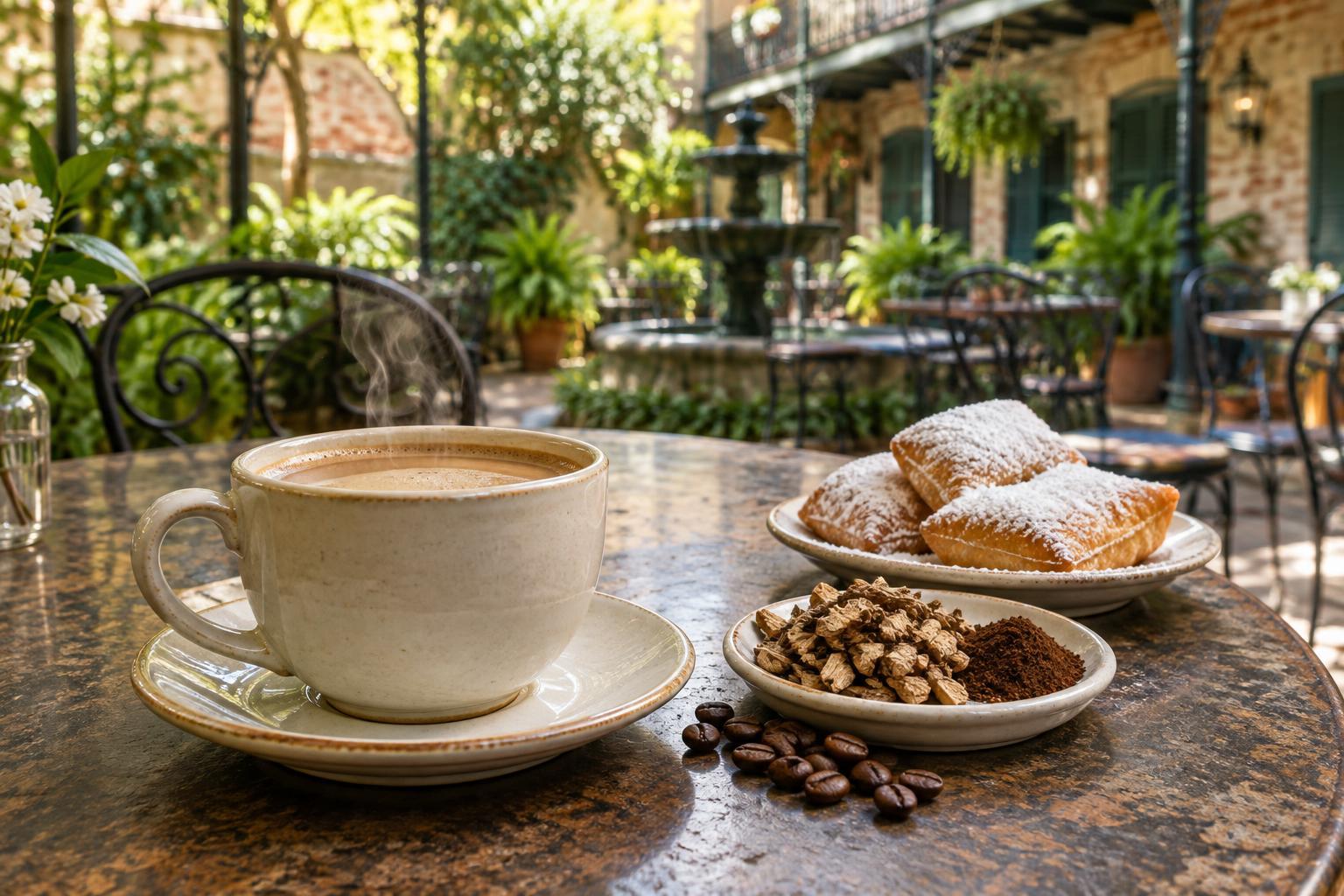
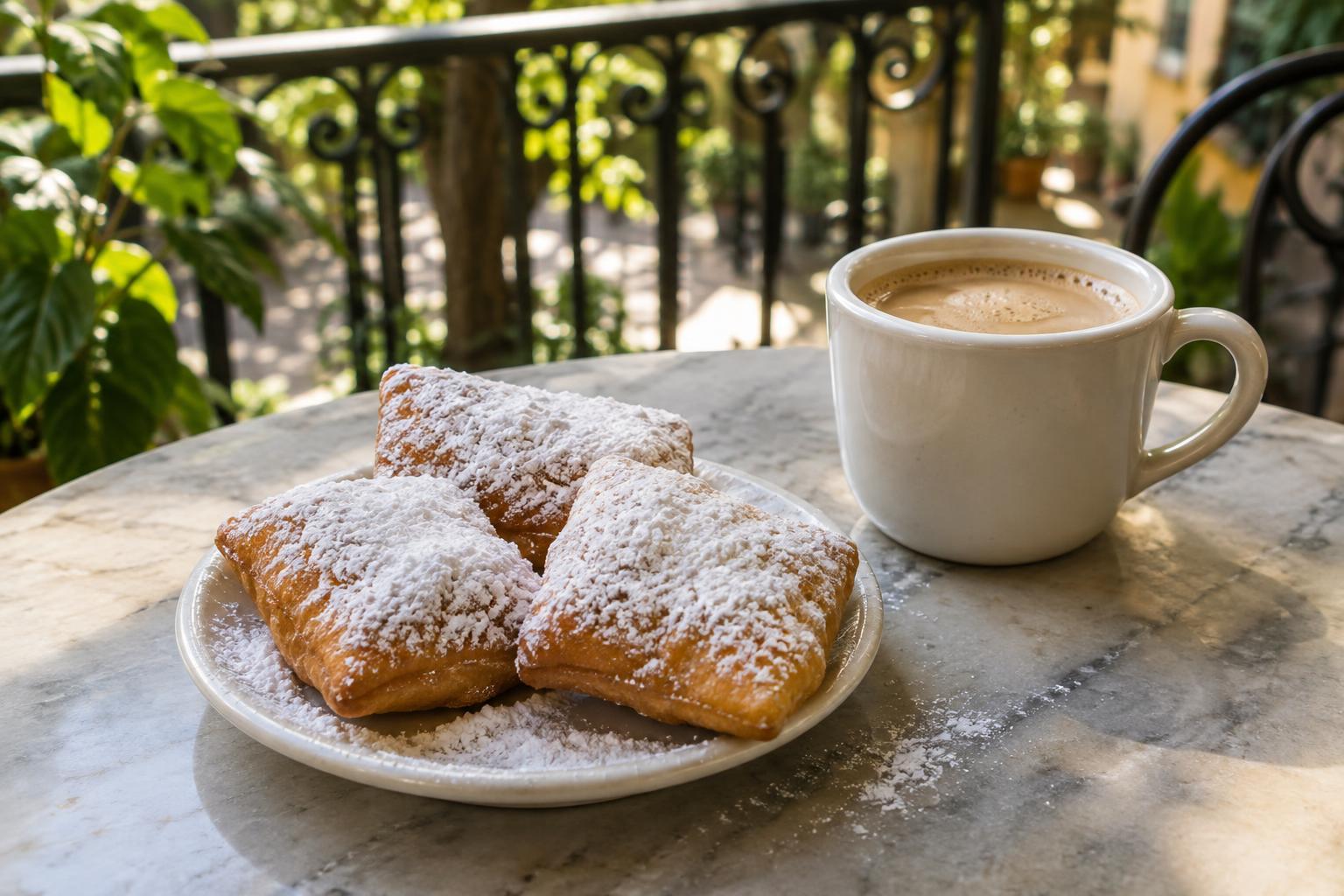
Beignets and café au lait make an easy introduction to a New Orleans café tradition. A beignet is a piece of fried dough, usually served warm under a generous layer of powdered sugar. It is a sweet treat rather than a filled pastry or a complete breakfast. Café au lait means coffee with milk; in New Orleans, it is often associated with coffee blended with chicory and served with hot milk. The balance and preparation depend on the café.
You do not need to know special terminology to order. Ask for beignets and a café au lait, then check the menu for the portion size. Some cafés sell beignets in sets, while others offer different quantities or versions. If you are sharing, it is worth deciding how many you want before joining a line: a plate can disappear quickly when it arrives hot.
What the beignets are like
Expect a soft, airy middle and an exterior that may be lightly crisp when freshly made. Beignets are commonly served without a filling, though individual bakeries may put their own spin on them. Powdered sugar is part of the experience, not a restrained garnish. It tends to land on sleeves, tables and anything else nearby, so lean over the plate for your first bite and keep a napkin close.
For the best sense of the texture, eat them soon after they arrive. A warm beignet is different from one that has sat in a bag while you walk around. If you plan to take an order away, it can still be enjoyable, but do not expect the same just-fried feel. Menus may also include other pastries; those can be worth trying, but they are not necessarily interchangeable with a traditional plate of beignets.
Understanding the coffee
At a New Orleans café, café au lait generally refers to brewed coffee and milk, rather than an espresso-based latte. Chicory is a roasted plant root used in some local coffee blends; it can add a dark, earthy edge to the cup. Not every café uses the same blend or milk-to-coffee ratio, so one shop’s version may taste quite different from another’s.
If you prefer a particular milk or want your drink iced, look at the menu or ask what is available rather than assuming every café offers the same choices. Sugar can be added to taste. The drink itself need not be sweet, which is useful alongside a heavily sugared pastry. If you do not drink coffee, you can still order beignets with another beverage the café serves.
How ordering and seating may work
There is no single citywide routine. Depending on the café, you might order at a counter, place an order with a server after sitting down, or join a separate line for takeaway. Take a moment to read posted signs before settling in. At a busy spot, having your order ready helps keep the line moving; at a table-service spot, follow the staff’s lead rather than trying to order at the counter.
Check the posted menu for prices, portion sizes and payment options. These details can change and differ from place to place. If you have a tight schedule, allow time for both the line and a freshly prepared order. And if a café is full, remember that beignets are not confined to one address: exploring another neighborhood café can be part of the pleasure.
Make it a pause, not a checklist stop
Beignets and café au lait work well as a morning treat, an afternoon break or a late-night snack wherever a café happens to be open. Hours vary, so check them directly if you are planning around a particular visit. Wear something you do not mind dusting off, give yourself time to sit if seating is available, and enjoy the food while it is warm.
It is tempting to treat the pairing as a photograph to collect, but the more satisfying approach is uncomplicated: order what sounds good, make room at the table for the sugar, and notice how the café fits into its surroundings. Whether your stop is brief or leisurely, knowing what to expect lets you spend less time puzzling over the menu and more time enjoying the first bite.