What’s in a cup of chicory coffee?
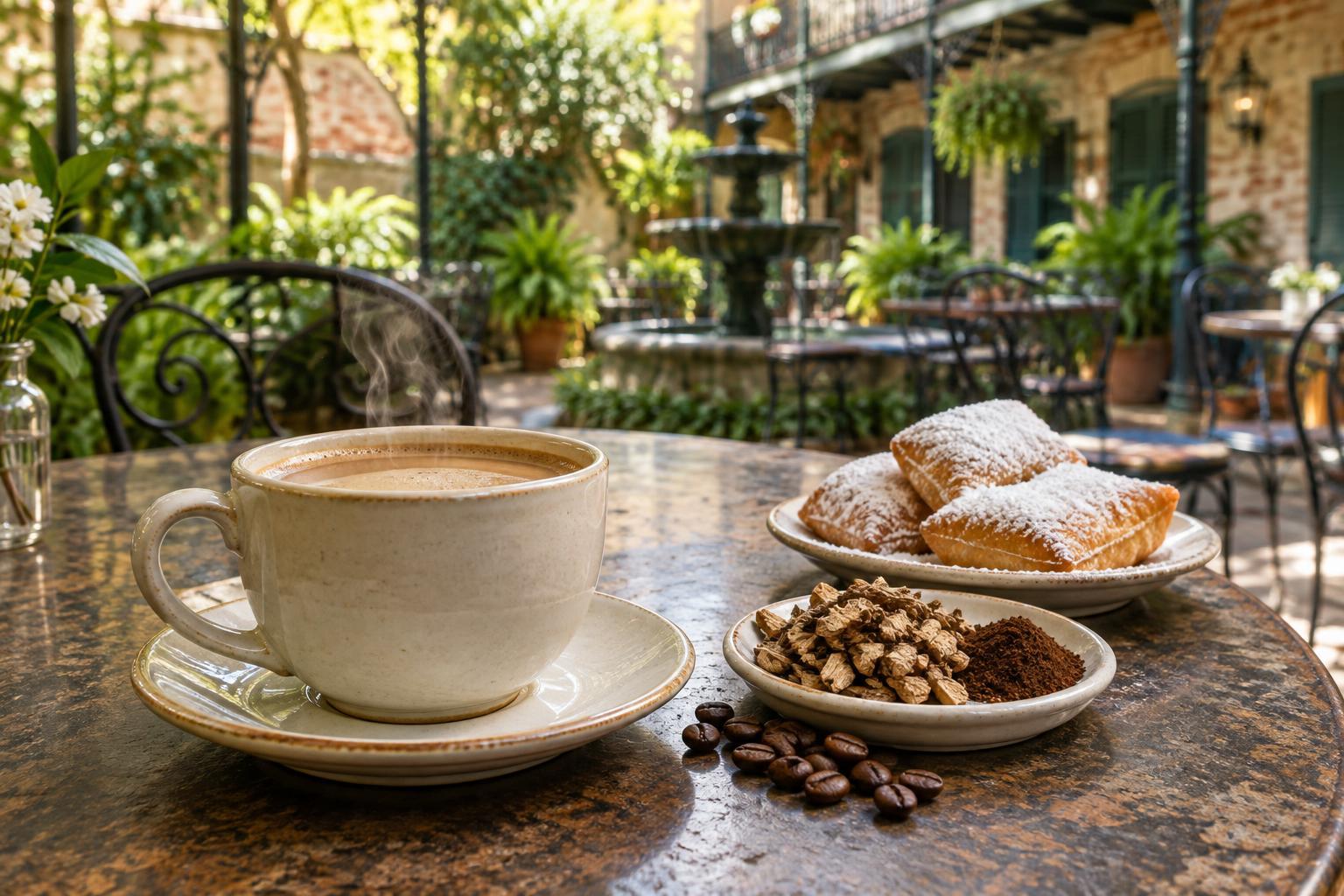
Chicory coffee is usually a blend of ground coffee and roasted, ground chicory root. Chicory is a plant, but the part used in the drink is the root: it is roasted until dark, then ground so it can be brewed alongside coffee. The resulting cup still tastes like coffee, with an added earthy, toasted note.
The distinction matters if you are deciding what to order or buy. Chicory root itself does not contain caffeine, but a coffee-and-chicory blend generally does because it contains coffee. The proportion of each ingredient varies, so one blend may taste only subtly different from regular coffee while another puts chicory’s character front and center.
How chicory became a New Orleans tradition
Adding chicory to coffee has roots beyond New Orleans. It was used in parts of Europe as a way to stretch coffee supplies, and the practice became closely associated with the city’s coffee culture. Accounts often connect its local popularity to periods when coffee was scarce or costly, including the Civil War era. That is a useful part of the story, though no single shortage explains every cup served since.
In New Orleans, the blend lasted well beyond any need to make coffee go further. It became a taste people recognized and sought out, especially as part of café au lait. Not every New Orleanian drinks chicory coffee, and not every café serves the same blend. Think of it as a durable local tradition rather than a rule about how everyone takes their coffee.
What chicory tastes like
Roasted chicory can bring woody, nutty or slightly bitter notes to a cup. Some drinkers notice a hint of sweetness in its aroma, even when the drink has no added sugar. It can also make the coffee seem fuller and darker. Exactly how much you notice depends on the coffee beans, the amount of chicory, the roast and the brewing method.
If you usually drink light-roast coffee for its bright, fruity flavors, a strong chicory blend may feel like a change of pace. If you prefer a robust cup that stands up to milk, it may be an easy fit. Try a sip before adding sugar or cream: that gives you a clearer sense of what the chicory contributes. Then adjust the drink to your taste rather than worrying about a supposedly correct way to enjoy it.
How people serve it in New Orleans
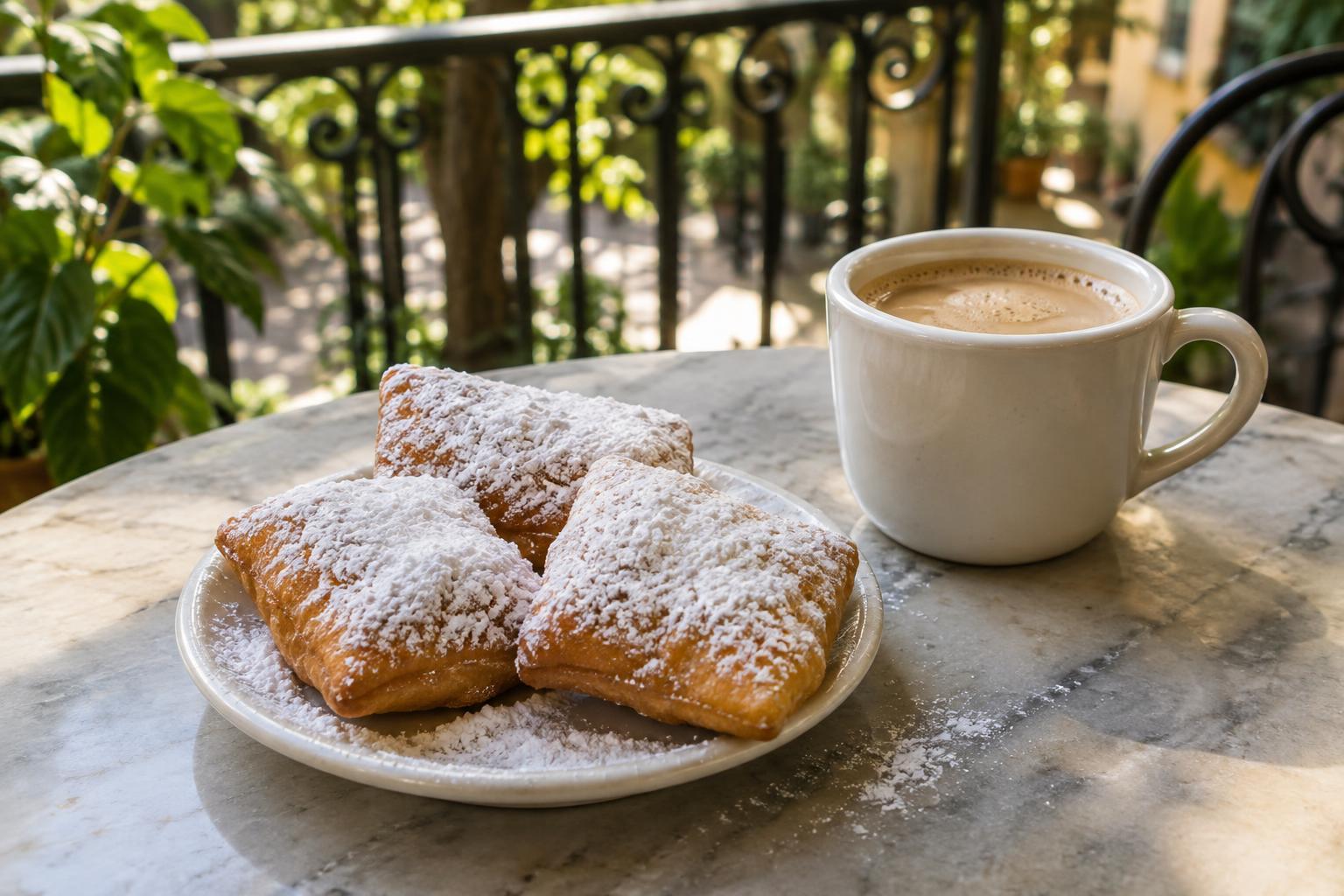
One familiar presentation is café au lait: coffee with hot milk. In a classic New Orleans-style version, a coffee-and-chicory blend is paired with scalded milk, which is heated until very hot but not boiled. The milk softens the blend’s bitter edge while leaving its roasted flavor noticeable. A café au lait alongside beignets is a well-known pairing; the unsweetened coffee balances the powdered sugar on the pastries.
Chicory coffee is not limited to café tables. People also brew it at home and serve it black, with milk or cream, or sweetened. Some drink it iced, particularly when a hot cup sounds less appealing. If you are ordering out, read the menu or ask whether a café au lait uses a chicory blend. The name of the drink describes coffee with milk, not a guarantee that chicory is included.
How to try it at home or while visiting
For a first home brew, look for a clearly labeled coffee-and-chicory blend and follow its package directions as a starting point. You can use a method suited to ground coffee, then change the strength on your next pot or cup. To make café au lait, heat milk gently and combine it with freshly brewed coffee in a ratio you enjoy. A roughly equal pour is a reasonable place to begin, not a requirement.
If you are visiting New Orleans, let curiosity guide you. Order a cup black if you want to identify the chicory’s flavor, or choose café au lait if you want to experience how it works with milk. Pairing it with a pastry can be enjoyable, but the drink stands on its own. The most useful takeaway is simple: chicory coffee is a distinctive blend with a long local association, and there is room to find your own way of drinking it.