Cemeteries as places of memory and design
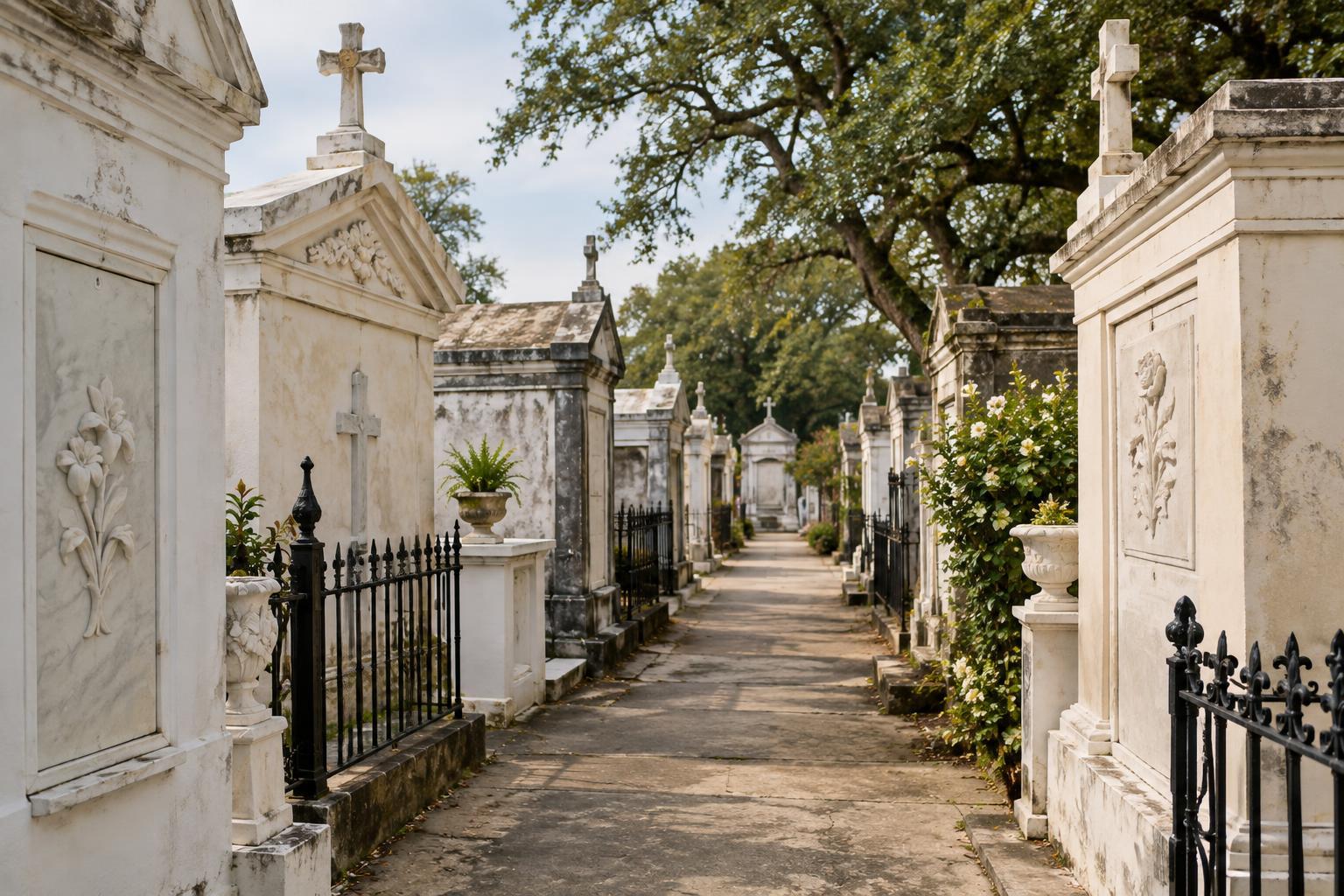
A walk through a New Orleans cemetery can feel like a walk among small buildings. Rows of family tombs have façades, cornices, doors and inscriptions; some stand beside more modest markers or communal burial structures. Their designs reflect choices made by families, craftspeople, congregations and cemetery operators over many generations. They are also active places of remembrance, not simply outdoor galleries.
Aboveground burial is often associated with New Orleans, where wet ground has influenced building practices. It is not the only form of burial in the city, however, and no single explanation accounts for every tomb. Space, custom, cost and the rules of a particular cemetery have also shaped what visitors see. Looking closely at those differences is more rewarding than treating every aboveground structure as the same kind of monument.
How a tomb tells its story
Many tombs combine masonry with a finished surface such as plaster or stone. A brick structure might be coated and painted to resemble a more elaborate building, while carved stone can give a nameplate, doorway or pediment its detail. Ironwork may frame a plot or add ornament. From a distance, a tomb’s silhouette can make the strongest impression; up close, lettering, repairs and changes in material reveal how it has been maintained or altered.
A family tomb can carry more than one generation of names, sometimes added in different lettering styles. Those layers make its history visible, but they do not always tell a complete story. An inscription may omit relatives, and a damaged or replaced plaque can obscure earlier work. Rather than assume every feature dates from the tomb’s original construction, notice how old and new elements sit together. That mixture is part of the cemetery’s living history.
Symbols to notice, without assuming too much
Angels, crosses, urns, flowers, wreaths and clasped hands appear in funerary art well beyond New Orleans. An angel may evoke guardianship or spiritual hope; an urn can suggest mourning or remembrance. A wreath might speak to honor or enduring memory. Such readings offer a starting point, not a universal code. The meaning of a motif can depend on a family’s beliefs, a maker’s design vocabulary or the conventions of its time.
Pay attention to where symbols appear. A carved flower on a nameplate can feel intimate, while a figure above a doorway shapes the whole façade. Repeated motifs across neighboring tombs may point to shared tastes or workshop practices, though appearance alone cannot establish who made them. Dates, names and inscriptions provide useful context when they are legible. Leave uncertainty intact where they are not; a visitor does not need to decode every image to appreciate the care that went into it.
Why conservation is more than cleaning
Cemetery structures face ordinary wear and difficult conditions. Rain can enter cracked masonry; moisture can loosen finishes or carry salts to a surface. Plants may shelter a tomb from sun while their roots or trapped debris create problems. Repairs also become part of a structure’s condition. A hard patch or incompatible coating can behave differently from older material, so a repair that looks tidy at first may not be the gentlest long-term solution.
Conservation begins with understanding what is there. A worn inscription, flaking finish or leaning marker may call for different responses, and some features should be stabilized rather than made to look new. Aggressive scrubbing, pressure washing and casual repainting risk erasing details or damaging fragile surfaces. Decisions about treatment belong with the people responsible for the site and, when appropriate, experienced conservation professionals. Visitors help most by leaving materials untouched, even when a loose fragment seems easy to put back.
Visiting with attention and respect
Cemetery access and visitor rules can vary, and they may change. Before going, check the cemetery’s current guidance on entry, hours, tours and photography rather than assuming a gate will be open. Once inside, stay on permitted paths, give mourners room and avoid sitting on tombs or leaning against ironwork. Do not move offerings, leave marks or enter an enclosure for a closer photograph.
A thoughtful visit need not be a hunt for the grandest tomb. Choose a few features to observe: the shape of a doorway, the contrast between carved and painted lettering, or the way a repaired wall meets older masonry. Read names quietly and remember that each monument marks people, not just a style. Seen this way, New Orleans cemetery art is both an expression of skilled design and a continuing responsibility to care for places of memory.