What to expect at a boil
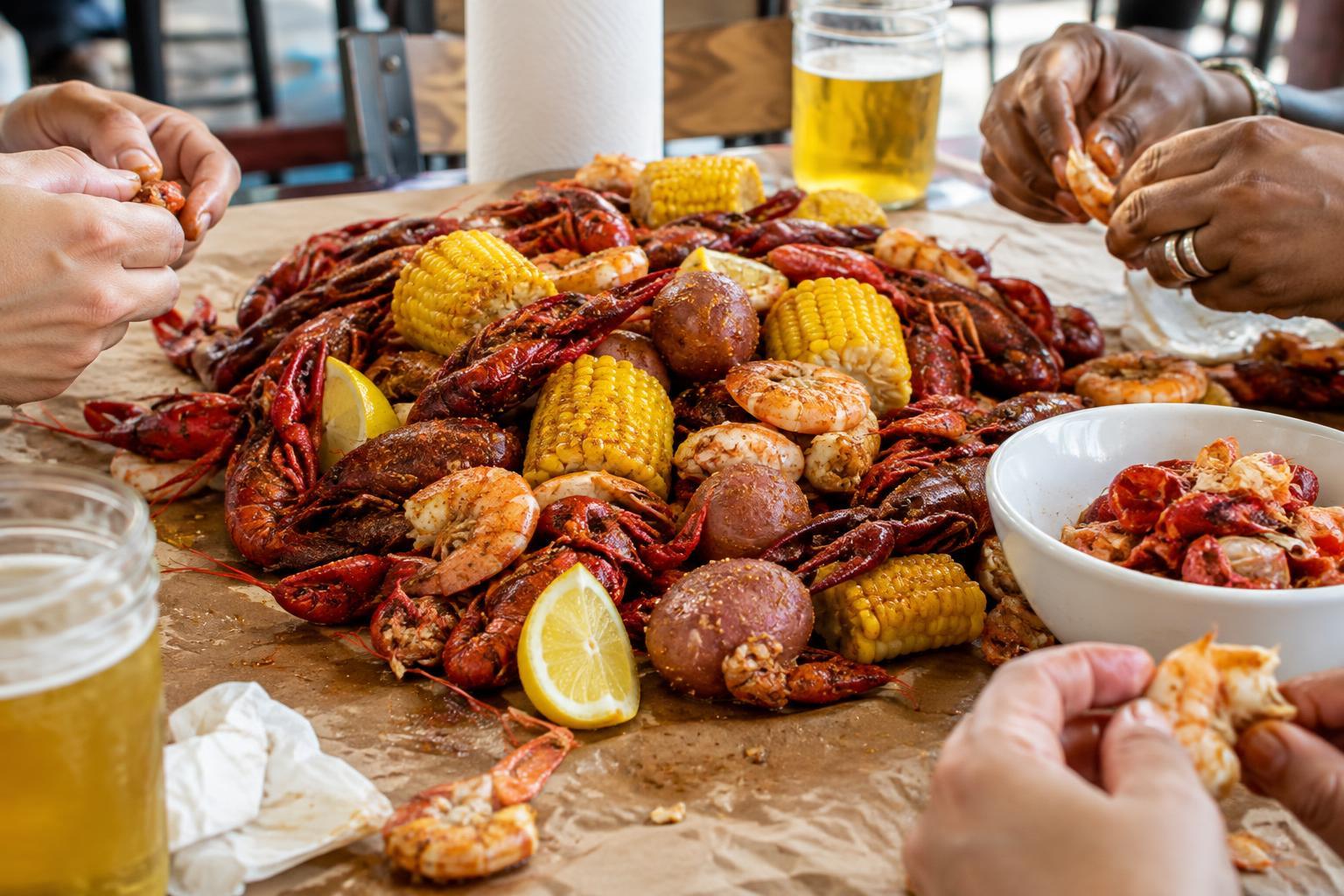
A New Orleans seafood boil is meant to be eaten with your hands and enjoyed at an unhurried pace. Depending on the gathering or restaurant, the main attraction might be crawfish, shrimp or crab. Corn, potatoes, sausage and other additions may be cooked alongside the seafood. Some tables are covered with paper for easy serving and cleanup; others use trays or platters. There is no single recipe or setup that represents every New Orleans boil.
The seafood usually arrives in its shell, seasoned from the cooking liquid and sometimes coated with extra seasoning afterward. That makes the weight on a menu different from the amount you will eat. It also means a meal can take longer than expected: peeling, talking and reaching for another piece are all part of the experience. If you are ordering rather than attending a home boil, check what comes with the seafood. Sides, sauces and minimum order sizes vary.
Choose portions by appetite, not just weight
For crawfish, think in pounds of whole crawfish, not pounds of tail meat. A couple of pounds can be a lighter order, especially with potatoes or other food on the table; someone making crawfish the entire meal may want several pounds. Size, appetite and how much time you want to spend peeling all matter. If you are unsure, start with a smaller order and add more if that is an option.
Shell-on shrimp generally require less peeling per bite than crawfish, so a smaller weight can feel like a substantial plate. Whole crabs are harder to judge by weight because sizes vary; asking how many crabs come in an order is more useful. For a group, consider a mix rather than assuming everyone wants the same seafood. Ask whether additions are included or ordered separately, and check the price and portion before committing to a large shared order.
Understand where the heat comes from
At a boil, “spicy” can mean more than one thing. Seasoning in the pot flavors the seafood as it cooks, while a post-boil coating can put pepper and salt directly on the shells and your fingers. Some cooks also let seafood rest in the seasoned liquid to deepen its flavor. Heat varies from kitchen to kitchen, and a batch may taste different from the one before it. If you have a low tolerance for spice, ask what can actually be adjusted before you order.
A sauce or dip on the side may be easier to control than seafood already coated in seasoning. Potatoes, corn or a plain side can provide a break between bites, though additions cooked in the same pot may be spicy too. Peeling before touching your drink, phone or face helps keep seasoning where you want it. Wash your hands well afterward; a napkin alone may not remove pepper or seafood juices.
Eat at your own pace
To eat a crawfish, separate the tail from the head, loosen the first sections of shell and pull out the tail meat. Some people draw juices from the head; it is optional, not a test of whether you are doing it right. Peel shrimp much as you would any shell-on shrimp, watching for sharp tails. Crabs take more patience and may call for a cracker or pick. If tools are provided and you are unfamiliar with them, it is fine to ask someone at the table to demonstrate.
Keep shells in the designated discard area rather than mixing them with food you still plan to eat. Share space and tools, pass additions around, and leave room for people who peel more slowly. A boil can be lively and messy, but it need not be a race or a performance. Enjoying a modest portion and stopping when you are full fits the occasion just as well as ordering another round.
Plan for the practical details
Before going, check the day’s seafood availability, portion sizes and ordering format with the host or restaurant. Crawfish availability in particular changes through the year, and a place known for boils may not offer every type of seafood on every visit. If someone in your group has a shellfish allergy or another dietary restriction, ask about ingredients and shared cooking or preparation equipment rather than assuming a side dish is separate.
Wear something you would not mind getting a little seasoning on, and make sure the table has napkins, a place for shells and access to handwashing. Those small preparations let you focus on what makes a boil memorable: good food, conversation and the pleasure of taking your time.