What makes a New Orleans praline distinctive
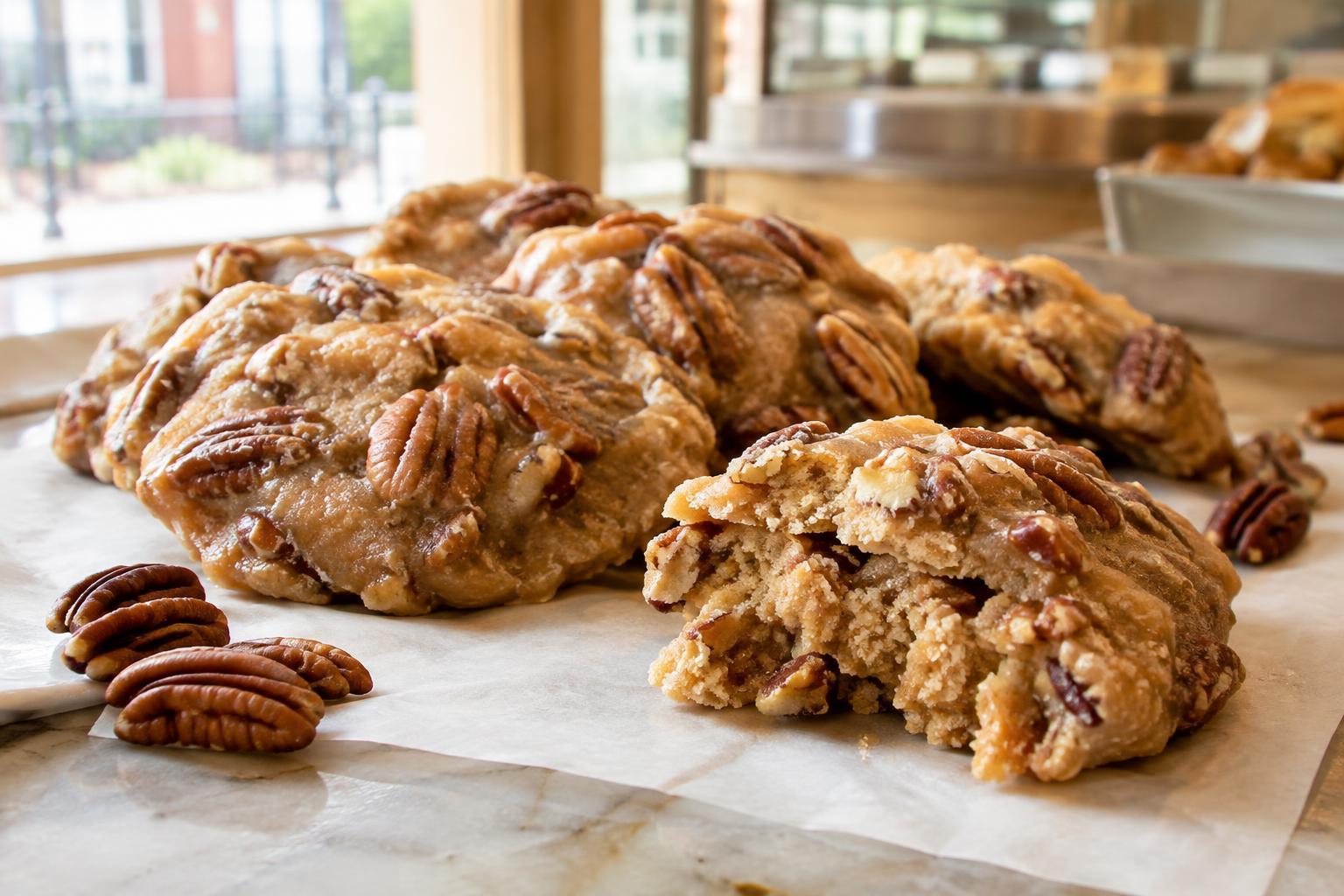
In New Orleans, a praline is usually a round, free-form candy made with pecans and a cooked sugar mixture. It is not the crisp, nut-coated sweet that the word may bring to mind elsewhere. A local-style praline is generally opaque and creamy-looking, with pecan pieces visible throughout. It should hold its shape in your hand, then give way when you bite it.
Pralines belong as much to the city’s food traditions as to its candy counters. Recipes and methods differ among families and makers, so there is no single color, size or degree of sweetness to look for. You may hear the name pronounced in different ways, too. The useful question for a visitor is not whether a praline matches one ideal version, but whether its ingredients and texture appeal to you.
The ingredients behind the flavor
Pecans are the defining nut in a New Orleans-style praline. Around them, the basic mixture commonly includes sugar, a dairy ingredient such as milk, evaporated milk or cream, and often butter. Some makers use brown sugar alongside white sugar for a deeper, caramel-like note. Vanilla and a little salt may round out the flavor. Variations can change the taste and feel without making the candy any less recognizable.
The way the mixture is cooked and stirred matters as much as the ingredient list. Sugar is dissolved and heated, then worked as it cools so that it forms many small crystals rather than a hard, glassy sheet. The candy is typically portioned onto a surface where it sets into individual pieces. That process helps explain why two pralines made with similar ingredients can feel quite different: one might be soft and fudgelike, another drier and more crumbly.
If you have a food allergy or dietary restriction, ask about ingredients rather than relying on appearance. Pecans are obvious, but dairy may not be; shared preparation areas can matter as well. A maker’s answer is more useful than a guess based on the candy’s color.
How a good praline should feel
A satisfying praline often has a slight resistance at first bite, followed by a tender, grainy melt. “Grainy” here does not necessarily mean gritty: fine sugar crystals give the candy its characteristic body. Pecans add a firmer bite and a toasted or buttery contrast to the sweetness. Depending on the recipe, a praline may be moist enough to seem almost fudgy or dry enough to break neatly at the edge.
Judge texture with some flexibility. A uniformly smooth candy may be delicious, but it will feel different from a traditional crystallized praline. A piece that is so hard you struggle to bite it, or so sticky it smears like syrup, may not offer the texture you expected. Neither color alone nor the amount of visible pecans can tell you how it will eat; if samples are offered, tasting one is the clearest guide.
Choosing a fresh praline
Start with what you can observe. A praline that is intact, smells pleasantly of sugar and nuts, and has a clean-looking surface is a promising choice. Ask when the batch was made and how the pieces have been kept. A shop that can explain its preparation and packaging gives you more to go on than an uncovered display does. If the candy is wrapped, check that the wrapper is sealed and that the piece inside has not been badly crushed.
Freshness is not always visible. A pale, matte surface can be normal for a crystallized praline, and a crumbly edge does not automatically mean it is old. On the other hand, a stale or unpleasant nut smell, signs of moisture inside the package, or an obviously off flavor are reasons to pass. Heat and humidity can alter texture, so a praline that has spent time in a warm bag may feel softer or stickier than it did at the counter.
If you are buying several, try one before committing to a box. That lets you choose the style you actually enjoy rather than treating every praline as interchangeable. Ask how the maker recommends storing them, especially if they are gifts.
Taking them home
Keep pralines protected from heat, direct sun and excess moisture. Individual wrapping helps prevent pieces from sticking together and makes them easier to share. For a short trip, a cool, dry spot in your bag is generally a better choice than a hot car or a place where the package may be crushed. Follow any storage guidance supplied by the maker, since recipes and packaging vary.
Pralines are best approached as a small taste of a larger tradition, not a test with one correct answer. Compare a soft piece with a firmer one, notice how the pecans balance the sweetness, and choose the version you would happily eat again. That attention to texture and flavor will serve you better than searching for a particular shade or shape.