What makes an object a throw?
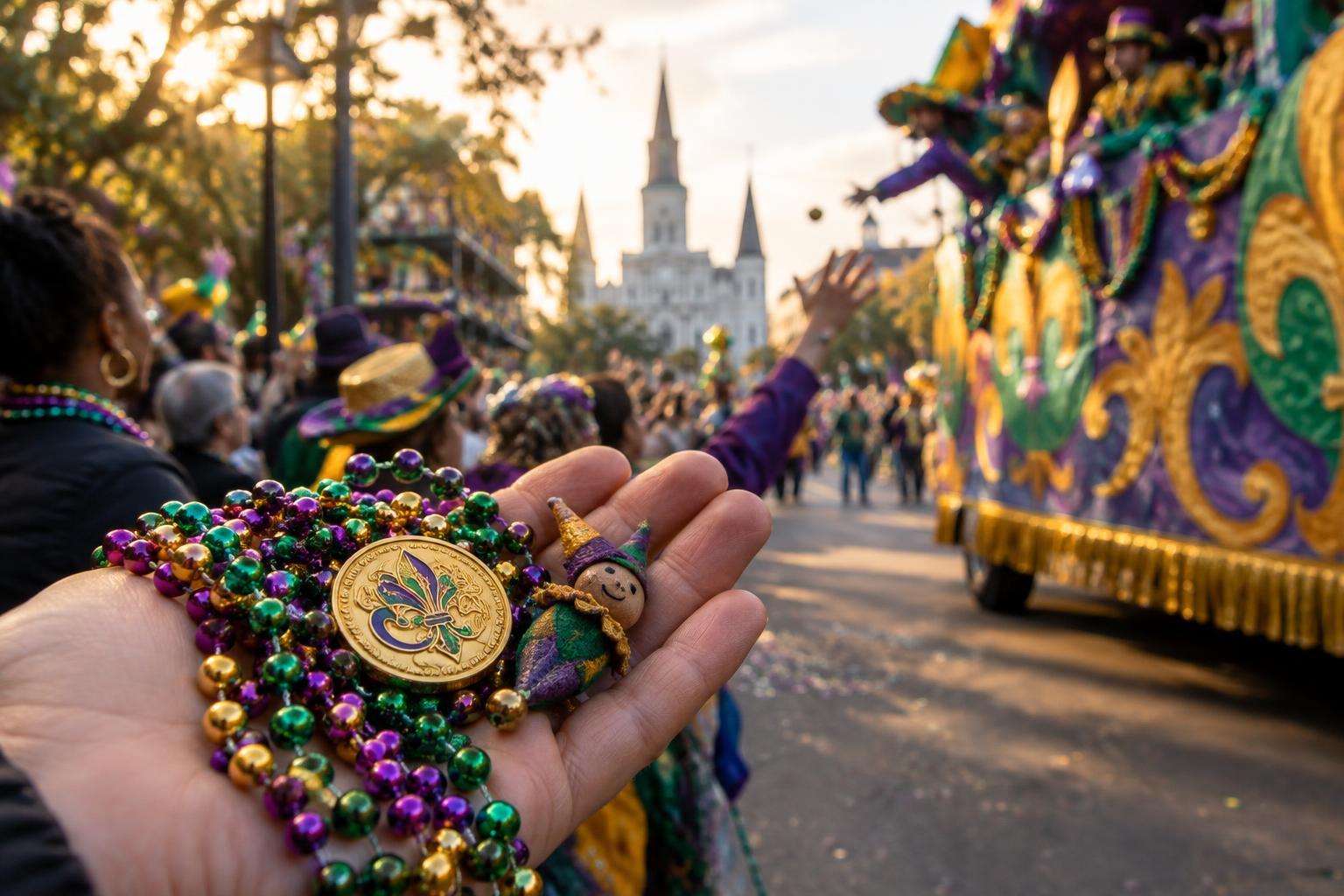
At a New Orleans Carnival parade, a throw is an object handed or tossed from a float to someone along the route. Beads may be the best-known example, but riders also distribute cups, doubloons, small toys and items made for a particular krewe. Some are plentiful; others take more preparation or carry a special connection to the group giving them away.
The appeal is not only the object. A rider makes eye contact, a spectator calls out, and something passes between them. For a moment, the parade becomes a shared encounter rather than a spectacle viewed from a distance. That exchange helps explain why an inexpensive cup can become a treasured reminder of a day spent with friends or family.
From keepsakes to parade customs
The custom of distributing small favors developed alongside New Orleans’ organized Carnival parades. Early throws included items such as trinkets and glass beads. As materials and manufacturing changed, plastic beads became common, making it easier to supply large crowds. Throws expanded well beyond necklaces: a rider might offer an object bearing a krewe emblem, a parade theme or a design created for a particular season.
There is no single throw that represents all of Carnival. Parades are organized by different groups, often called krewes, with their own histories, aesthetics and ways of participating. Looking closely at what a krewe gives away can reveal how it presents itself. A mass-produced bead, a decorated keepsake and a hand-selected gift may all belong to the same celebration, but they carry different kinds of effort and meaning.
Colors, emblems and coveted catches
Purple, green and gold are strongly associated with New Orleans Carnival. They are often explained as representing justice, faith and power, respectively. That familiar interpretation is useful context, though it does not mean every bead in those colors was designed as a symbolic statement. Colors can also signal festive dress, a krewe’s identity or simply a rider’s choice of throw.
Doubloons—typically coin-like parade tokens—offer a more specific keepsake. Their designs may identify a krewe or reflect a theme, inviting people to notice details after the parade has passed. Cups serve a similar purpose in an everyday form: they can remain in a kitchen long after the last bead has been put away. Other throws become sought-after because they are distinctive or require individual attention. The decorated coconuts associated with Zulu are a notable example, valued for their connection to that krewe’s tradition. No catch, however, is worth pushing someone aside or entering a float’s path.
The people and traditions behind the objects
Throws can be an inviting way to learn about Carnival, but they are only one part of it. Floats, costumes, music, neighborhood gatherings and the work of krewe members all shape a parade. New Orleans Carnival also includes traditions with different histories and forms of expression. Mardi Gras Indians, for example, are known for intricate suits and community practices; their art should not be reduced to the familiar float-and-bead model.
It is worth remembering, too, that Carnival’s public joy exists alongside a complicated history of access and exclusion. Different communities have built their own organizations and celebrations. Rather than treating every parade as interchangeable, read the name on a throw, notice who is presenting it and learn what you can about the group. The souvenir can become a starting point for curiosity, not a substitute for the larger story.
How to enjoy throws without losing the spirit
If you are attending a parade, leave room for children and other spectators to see. Watch for objects coming from above, keep your hands away from moving floats and follow the directions of parade workers. A wave or a cheerful request is enough; there is no need to compete for every item. If a rider appears to be offering something to a particular person, let that exchange happen.
Afterward, choose what you genuinely want to keep. A few objects with a story behind them often mean more than a bag of beads. Check local options before donating or recycling unwanted throws rather than assuming every material belongs in a household recycling bin. Carnival throws are gifts of a moment: enjoying them thoughtfully honors both the people who made the celebration and those sharing the street with you.