Two traditions, not two names for the same thing
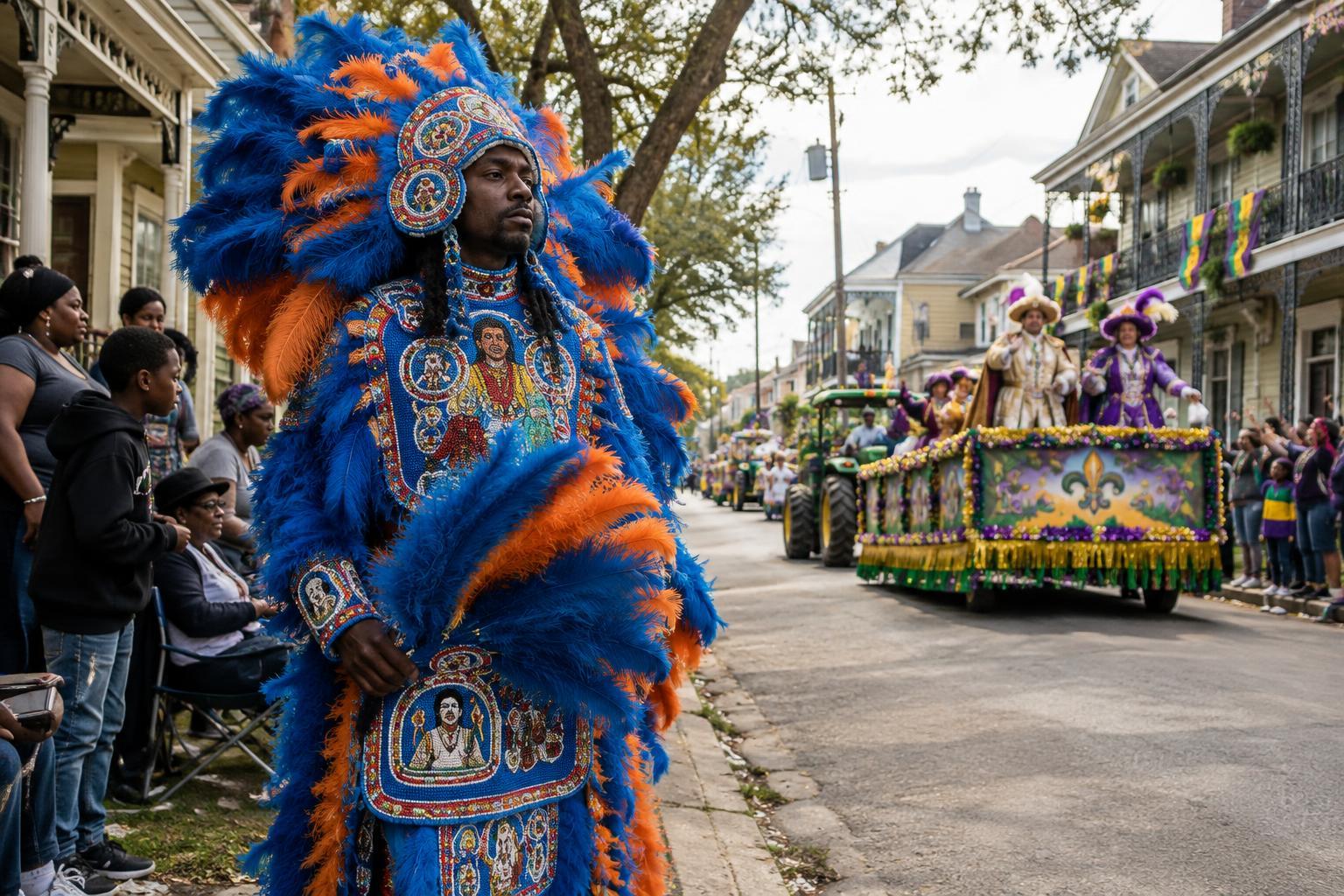
New Orleans Carnival brings many kinds of public celebration into view. A visitor might encounter a krewe parade with floats and throws, then see photographs of Mardi Gras Indians in elaborate, hand-sewn suits and assume these are versions of the same custom. They are distinct traditions. Each has its own practices, social relationships and meanings, and neither can be explained by a single event on a visitor’s calendar.
Carnival krewes are organizations that stage activities such as parades and balls. Mardi Gras Indian groups, often called tribes, are part of a Black New Orleans masking tradition centered on community, artistry, music and encounters between groups. Both may be visible during Carnival, but sharing a season does not make their histories or purposes interchangeable.
What is a Carnival krewe?
A krewe is a group organized around Carnival activities. Many people know krewes through street parades: members ride or walk along a route, present a theme, wear costumes or masks, and may hand out throws to spectators. Krewes can also hold balls and other gatherings. Their size, membership practices, budgets and approaches to public participation vary widely.
The parade is often a krewe’s most visible work, but it is not the whole organization. Members and supporters may spend months preparing designs, costumes and events. Nor does the word “krewe” tell you everything about a group’s character. Some are long established; others are newer. Some emphasize spectacle, while others use humor, neighborhood identity or artistic experimentation. It is more useful to learn about a particular krewe than to assume all krewes operate alike.
What is Mardi Gras Indian masking?
Mardi Gras Indian masking is a tradition developed and sustained within Black New Orleans communities. Maskers create striking suits featuring intricate beadwork, feathers and sewn images or patterns. The work can take many months, and a suit is more than a costume to be worn once and forgotten. It expresses a masker’s vision and skill, as well as relationships within a group and community.
Groups have their own names, roles and ways of carrying the tradition forward. You may hear titles such as Big Chief, but not every encounter will make sense through a simple list of ranks. Songs, chants, drumming and call-and-response are also central: this is a living practice of sound and movement, not just a visual art form.
The name “Mardi Gras Indians” is widely used within the tradition, but it should not be mistaken for a description of the maskers’ tribal citizenship. Accounts of the tradition often discuss Black–Indigenous histories and ideas of solidarity, while its origins and imagery deserve more care than a quick origin story can provide. When possible, listen to how individual maskers describe their own work rather than assigning one meaning to every suit or group.
Different ways of moving through the city
A large krewe parade typically follows an announced route and has a planned sequence of floats and participants. Mardi Gras Indian groups may appear in neighborhood streets, move on foot and meet other groups in encounters shaped by song, display and conversation. These encounters are sometimes described using words associated with competition, but visitors should not assume they are watching a fight. The exchange may express artistry, pride and respect.
Timing and location matter, yet neither tradition should be reduced to a guaranteed tourist appointment. Parade plans can change, and neighborhood masking does not necessarily offer the same kind of fixed viewing spot as a float parade. If you are planning a visit, check current information from organizers and local community sources rather than relying on an old route, an outdated event listing or an expectation that a particular group will appear.
How to look, listen and make room
Start by treating participants as people rather than as attractions. Give maskers and musicians room to move; do not touch a suit or step into a group’s path for a photograph. For a close portrait or extended filming, ask permission when there is an appropriate moment, and accept a refusal without argument. Keep children and companions close enough that they do not accidentally obstruct an encounter.
The same attentiveness improves a krewe parade experience: respect barriers and the people working along the route, and remember that the spectacle depends on substantial effort behind the scenes. For either tradition, learn a group’s name when you can and be specific about whose work you admire. The most rewarding approach is not to decide which celebration is more “authentic,” but to recognize the distinct people and practices that make New Orleans Carnival so varied.