Why tipping is part of the night
Live music can feel wonderfully spontaneous in New Orleans, but the work behind it is not. Musicians bring instruments, rehearse, travel, set up and perform, often in several kinds of spaces. A tip is a direct way to thank them for the music you enjoyed. It is also a useful habit for visitors: if live music is part of your plans, set aside some money for the people making it.
There is no single amount that fits every performance. A brief stop beside a street band is different from spending an entire set in a bar. Give what you comfortably can, and consider how long you listened, the size of your group and whether you made a request. You do not need to interrupt a song or make a show of giving. A quiet contribution at a natural pause is enough.
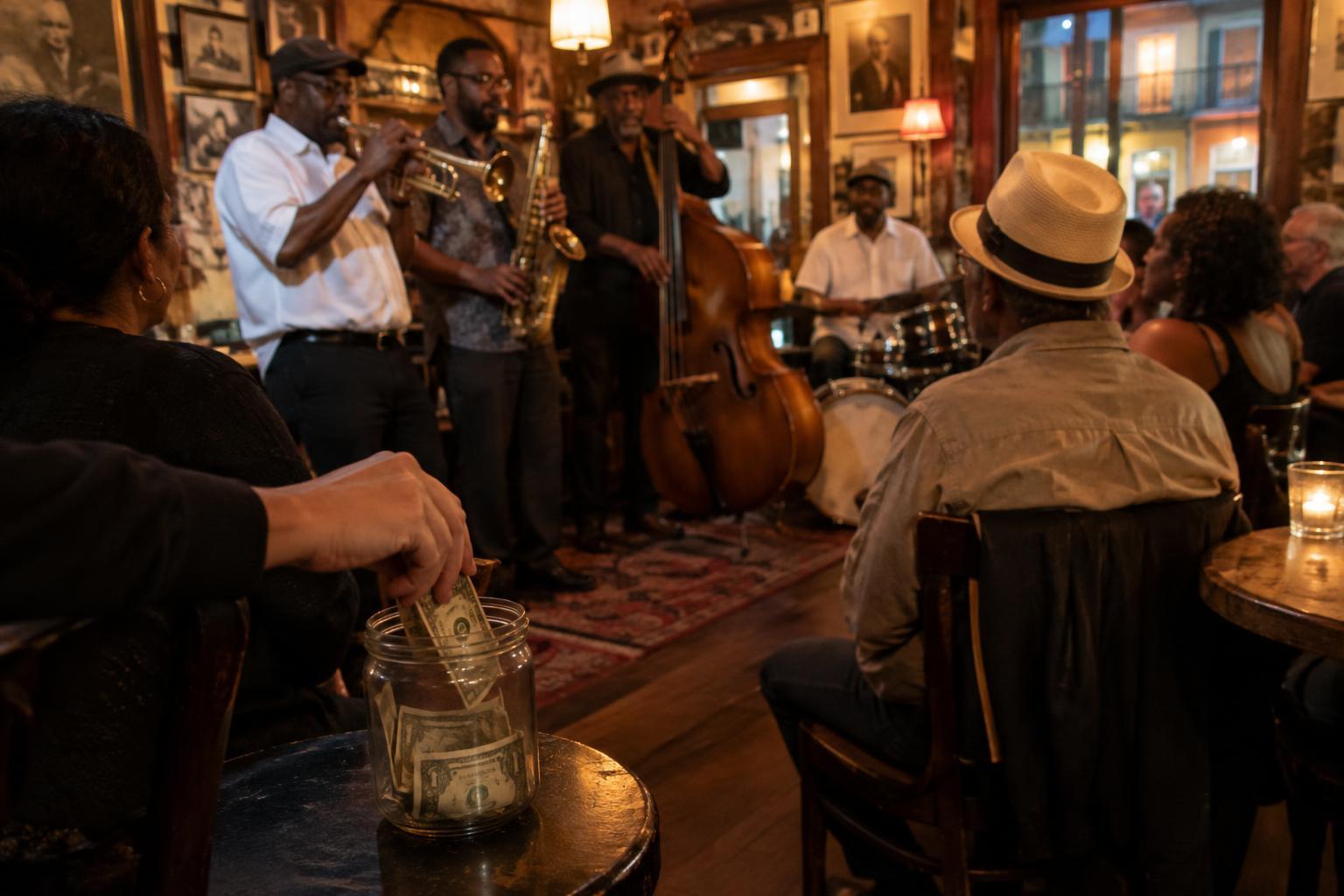
At clubs and bars: look for the jar
At a club or bar, check near the stage or bandstand for a tip jar or a sign explaining how to tip. If you cannot see one, ask a staff member or wait until the set ends to ask a musician. Put your tip where the performers direct you rather than assuming a jar at the bar belongs to the band. Staff tips and musician tips are usually separate gestures.
A cover charge, ticket or drink purchase should not automatically be treated as a musician tip. Those payments may support the venue and the performance in different ways, and arrangements vary. If you enjoyed the set and are able to give directly, do so. If the venue clearly says tips are included or offers other guidance, follow it.
Requests deserve extra consideration. If the band invites them, make a request politely and add a tip, particularly if you are asking for a specific song. Do not call out over an introduction or expect musicians to change their set. If they decline, enjoy what they have chosen to play.
On the street: listen, give and leave room
Street performances are easy to encounter while walking through the city. If you stop to listen for a while, contribute if you can. Look for an open case, bucket or clearly marked tip spot, and place your money there without stepping into the performance space. For a group that listens together, it is considerate for more than one person to contribute rather than leaving the entire gesture to one companion.
Keep sidewalks, doorways and routes through a crowd clear. Street musicians and their audiences share public space with residents, workers and other visitors. Watch where you stand, keep children close in a crowd and avoid touching instruments or equipment. If you take a photo or short video, tip first when possible, and respect a performer who asks not to be recorded. A recording does not replace supporting the performance you are enjoying.
You may not have money to give every time you hear a few notes while passing by. Keep moving if you cannot stop or contribute; there is no need for an elaborate apology. The more important distinction is between passing through and making a performance part of your outing.
Cash, digital tips and a little preparation
Small bills make tipping simple, especially where a performance is informal or a jar is being passed. Before heading out, consider setting aside a modest music budget separate from money for drinks, food, transport and venue admission. That way, you can respond to a set you love without searching your pockets at the last note.
Some performers display a digital payment option. Use only information the performer has visibly provided or confirms when you ask; do not assume an unrelated sign or account belongs to the band. Digital options can be convenient, but they may not always be available, so carrying some cash is helpful. If you have neither, attentive listening and sincere thanks are still more respectful than demanding a free request.
Let the performance guide your timing
Good tipping etiquette is also good audience etiquette. Wait for a break between songs before approaching a stage, keep conversations low when the room is listening and follow any house rules about photography or moving around. In a busy bar, you can place a tip in the jar as you leave rather than pushing toward the musicians mid-song.
New Orleans music happens in many settings, and each has its own rhythm. Notice the cues around you, support the artists when you can and give them room to do their work. A thoughtful tip, offered without interrupting the music, is a straightforward way to be a welcome part of the audience.