Start by noticing what kind of show you’ve entered
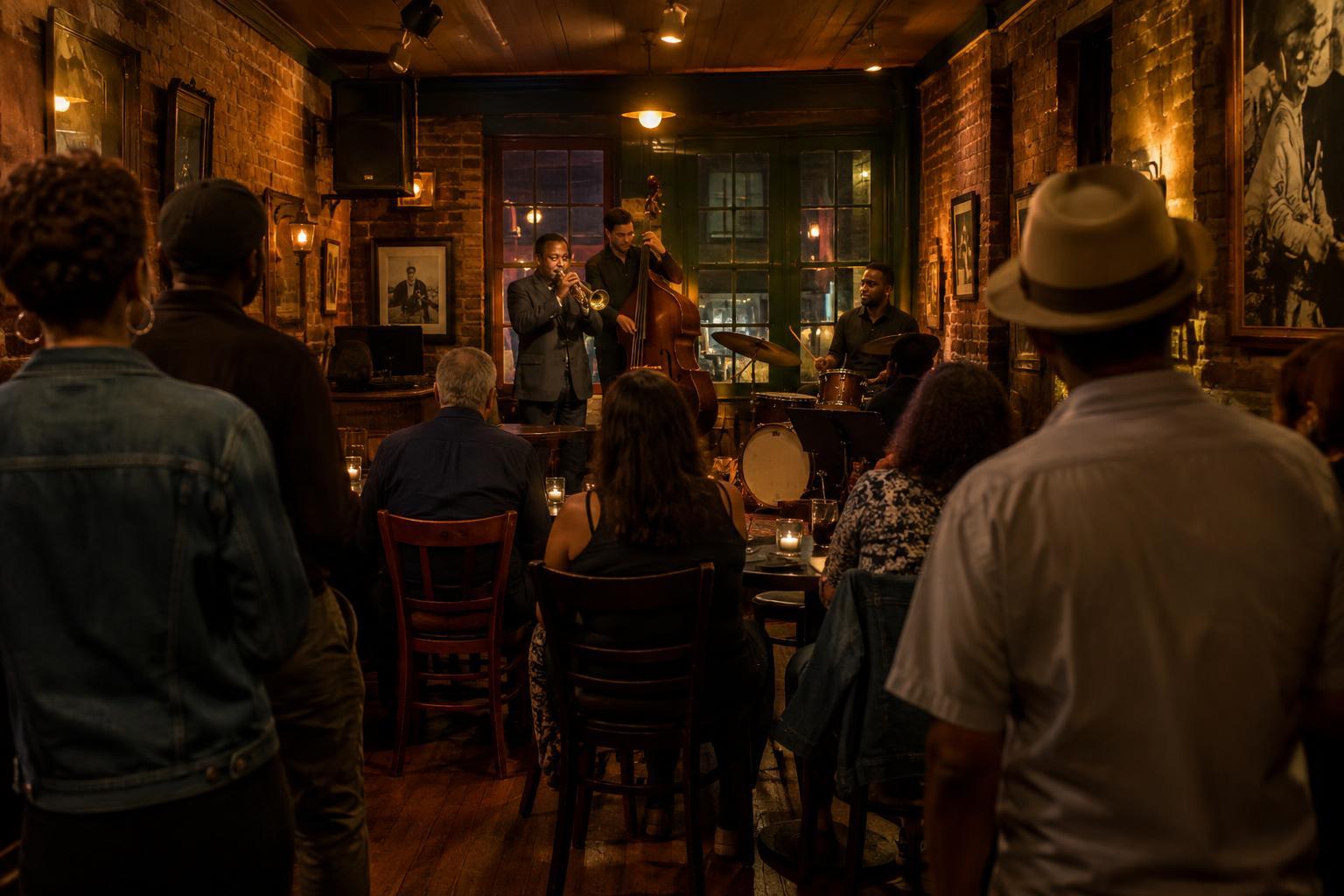
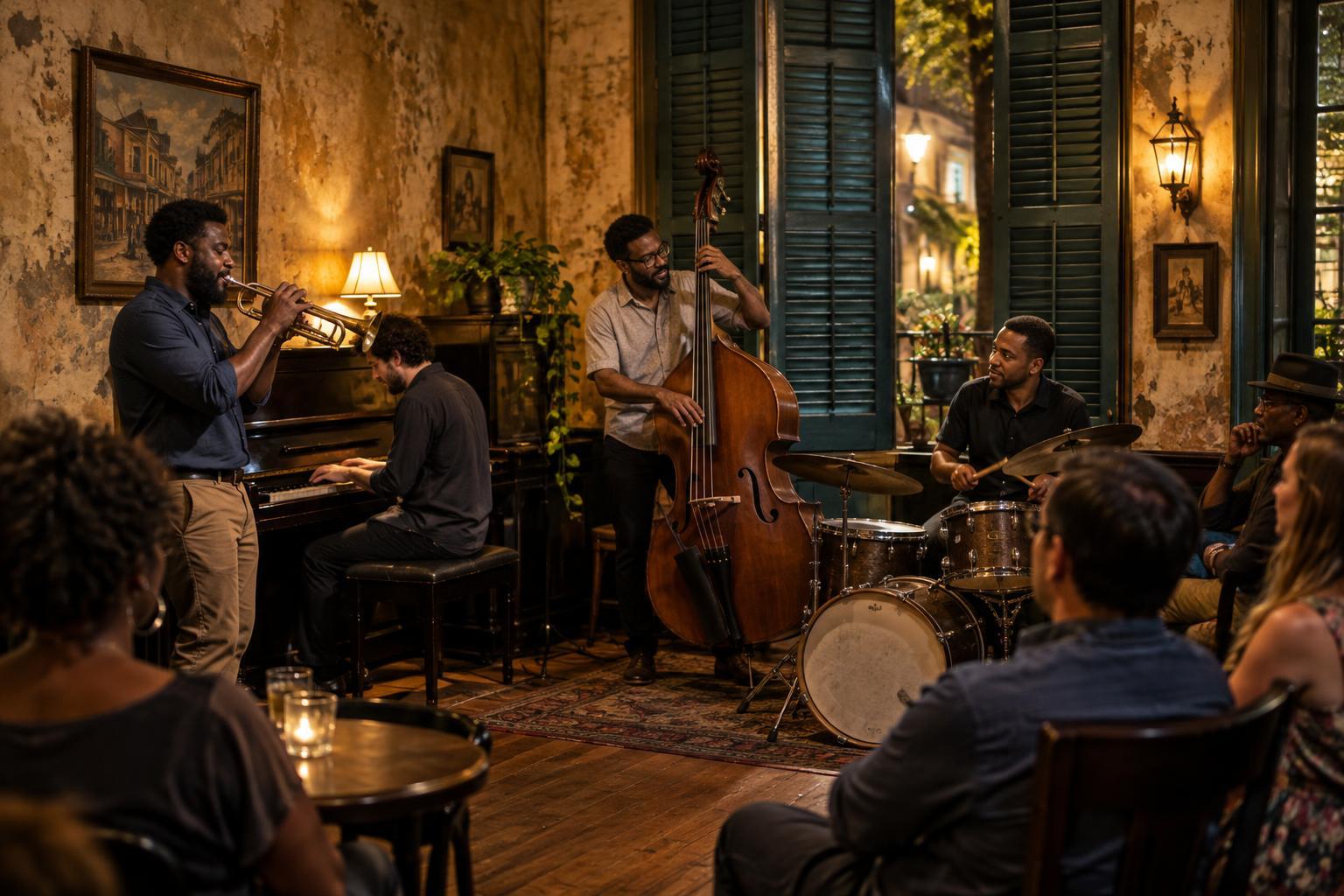
New Orleans music invites movement, but not every performance has the same expectations. A crowded dance floor, a seated listening room and a small bar with a band tucked into the corner all offer different amounts of space. Before moving toward the stage, take a moment to look around. Is there an open area where people are already dancing? Are chairs arranged for close listening? Are servers or musicians trying to get through a narrow aisle?
The answer can change during a set. A room may begin quietly and loosen up as the music builds, or a lively crowd may settle for a softer song. Let the music and the people sharing the space guide you rather than deciding in advance what the night should look like. If you are unsure, start at the edge of an existing dance area, where you can join in without blocking a view or a walkway.
Make room for other people’s night
Good dance-floor manners are mostly about awareness. Keep drinks and bags out of other people’s way, leave paths to exits and restrooms clear, and check behind you before stepping back. In a tight room, smaller movements often work better than wide turns or raised arms. If you bump someone, a quick acknowledgment and a little more space are usually more useful than a long explanation shouted over the band.
Dancing near strangers does not make them your dance partners. An invitation can be as simple as a smile or an outstretched hand, but wait for a clear welcome before moving closer or touching anyone. If someone turns away, keeps their distance or declines, give them room. The same courtesy applies when you are not dancing: avoid planting yourself in front of seated listeners or using their table as a place to set down your things.
Keep the performers’ space theirs
The musicians’ energy may feel close enough to touch, especially in an intimate room. That closeness is part of the pleasure of live music, not an invitation to step onto a stage, grab an instrument or interrupt a song. Give performers and staff space to work. Watch for cables, monitors, instrument cases and other equipment near the performance area; a small step in the wrong direction can create a problem for someone else.
You can show enthusiasm without demanding attention. Applaud, dance, respond to a musical moment and let the players lead the performance. If a band invites audience participation, follow that invitation rather than trying to create your own spotlight. Resist calling out requests over a quiet passage or holding up a phone where it blocks other listeners. A brief photo from your own space is less intrusive than filming continuously in someone’s line of sight.
Follow the rhythm without treating it as a test
There is no single way to dance to the range of music heard around New Orleans. Some songs invite a loose sway; others might make you want to step, clap or move with a partner. You do not need to know a particular dance to participate. Listen for the pulse, begin with movements you can control, and leave enough room to adjust as the song changes.
Notice how regulars and other dancers respond, but treat that as a cue, not a routine to copy or a performance to evaluate. People may have personal or cultural connections to the music that a visitor does not share. Enjoying a groove does not require claiming expertise. If you want to learn, observe with appreciation, and ask questions when conversation is welcome—not while someone is playing or dancing.
Let the experience extend beyond the dance floor
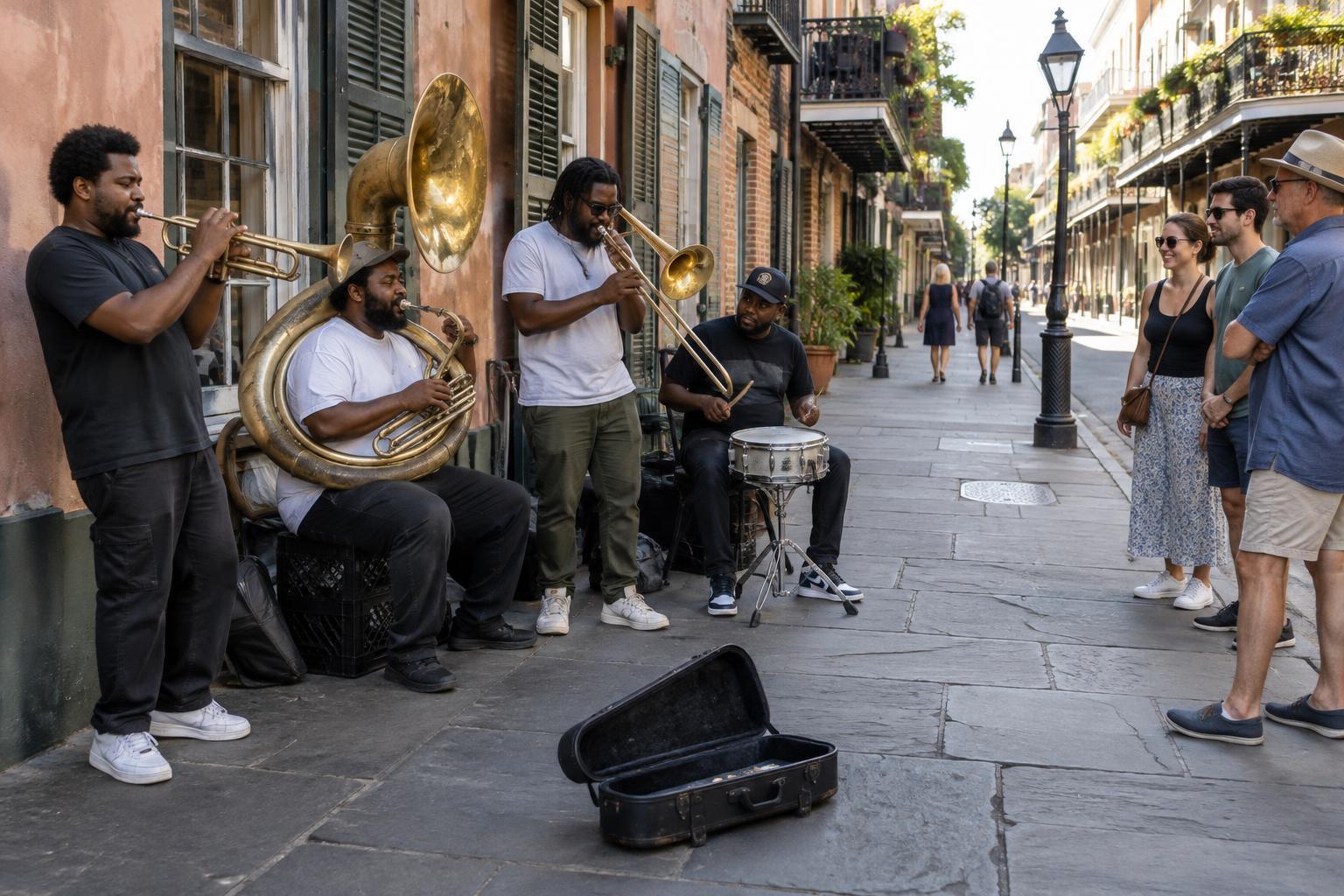
A memorable show is not measured by how close you get to the band or how much space you take up. Sometimes the best place to be is dancing at the back; sometimes it is listening carefully from a seat. If the room is packed, be willing to pause, move aside or let someone pass. If a performance has a cover or an opportunity to tip the musicians, consider it as part of supporting the music you came to hear.
Before heading out, check practical details directly with the venue, since schedules, admission arrangements and room setups can change. Once you arrive, the most reliable plan is simpler: listen first, notice who shares the room and move in a way that leaves the show better for everyone.