Start with the building you can identify
Before searching for a construction date, write down the building’s present street address, its cross streets and the side of the street it occupies. Take notes on distinctive features, such as a courtyard entrance, roofline or corner storefront. An address alone may not be enough: street names, numbering and lot boundaries can change, and one present-day address may cover more than one older structure.
Separate the questions you want to answer. When was the lot developed? When was the structure standing? Which parts of the visible building came later? Who owned it, and who lived or worked there? Those are related questions, but they may require different records. A building can be older than its current appearance, while a business associated with an address may have occupied only part of the property.
Build a timeline from more than one kind of source
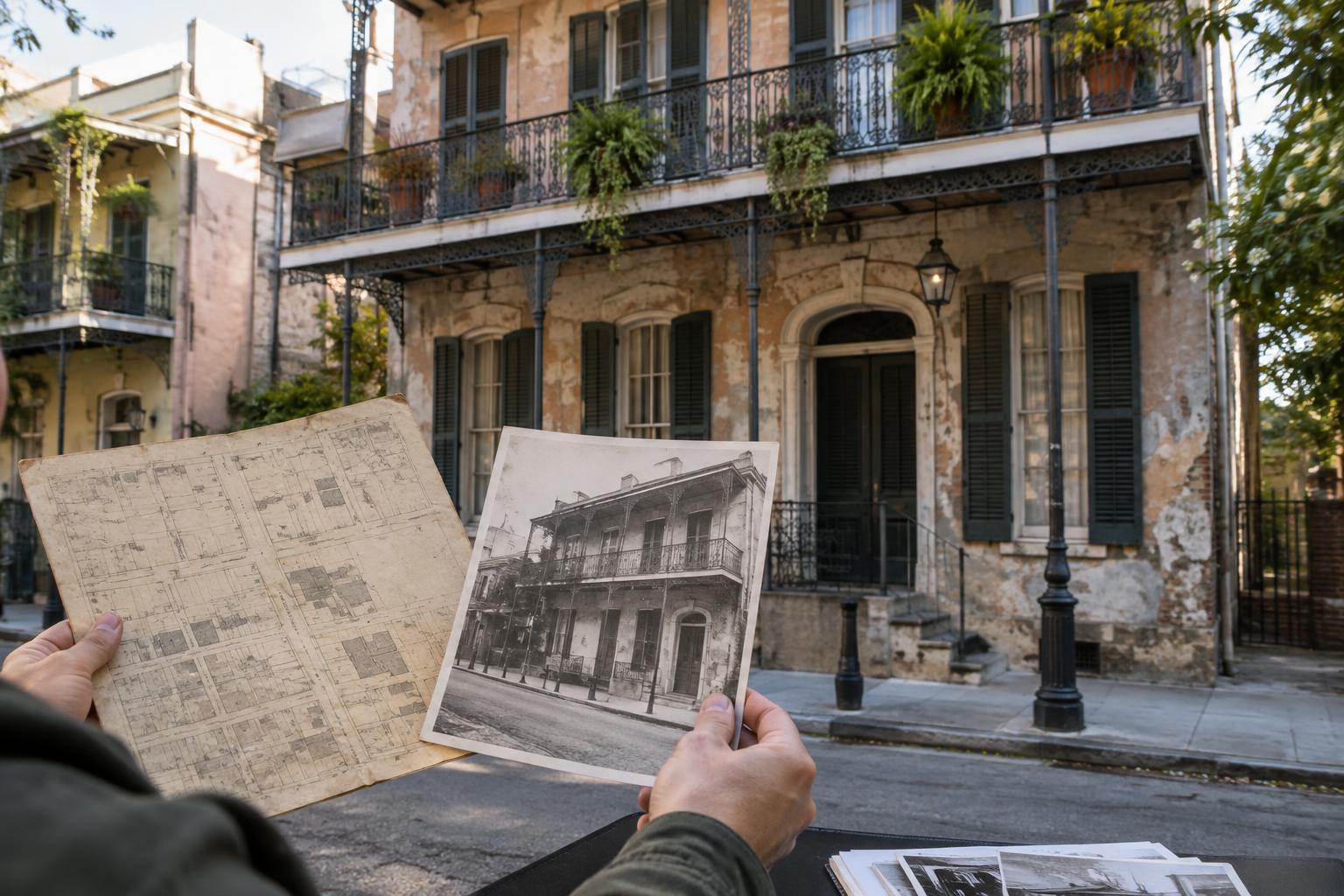
Begin with sources that help place the building in time: historic maps, dated photographs, city directories and property records. Fire insurance maps can show a building’s footprint, materials or use at the time a map was made. Compare editions where available, but do not assume that every drawn change represents a precise construction date. A photograph may confirm that a feature existed by a certain point without revealing when it was added.
Directories can help trace occupants and businesses, though an entry does not prove ownership or even describe the whole building. Deeds and other property records can establish transactions, but the history of a parcel is not automatically the history of every structure on it. Permits may document proposed work rather than prove that work was completed exactly as described. Record what each item actually says, along with its date and identifying details.
For New Orleans research, useful starting points may include the New Orleans Public Library’s Louisiana Division, The Historic New Orleans Collection and the Louisiana State Museum. Their collections and access procedures vary, so check the relevant catalog or contact the institution before planning a visit. Digital collections are convenient for a first pass, but a brief online description may not contain all the information in the underlying item.
Check preservation files without treating them as the final word
Preservation records can offer a head start on a building’s architectural history. Depending on its location and status, look for materials connected with the Vieux Carré Commission, the Historic District Landmarks Commission or a National Register of Historic Places nomination. Such files may point to previous alterations, photographs, surveys or a proposed period of significance. Confirm which property a file describes; a district designation does not mean that every building within it has the same age or individual designation.
Read these materials as evidence assembled for a particular purpose, not as an answer to every question. A survey may give an estimated date or use broad architectural terms. If its conclusions conflict with a dated map or photograph, note the difference and investigate rather than choosing the more appealing story. Likewise, architectural style is a clue, not proof that every visible element is original.
Look beyond owners and architectural labels
Buildings are also records of the people who used and maintained them. Once you have a working timeline, directories, newspapers, photographs and collection finding aids may help you identify residents, tenants, workers or businesses. Search variant spellings and earlier addresses when the evidence supports them. Be cautious about attaching a person to a building solely because they owned the land or appeared in a nearby listing.
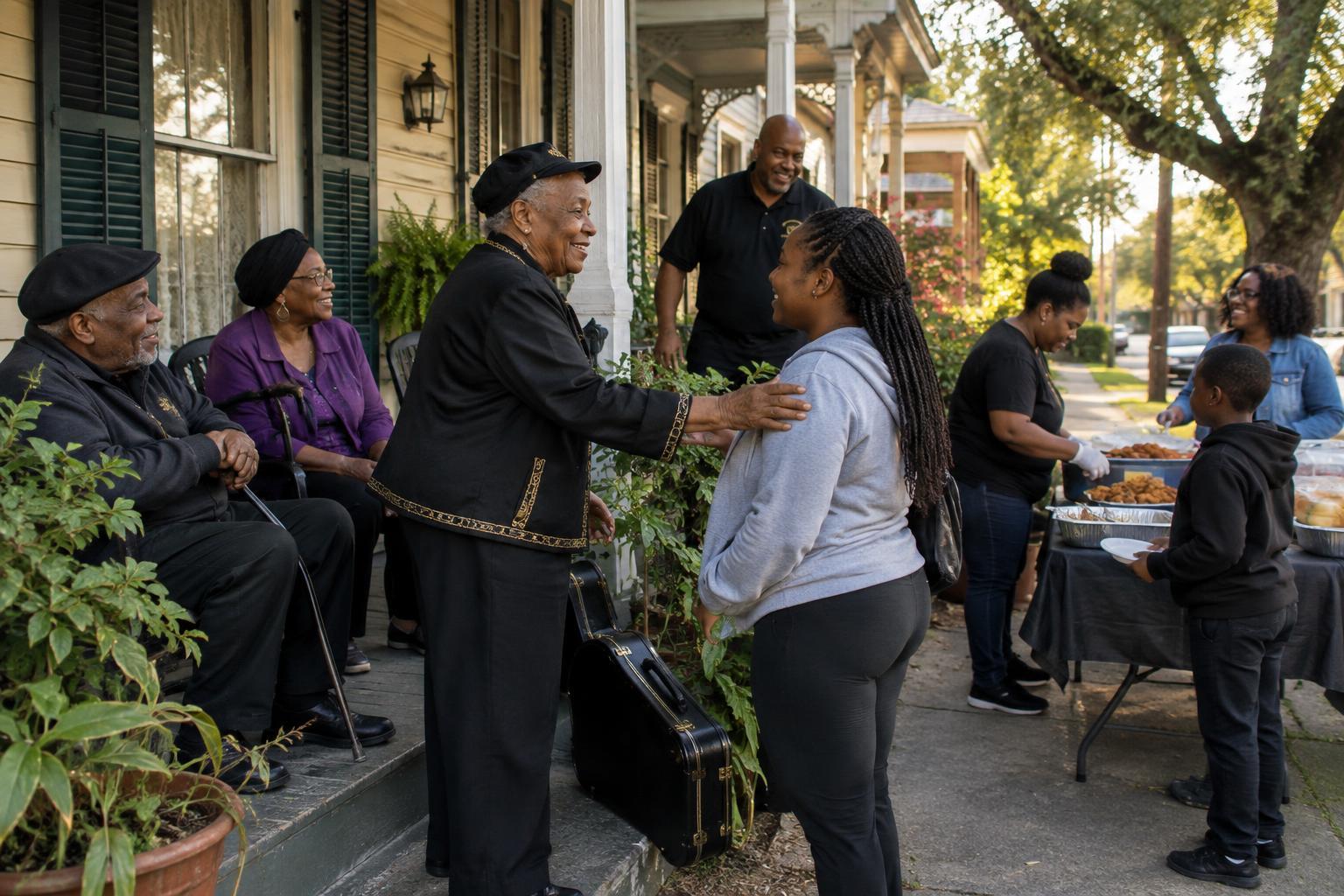
New Orleans histories can be flattened when research focuses only on prominent owners or a picturesque façade. Consider whose lives are visible in the surviving records and whose are harder to trace, including people whose labor shaped a property without being named in a deed. Oral histories and family accounts can add valuable context, especially about use and community meaning, but identify them as recollections and compare specific claims with dated records when possible.
Write a history that shows its limits
Keep a simple research log with the source title, date, collection or record identifier, and the claim each source supports. A timeline can distinguish confirmed events from estimates: “shown on a map by this year” is more precise than “built in this year” when the map is your earliest evidence. If two sources disagree, explain the disagreement rather than hiding it.
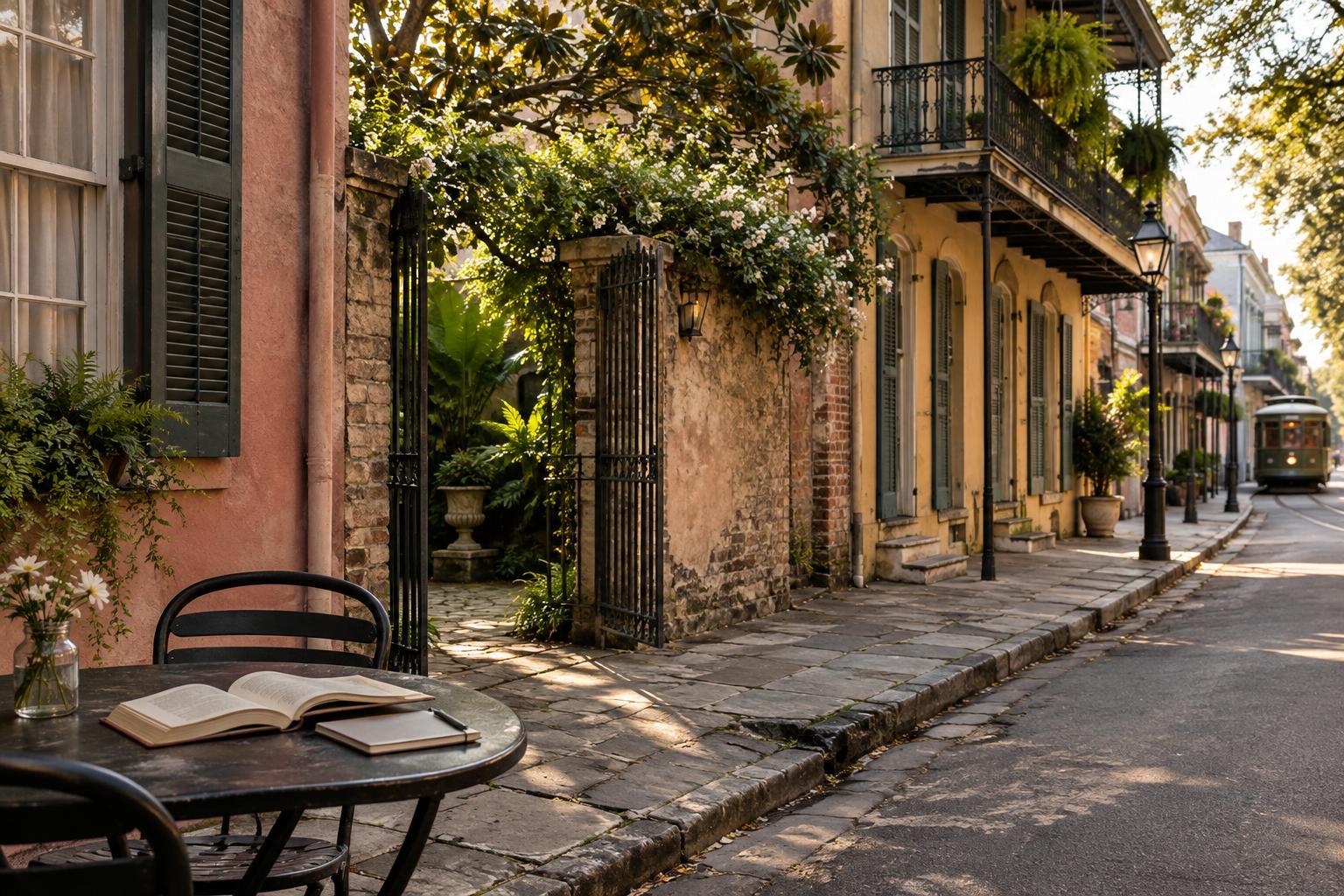
The strongest short account may end with an open question. You might establish that a structure predates one photograph, that its storefront changed later and that a particular business occupied it for a documented period—without knowing who designed it. That is still a useful building history. It lets readers appreciate New Orleans’ layered streetscape without turning a plausible detail into a fact.