Start with the style, not the sauce
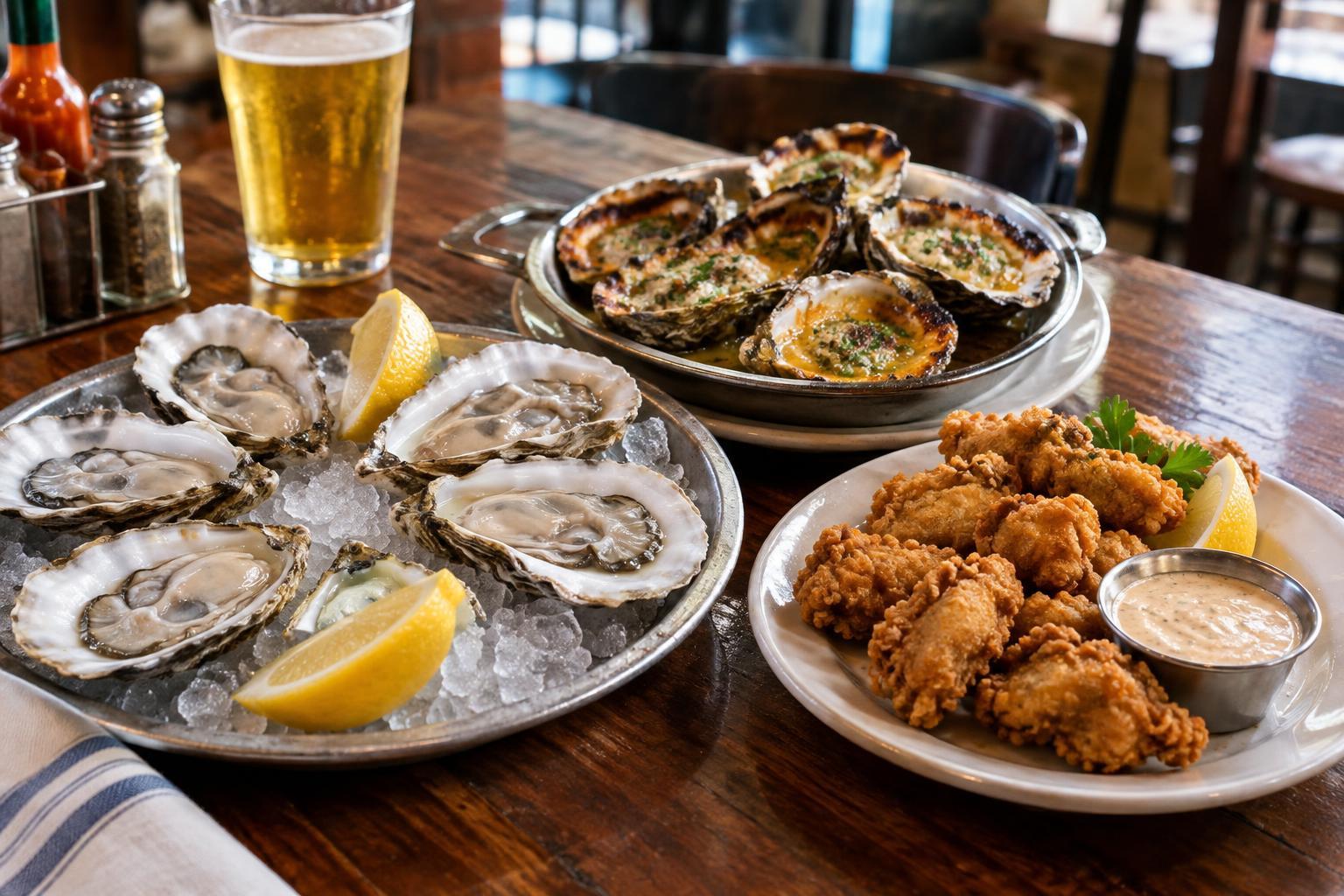
Oysters appear on New Orleans menus in forms that can feel like separate dishes. Raw oysters are served cold, usually on the half shell. Chargrilled oysters arrive hot on the shell with a rich topping. Fried oysters are removed from the shell, coated and cooked until crisp. If you are choosing for a group, it helps to ask first whether everyone wants the briny taste of the oyster up front or would rather have it alongside butter, seasoning or crunch.
Portions and preparations vary by restaurant. Raw oysters may be listed by the half-dozen or dozen, while chargrilled oysters often come as a plate to share. Fried oysters might be an appetizer, a platter or the filling of a po’boy. Read the menu description rather than assuming that two orders of “oysters” will be comparable in size or richness. If you are unsure, ask how many come with an order and whether the dish is meant as a snack or a meal.
Raw oysters: keep the first bite simple
A raw oyster on the half shell offers the clearest taste of the oyster itself. It is typically served chilled, with its natural liquid still in the shell. Lift it with the small fork if one is provided, check that it is free of shell fragments, and try one without a heavy dose of sauce. You can then decide whether you prefer lemon, hot sauce, cocktail sauce or another accompaniment offered at the table. There is no required way to dress it.
If the menu lists more than one oyster, ask your server what distinguishes them. Size, salinity and flavor can vary, and a short description is more useful than guessing from a name. You can also ask whether the oysters are served freshly shucked. Prices and availability may change, so check the menu before planning around a particular selection.
Raw oysters carry a food-safety risk that appearance, smell, lemon juice and hot sauce cannot rule out. People who are pregnant, immunocompromised or otherwise advised to avoid raw seafood should choose a fully cooked option instead. If you have a shellfish allergy, tell the staff before ordering; switching to a different dish does not necessarily eliminate the possibility of shared equipment or contact.
Chargrilled oysters: expect heat and richness
Chargrilled oysters are cooked on the shell, commonly with a butter-based topping, seasoning and cheese. They come to the table hot, sometimes with bread for catching what remains in the shells. The topping is part of the appeal, but it can be substantial: one order can feel much heavier than the same number of raw oysters. Let the shells cool enough to handle, and use the provided fork rather than trying to drink from a hot shell.
If you are ordering chargrilled oysters because you want cooked seafood, ask how the kitchen prepares them rather than assuming every version is cooked to the same degree. Also check the listed ingredients if dairy or other additions matter to you. Sharing a plate before the main course is an easy way to try the style without committing everyone at the table to a rich appetizer.
Fried oysters: decide between a plate and a po’boy
Frying gives oysters a crisp coating around a tender center. A plate may come with a dipping sauce and sides; a fried oyster po’boy puts them in bread with whatever dressings the restaurant uses. If you want to taste the oysters with less bread and fewer competing ingredients, order a plate. If you want a filling, portable meal, the sandwich may be the better choice.
Ask what comes on a po’boy if you have strong preferences. “Dressed” commonly refers to toppings such as lettuce, tomato, pickles and mayonnaise, but the exact combination is worth confirming. Sauces can often be served on the side, which also helps keep the coating crisp. Fried oysters are best enjoyed soon after they arrive, when the contrast between the coating and the center is strongest.
Make a mixed order work for your table
For a first visit, consider ordering a small serving of one style, then choosing the next round after you know what you like. A half-dozen raw oysters makes a useful starting point for curious diners; a shared chargrilled plate offers a contrasting taste; and a fried oyster po’boy can turn the comparison into dinner. You do not need to order all three at once, particularly if table space or appetite is limited.
Before ordering, check the posted menu or ask staff about portions, ingredients and availability. If you are deciding among restaurants, verify current hours and oyster service directly rather than assuming a kitchen serves every style all evening. The best order is not a fixed New Orleans ritual. It is the one that fits your appetite, your comfort with raw seafood and the way you want to spend the meal.