Start with curiosity, not a checklist
Public art in New Orleans takes many forms: large murals, small painted details, sculptures, memorials and work made for neighborhood gathering places. Some pieces are commissioned and labeled; others may have no visible explanation. Treat an art walk as a chance to notice how a place is used, rather than a race to collect the most photographs.
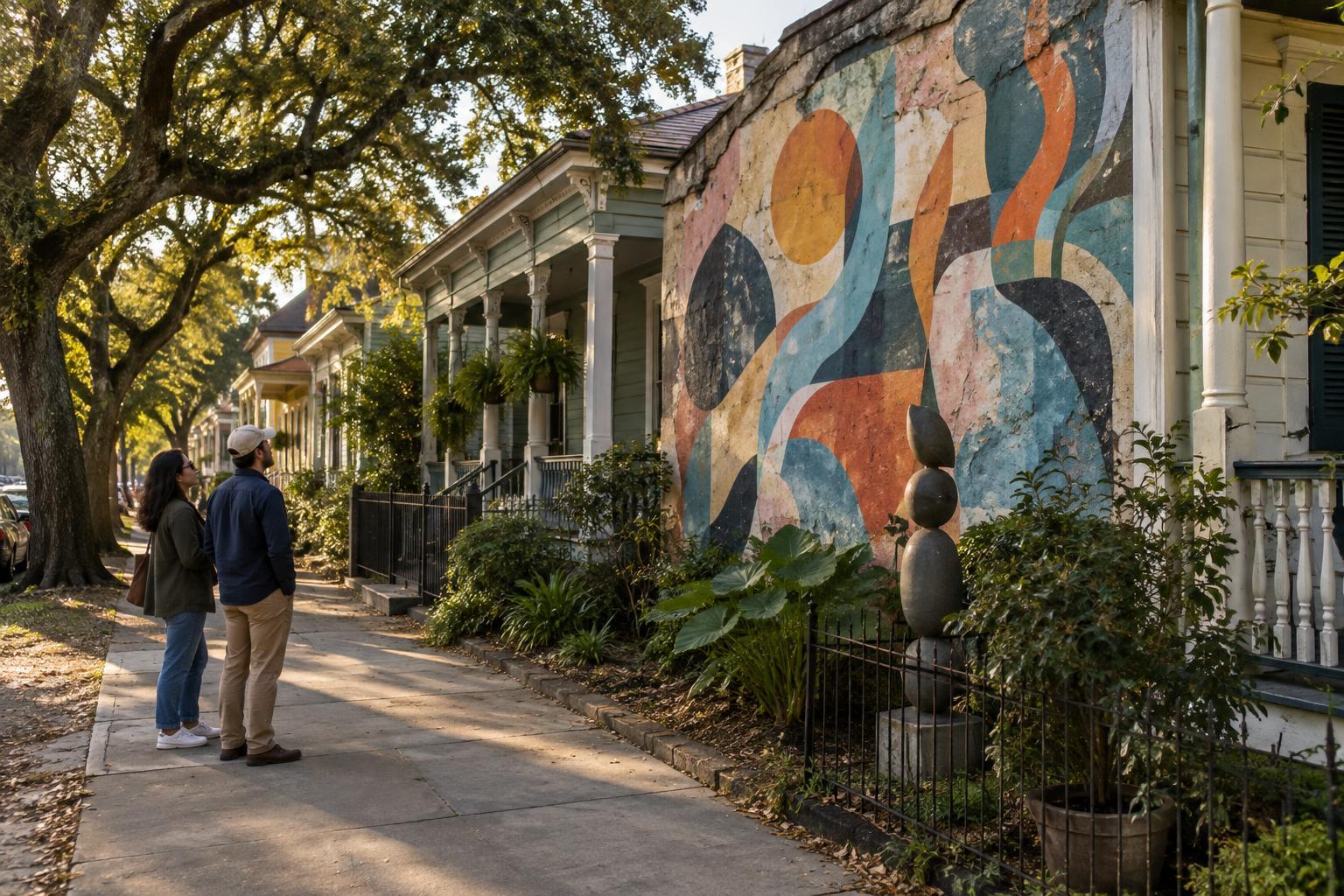
Choose a manageable area and leave time to pause. Look at what surrounds a work: nearby homes and businesses, the street corner it faces, and whether people use the space to meet, rest or pass through. Art in a public setting can be meaningful without being intended as a visitor attraction. If you cannot tell what a piece represents, observation is a better starting point than a confident guess.
Plan a route that can change
A good public-art walk does not depend on every piece still being visible. Murals can be painted over, walls can be repaired, and construction can change access. Before heading out, check a current map or the information published by an arts organization when available, but keep a few alternate streets or indoor stops in mind. Do not assume an older photo shows what is there today.
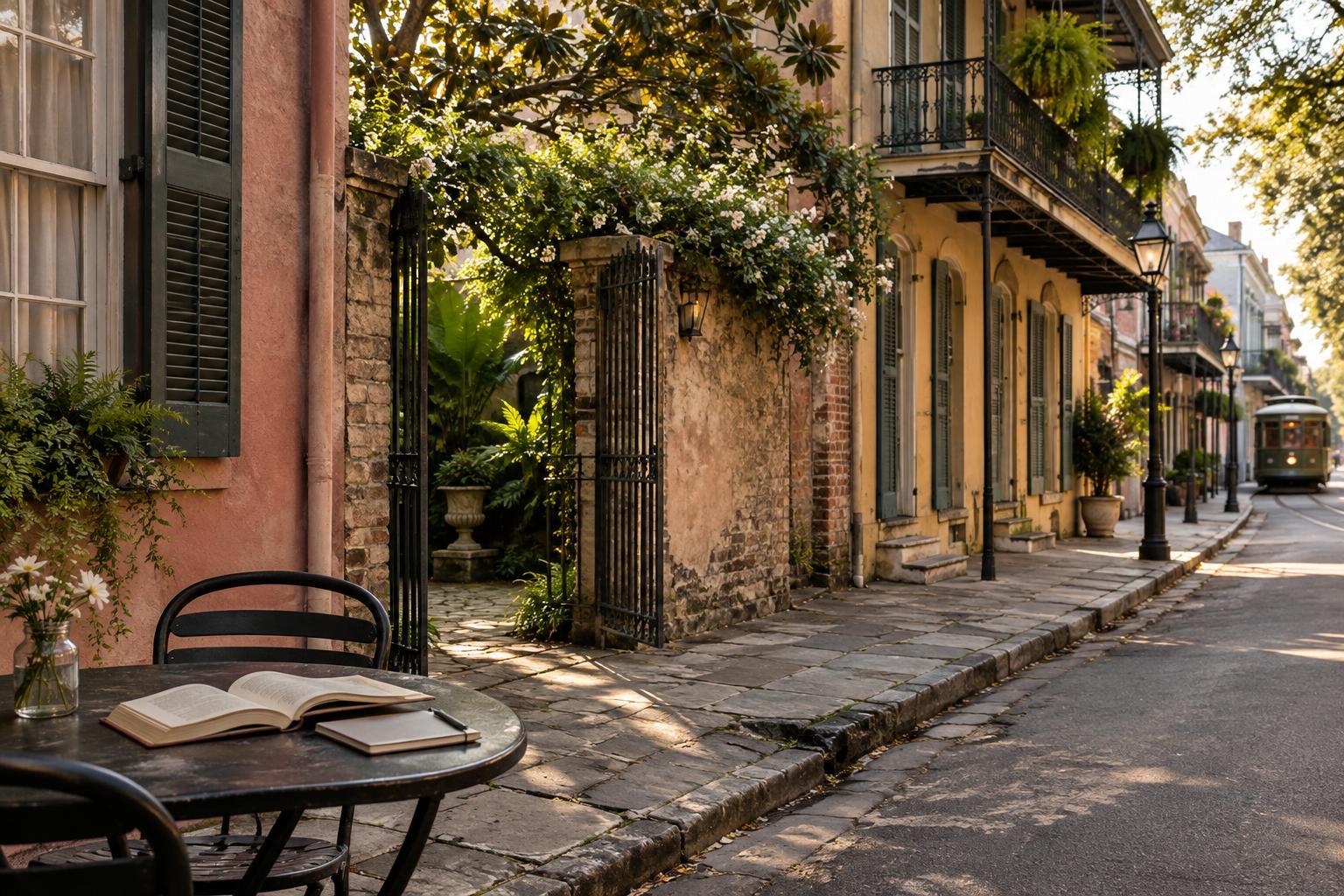
Build in practical comforts, especially if you plan to walk for more than a short stretch. Check the weather, carry water, and pay attention to crossings and uneven pavement. A daytime visit often makes it easier to see detail and understand the surrounding block. If you return after dark, choose a route based on your own comfort and current conditions rather than assuming an artwork is lit or easy to find.
Read the work without speaking for it
Begin with what you can see: color, materials, figures, words and the way a piece occupies its site. A title, artist credit or plaque may offer helpful context. When those details are absent, resist assigning a name, history or community meaning to the work based on appearance alone. New Orleans has layered cultural traditions, and a brief encounter rarely tells the whole story.
Look for the artist’s name before sharing a photo, and credit them when you can identify them reliably. If you want to learn more, follow information provided on-site or by the artist or presenting organization. A memorial calls for particular care: give people room to reflect, and avoid treating objects left in remembrance as props. Not every public artwork asks for the same kind of attention.
Photograph without taking over the space
A sidewalk may offer a good view, but it still needs to work as a sidewalk. Step aside for pedestrians, keep doorways and ramps clear, and avoid standing in the street to frame a shot. Never move objects, climb on a sculpture or touch a painted surface for a better image. Those choices can damage the work or make the space harder for others to use.
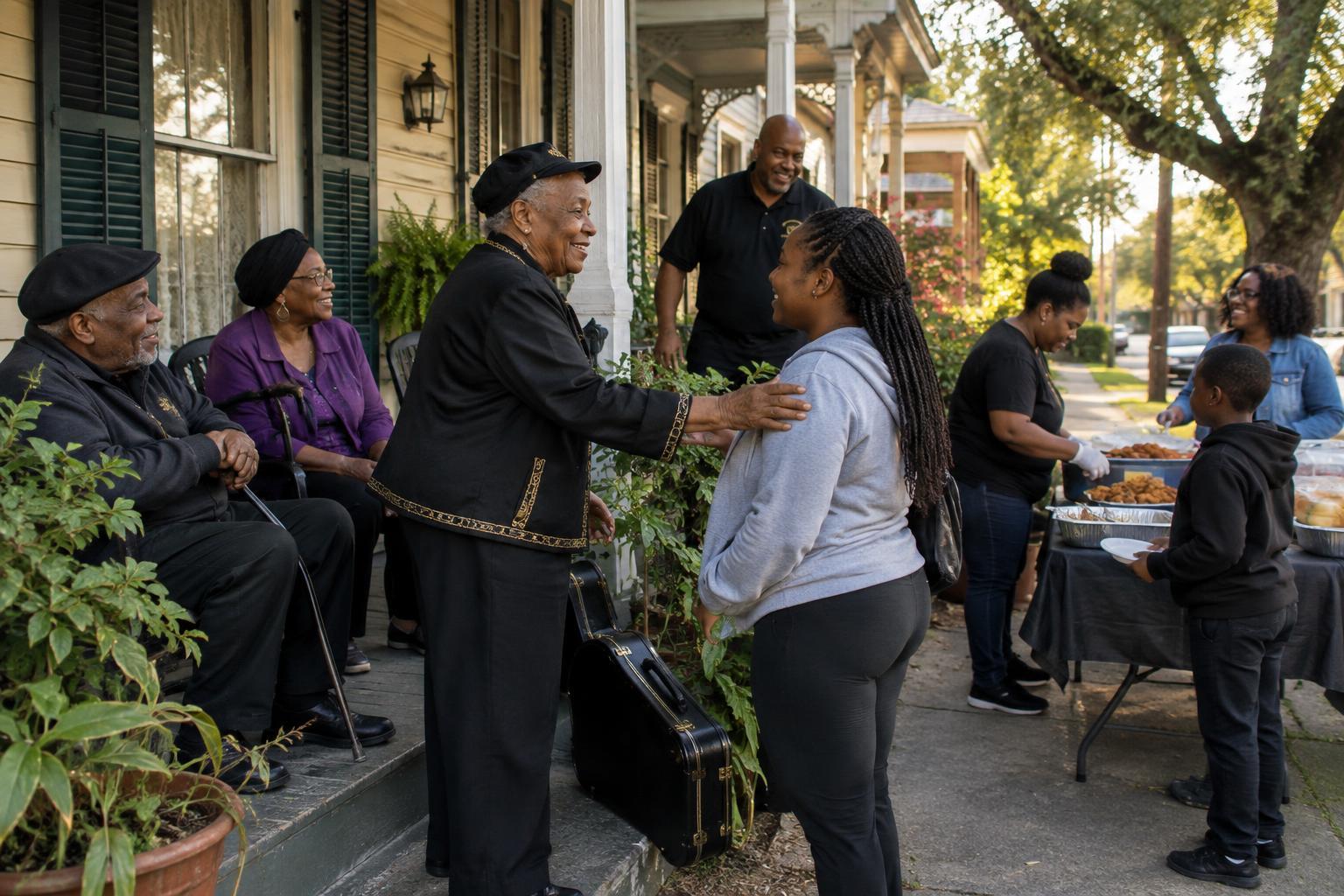
Think about who appears in the frame. Ask before making a stranger the subject of a close photograph, particularly near a home, school or gathering. If someone is using the space, wait or choose another angle rather than asking them to leave. When posting, a thoughtful caption can credit the artist and describe your visit without presenting a residential block as an empty backdrop.
Remember that the neighborhood is not an exhibit
Art can draw you onto a street you might otherwise have missed. Follow that interest with ordinary courtesy: keep noise down near homes, respect signs and gates, and distinguish between public access and private property. A visible mural on a building does not grant permission to enter a yard, courtyard or workplace. If a location feels unsuitable for a stop, appreciate the work in passing.
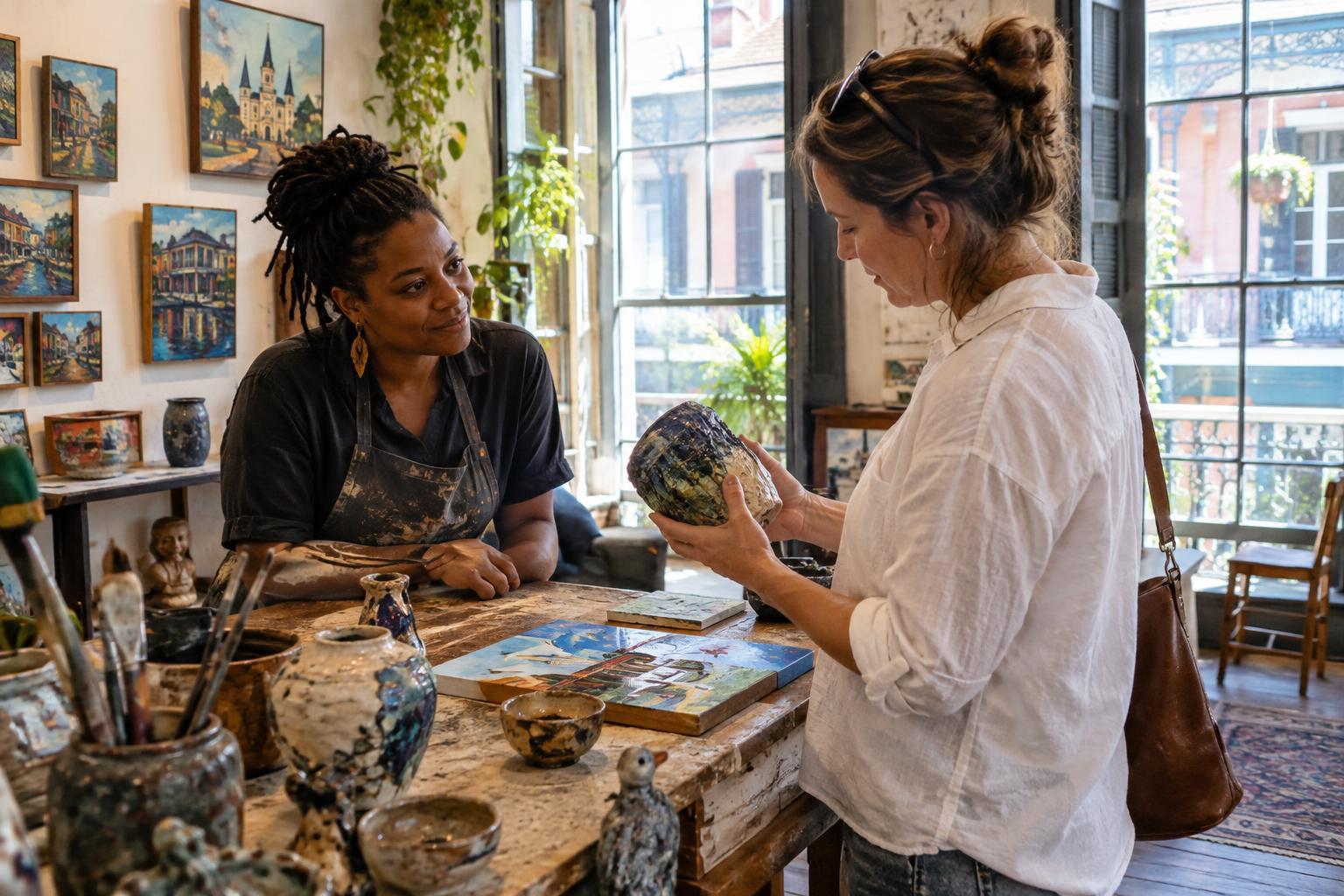
Give yourself room to enjoy what lies around the art, too. A conversation, a meal or a visit to a nearby cultural space may offer more understanding than another quick photograph. Support local artists and businesses when it suits your plans, without assuming anyone owes you an explanation of the neighborhood. The most rewarding public-art walk leaves both the visitor and the space room to breathe.