A theme becomes a plan
A Mardi Gras float may pass a spectator in less than a minute, but making it can take months of decisions and hands-on work. Each parade has its own approach. Some krewes commission professional float builders, while others rely heavily on members and volunteers. Floats can also differ greatly in size, materials and complexity. What they share is the challenge of turning a visual idea into something that can travel a parade route with people aboard.
Planning often starts with a krewe’s theme and the story each float will tell within it. An artist may sketch the overall shape, colors, signs and sculpted figures, thinking about what viewers will recognize from the sidewalk. A clever detail is useful only if it can be seen. Bold silhouettes, readable lettering and strong color contrasts help a design work at parade speed, especially after dark.
Designing for a moving street
A float is not simply a sculpture on wheels. Its design must account for the vehicle or trailer underneath, the space available for riders, and the route it will travel. Builders have to consider height, width, weight, balance and turning room. Decorations must stay secure through starts, stops and uneven pavement. Railings, steps and places for riders to stand or sit are functional parts of the design, not afterthoughts.
Designers also think about the audience from several angles. Spectators standing close to the curb may see different details from those across the street. Large figures can give a float its identity from a distance, while smaller painted scenes reward a closer look. On floats that carry riders, the decoration must leave room for them to see, interact with the crowd and handle throws. A successful design balances spectacle with the practical demands of a procession.
Building the structure and scenery
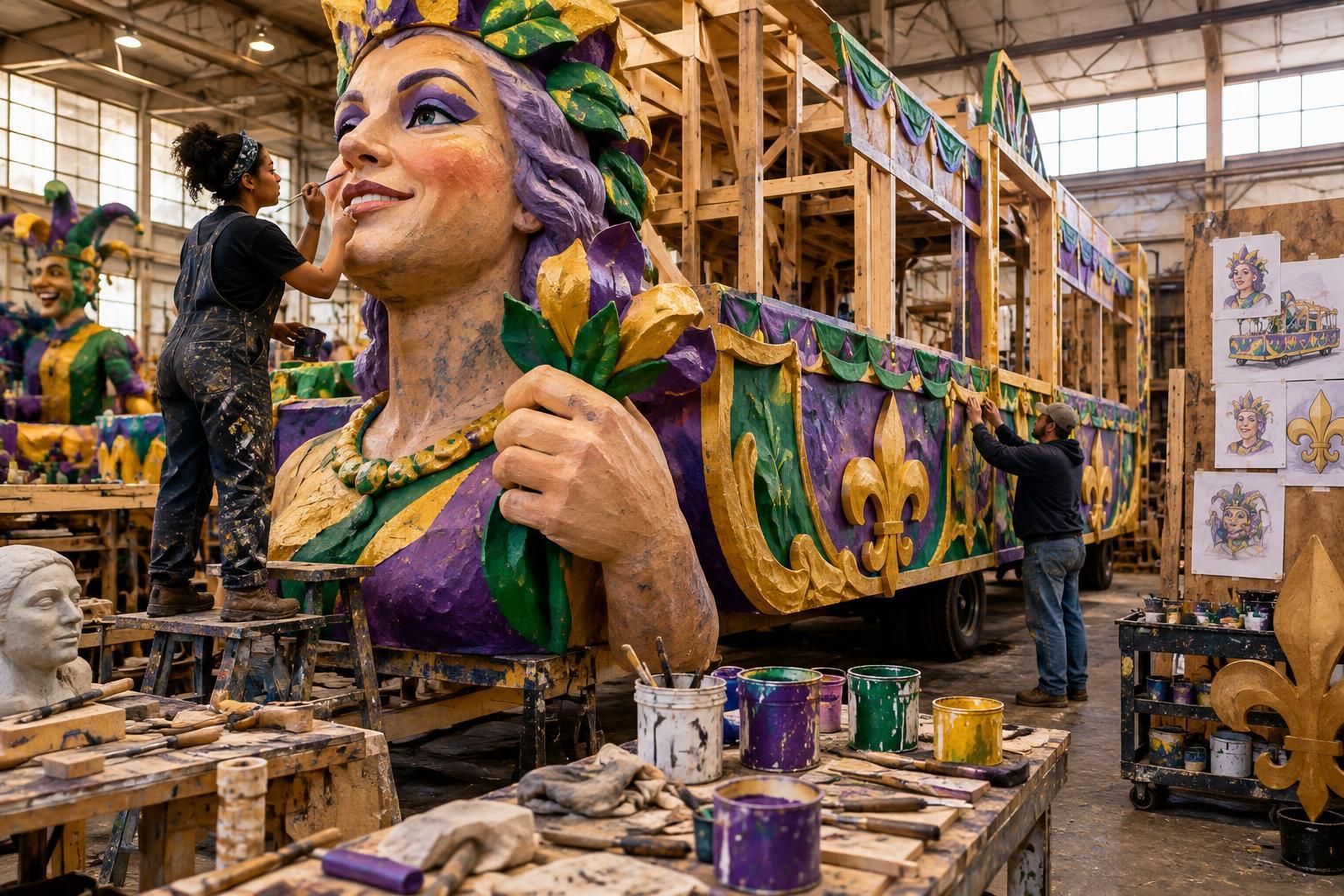
Construction begins with a sound base and the framework that will support the finished display. Depending on the float, builders may reuse an existing chassis or structure and change much of what appears above it. That reuse is one reason a float seen one season may be transformed into something almost unrecognizable in another. Structural work comes before delicate decoration: a giant character or ornamental arch needs support as well as a convincing shape.
Artists and craftspeople then build up the scenery using materials suited to the design and workshop. Shaped foam, carved forms, papier-mâché, wood and other materials can become faces, creatures, buildings or oversized objects. Techniques vary, and not every float uses every material. After the forms are assembled, surface preparation and paint bring them together. Shading gives flat areas depth; highlights make features stand out under changing street light. Lettering, trim and lighting, where used, add another layer of detail.
The final work happens before the roll
A finished-looking float still needs practical attention before parade day. Builders and parade crews check that decorative pieces are attached, rider areas are usable and the float is prepared for movement. Organizations must also meet applicable parade requirements. The precise checks depend on the float and the parade, but the underlying question is straightforward: will the design hold up and function as intended on the street?
Preparation continues outside the workshop. Riders need to know where they will be, and crews coordinate how floats will join and move with the parade. Weather, transport and last-minute repairs can all affect the work. This effort is easy to miss from the sidewalk, where the result appears to glide by as one bright, complete scene. Behind it are designers, sculptors, painters, fabricators, drivers, crew members and krewe organizers whose contributions are not always visible.
What to look for from the sidewalk
The next time you watch a parade, try looking at a float before reaching for a throw. Notice how its shape announces the idea from down the block, then look for the smaller jokes or scenes that appear as it gets closer. Watch how the artist has used scale: an enormous face might anchor the float, while painted details connect it to the parade’s wider theme. On a night parade, consider how lighting changes what stands out.
Floats are one part of New Orleans Carnival, alongside music, marching groups, costumes and neighborhood traditions. Their artistry lies not only in their appearance but in their ability to carry a shared idea through public streets. Knowing a little about the work behind them can make even a brief view feel richer.