A suit is a work of art meant to move
In New Orleans, Mardi Gras Indian suits are made to be seen up close and in motion. As a masker walks, dances or turns, feathers shift around carefully composed panels of beads, sequins and other materials. The finished suit can be monumental, but its details reward patient looking: a change in bead color, a raised border, or a scene that becomes clear only when the wearer faces you.
Mardi Gras Indians are part of a Black New Orleans masking tradition also described as Black Masking Indian culture. The name, practices and meanings come from the communities that sustain them; they should not be treated as a generic Mardi Gras costume theme. Each masker and group brings its own approach to making, wearing and interpreting a suit.
From an idea to a wearable structure
A suit often begins with a concept: a story, a figure, a memory, a tribute or a visual theme the maker wants to express. The artist plans how images will fit across the apron, chest, shoulders, back and headpiece. Those choices must work both as a composition and as clothing. A panel that looks striking on a table also needs to sit correctly on a body in the street.
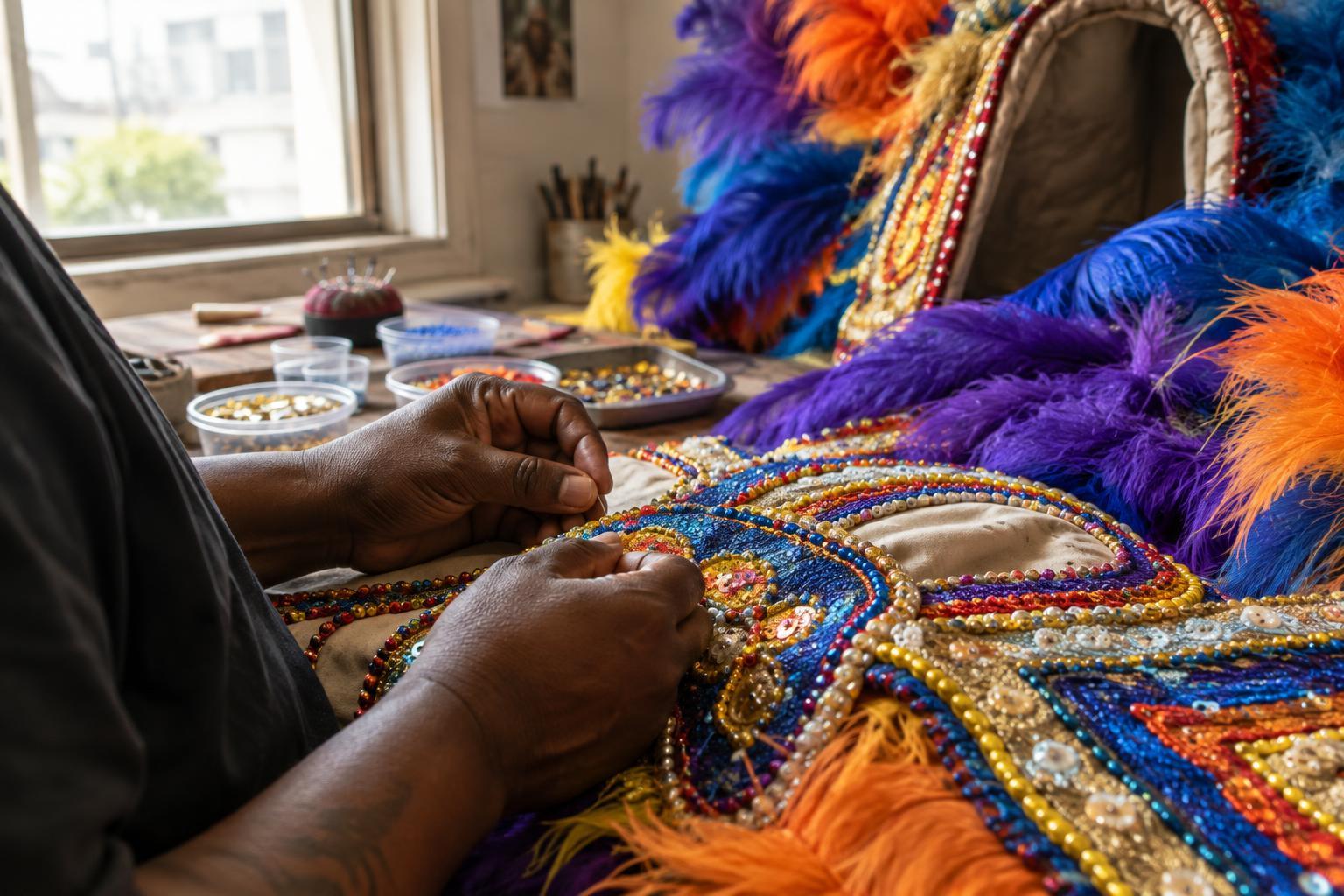
Fabric-backed panels provide a base for decoration. Makers may draw out an image, establish its outlines and then fill areas with hand-sewn beads, sequins and other embellishments. Shapes, color contrasts and raised edges help an image remain legible from a distance. Methods and materials vary, and a finished suit may reflect help from relatives, fellow maskers or other skilled hands. Its design remains closely connected to the person who wears it.
Weight and balance matter throughout the process. A large headpiece or heavily worked panel needs enough support to hold its shape without preventing the wearer from moving. Building the suit involves practical decisions about fit, attachment and repair alongside artistic ones. What spectators see in a brief encounter may represent many months of planning and handwork.
What beadwork and feathers do
Beadwork gives a suit much of its detail. Individual beads can form lines, faces, lettering, patterns and shaded areas; sequins and reflective elements catch changing light. Layering these materials can make a flat surface appear dimensional. Close viewing reveals the decisions hidden within the overall spectacle: where a line thickens, where colors meet, and which parts of a scene the maker chose to emphasize.
Feathers create a different kind of effect. They extend the suit’s outline and respond to movement, making the wearer’s presence felt before every beadwork detail is visible. Their placement can frame a headpiece, broaden the shoulders or complete the shape of a panel. Feather types and arrangements differ among suits, so there is no single construction formula to look for. Beads, feathers and fabric work together to make an artwork that changes as its wearer moves.
Meaning belongs to the people who make and wear it
The artistry cannot be separated from Black New Orleans history, neighborhood ties and the relationships among masking groups. Designs can express pride, remembrance, spirituality or a personal account, but an onlooker cannot reliably decode every symbol by sight. The maker’s explanation, when they choose to give one, matters more than a visitor’s guess.
The tradition’s references to Indigenous peoples are also complex. Community accounts often speak of respect and historical connections, but no single origin story explains every group or every suit. Indigenous peoples have their own distinct cultures and identities; a Black Masking Indian suit should not be mistaken for a representation of one universal Indigenous style. Approaching the work as a living New Orleans practice leaves room for its makers to describe what their choices mean.
How to appreciate a suit respectfully
If you encounter maskers in the street, give them room to move. Do not touch a suit, pull a feather or step into someone’s path for a photograph. Some details are delicate, and the person wearing the work is participating in a community tradition, not simply posing for an audience. Ask before taking a close portrait or beginning a conversation, and accept it if the moment is not right.
Look beyond a single spectacular image. Notice how a panel reads from several steps away and how its details change at close range when viewing is welcome. Listen when makers speak about their work, without expecting anyone to explain it on demand. The patient labor of sewing, fitting and refining is part of what makes each suit remarkable—and part of why the finished work deserves attention on its own terms.