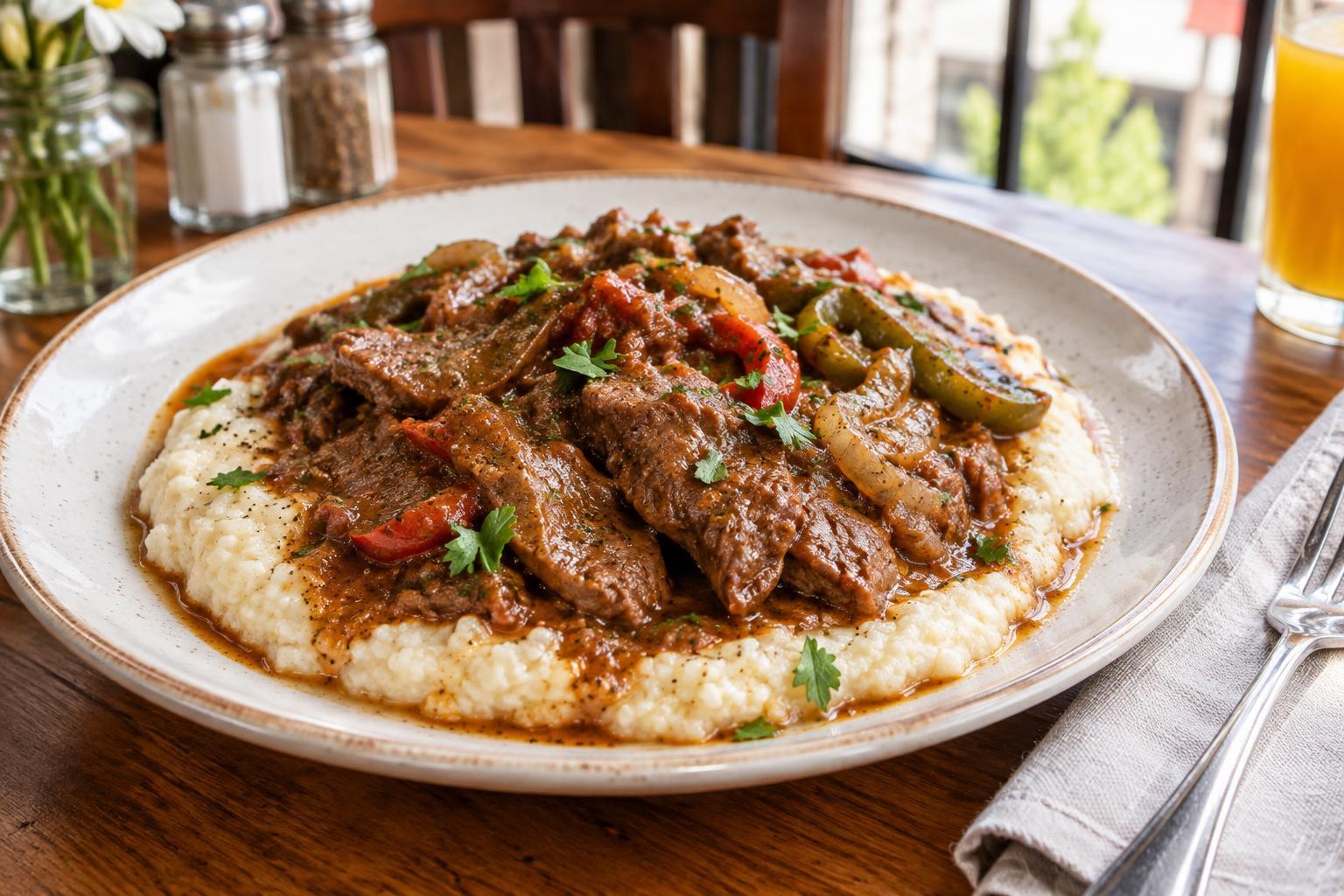
What are grillades and grits?
Grillades and grits bring together two simple components: pieces of meat cooked until tender in a seasoned gravy, served over or alongside soft grits. Despite the name, grillades are not necessarily grilled. The meat is often browned and then simmered, giving the gravy time to develop flavor. The result is a substantial plate that can feel equally at home at breakfast, brunch or a later meal.
Grits are made from ground corn and cooked with liquid until soft. They provide a mild base for the gravy, which is why the two parts of the dish work so well together. Depending on the kitchen, the grits may be loose and spoonable or thick enough to hold their shape. If you have only tried plain grits, a forkful with the gravy offers a better sense of how they function in this dish.
Why one plate may differ from another
There is no single ingredient list that defines every serving of grillades. Cooks may use pork, veal or beef, and they may cut the meat into small pieces or serve larger portions. Some gravies feature tomato; others lean more heavily on browned meat, stock and vegetables. Onion, celery and bell pepper may contribute flavor, while the amount of pepper, herbs and other seasoning varies. Those choices change both the color of the gravy and the balance of the finished plate.
The grits can vary just as much. Some kitchens keep them fairly plain so the meat and gravy lead. Others enrich them with butter, dairy or cheese. Neither approach is a reliable clue to the quality of the dish; they simply make for different meals. A menu that says only “grillades and grits” may leave these details unstated, so it is reasonable to ask what meat and style of gravy are being served.
Grillades and grits are often discussed as a New Orleans brunch dish, but that association does not mean every restaurant serves them or that they are available only in the morning. Menus change, and daily specials may come and go. If this is a dish you particularly want to try, check a current menu or ask the restaurant directly rather than building an outing around an assumed schedule.
How to order without guessing
Start with the menu description. If it identifies the meat, gravy or type of grits, you already have a useful picture of the plate. If not, a brief question can clear up what matters most to you: “What meat is in today’s grillades?” or “Does the gravy contain tomato?” You do not need to know a preferred or supposedly authentic version to order with confidence.
Ask about ingredients when they affect whether you can eat the dish. For example, cheese or other dairy may be added to grits, and a gravy can contain ingredients not obvious from its appearance. A server may be able to check with the kitchen, but should not be expected to guarantee an ingredient is absent without confirmation. If you have an allergy, explain it clearly and ask about preparation as well as the listed ingredients.
Think of the dish as a full meal rather than a side of grits with a small topping. The meat, gravy and corn base can be filling, though portion sizes differ. If you are deciding between several dishes at brunch, ask about serving size instead of assuming grillades will be lighter because they appear on a breakfast menu.
Getting the most from the first bite
Take a little meat, gravy and grits together before adding hot sauce or extra seasoning. That bite shows how the kitchen intended the components to work together. If the gravy tastes rich, the grits may soften its intensity; if the grits are especially creamy, a peppery gravy may provide contrast. You can adjust the seasoning once you know what is already on the plate.
It also helps to approach grillades and grits as a flexible cooking tradition, not a test with one correct answer. A tomato-forward pork version and a darker beef version may be noticeably different while sharing the same basic idea. Pay attention to what you enjoy—the texture of the grits, tenderness of the meat and character of the gravy. Those details will give you better questions to ask the next time you see grillades on a menu.