Why the distinction matters
In New Orleans, “Creole” and “Cajun” are often used side by side. Both traditions make generous use of local ingredients, long-developed flavor, and recipes passed through families and communities. Yet treating the words as synonyms misses the people and places behind the food. They describe overlapping cultural histories, not two fixed sets of recipes.
A useful starting point is geography. Creole cooking is closely associated with New Orleans and its long history as a port city. Cajun cooking grew within Acadian communities in rural south Louisiana. Those descriptions help explain differences, but they are not borders: people moved, cooked together, adapted ingredients, and brought their food into new settings. A dish served in New Orleans today may reflect both traditions.
The histories behind the labels
Creole is a complex identity, not simply a cooking style. In Louisiana, the term has been used in different ways across time and communities. New Orleans Creole food reflects influences from African, European, Caribbean, and Indigenous foodways, among others. Enslaved cooks and their descendants were central to the development of the city’s cuisine, even when older accounts gave them too little credit. Creole food also includes traditions maintained by Creole communities of color.
Cajun refers to the descendants and culture of Acadians who settled in Louisiana after displacement from what is now eastern Canada. Their cooking developed in conversation with the ingredients and food knowledge of south Louisiana, including those of neighboring communities. Neither tradition was created in isolation. Both changed as families encountered new ingredients, cooking methods, and economic circumstances.
That history is one reason simple formulas can mislead. “Creole means fancy; Cajun means rustic” may sound memorable, but it flattens home cooking in the city and the skill involved in rural food traditions. The labels are most helpful when they invite questions about a dish’s origins and the cook’s own account of it.
Shared foundations, different tendencies
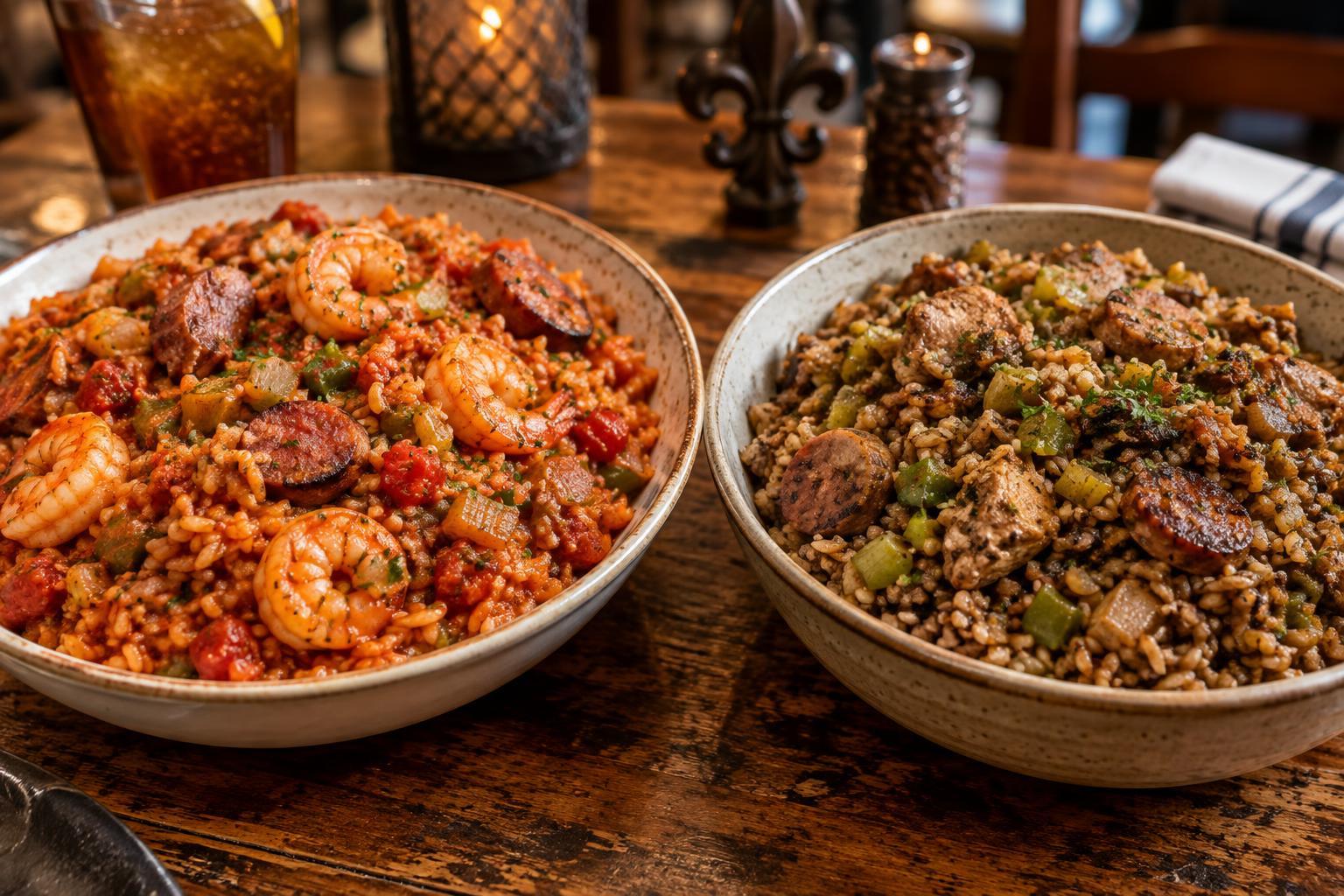
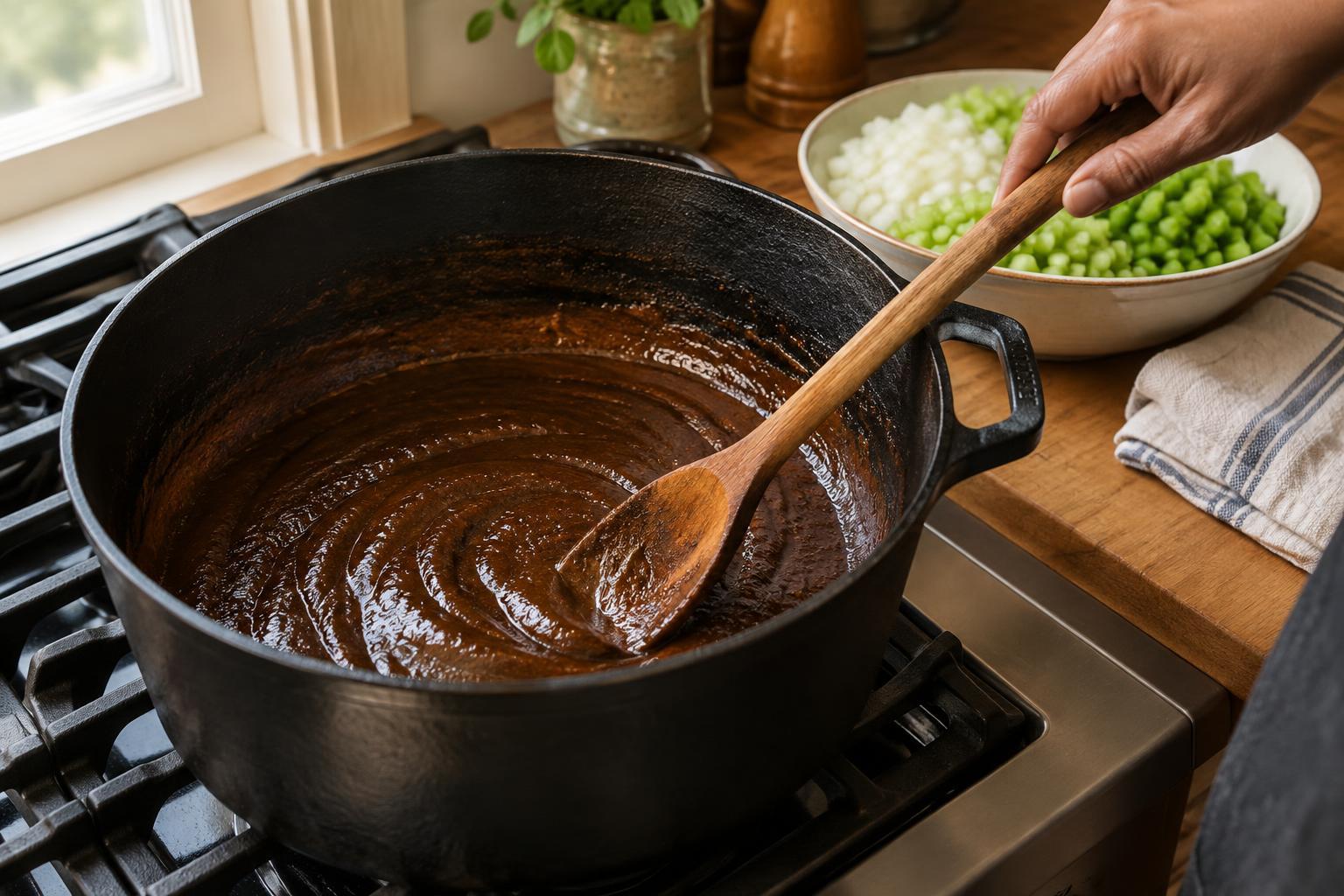
There is plenty of common ground. Cooks in both traditions may build flavor with onions, celery, and bell pepper; use a roux to give a dish body; or prepare rice, seafood, sausage, and slow-simmered stews. Gumbo, jambalaya, and étouffée can appear in more than one tradition, with variations from household to household. A single ingredient rarely settles whether a dish is Creole or Cajun.
Some tendencies can still be useful to notice. New Orleans Creole cooking often reflects the variety of ingredients available in an urban port, and some well-known Creole preparations use tomatoes. Cajun cooking is often associated with the resourcefulness of rural households and with dishes shaped by regional harvests, fishing, hunting, and preservation. But a tomato does not make every pot of gumbo Creole, and its absence does not automatically make one Cajun.
Heat is another unreliable shortcut. Neither tradition is defined by making food as spicy as possible. Seasoning may bring warmth, but the balance of the broth or sauce, the texture of the rice, and the flavor of the main ingredients matter just as much. The most revealing comparison is often between two cooks’ versions of the same dish.
How to explore both at the table
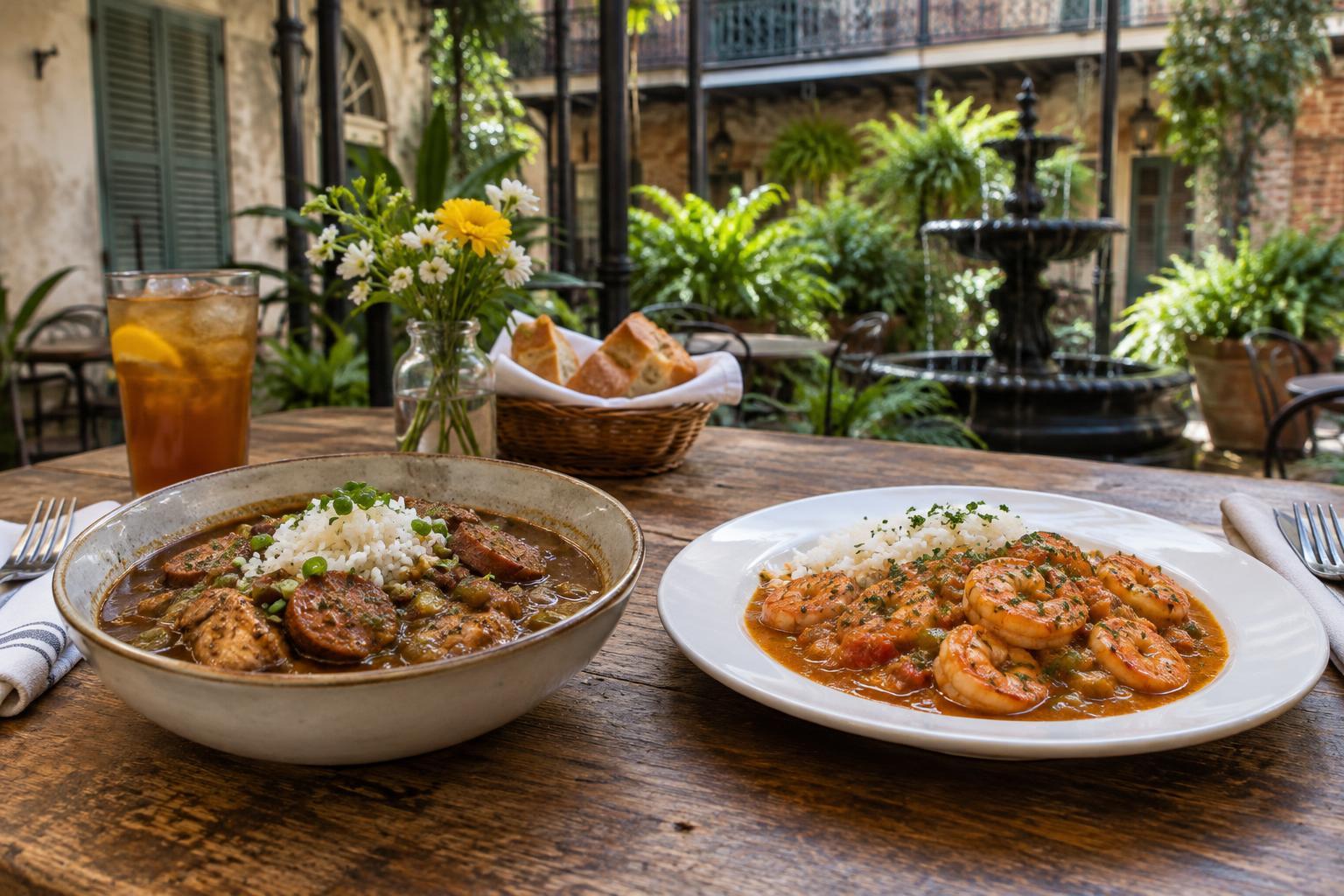
When reading a menu in New Orleans, treat “Creole” or “Cajun” as a clue rather than a guarantee of one particular flavor. Look at the description: Is a seafood dish served in a tomato-based sauce, or is it built around a darker roux? Is the rice cooked with the other ingredients or served beneath them? These details tell you more about what you will eat than a label alone.
If a server has time, ask how the kitchen prepares a dish or whether it follows a family or regional style. An answer may reveal a connection to New Orleans, another part of Louisiana, or several places at once. It is also fine to enjoy a dish without assigning it to one tradition. Restaurant cooking, like home cooking, can draw from more than one inheritance.
For a visitor, the most rewarding approach is to try different preparations rather than seek a definitive example of each category. Notice what stays familiar and what changes from plate to plate. Creole and Cajun cooking share deep Louisiana connections, but each carries distinct histories—and both leave room for the individual cook.