What does “masking” mean in New Orleans?
In New Orleans, masking means more than putting on something that covers your face. The word can describe dressing for Carnival, taking part in a parade, or appearing in an elaborate suit made for a community tradition. A mask may create a playful disguise, mark membership in a group, or help a person step into a public role. The meaning depends on who is masking and where you encounter them.
For a beginner, the most useful starting point is to resist treating every striking outfit as the same kind of costume. New Orleans traditions have different histories, makers, and expectations for spectators. You do not need to know every detail before you go out, but noticing those differences will make the experience richer and help you behave like a welcome guest.
Carnival masks: disguise, play, and participation
Carnival is the season leading up to Mardi Gras, and dressing up is one of its most accessible traditions. You might see a carefully built character, a group wearing a shared theme, or someone who simply wanted an excuse to wear a wig and bright colors. Some parade organizations have their own masking customs, while people on the sidewalk may dress for the pleasure of joining the scene. Not every masker belongs to a krewe, and not every costume carries a message.
If you want to participate, you can start simply: choose clothes and accessories you can walk in, account for changing weather, and keep your hands free enough to manage your belongings. Think about the people around you when planning large wings, props, or anything that could block a view in a crowd. Dressing up invites play, not permission to cross personal boundaries. Ask before posing with a stranger, and accept a no without making it awkward.
Black masking traditions deserve their own attention
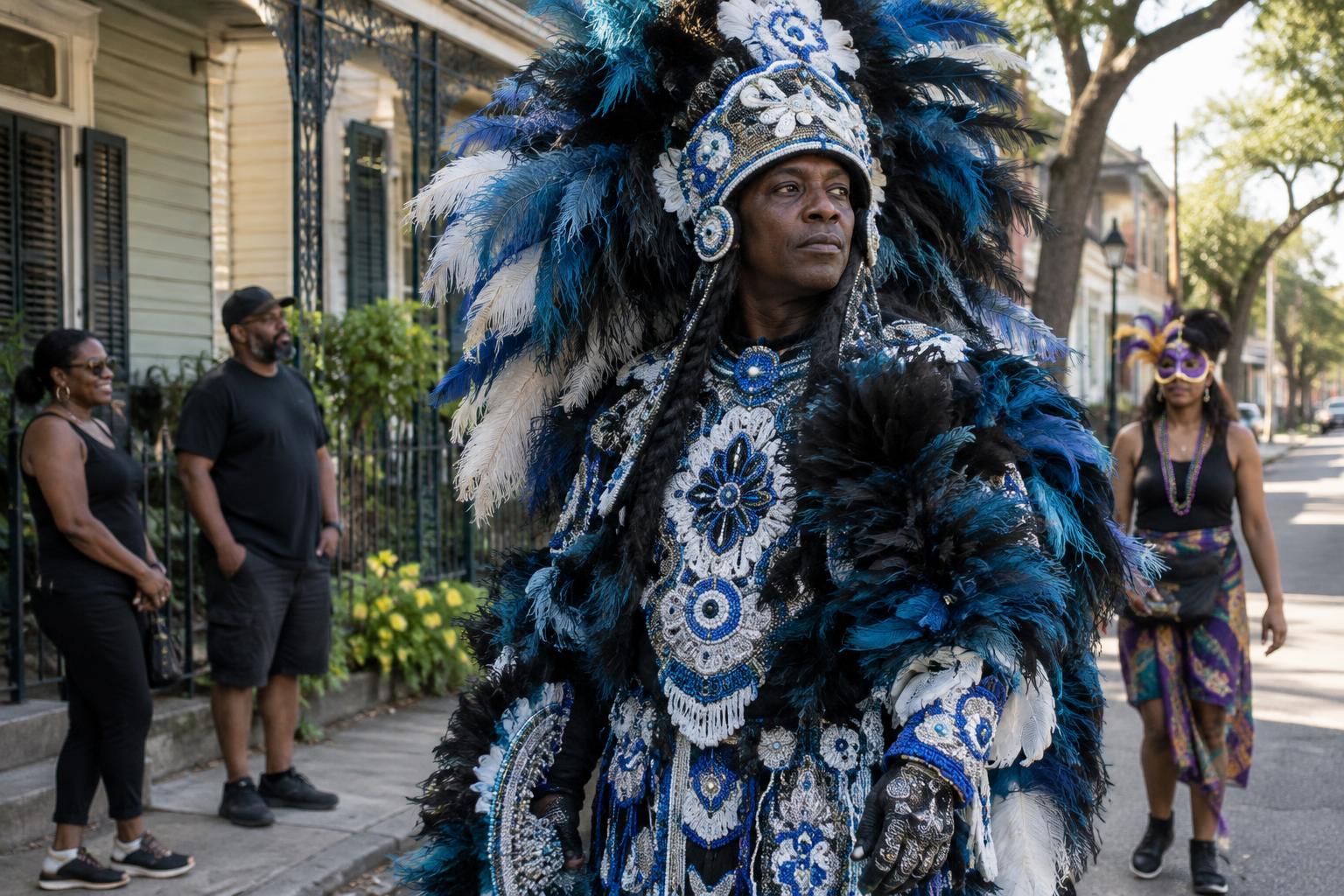
Among the city’s most distinctive traditions are those of Black masking groups, whose members create intricate suits with beadwork, feathers, and other hand-worked details. You may hear participants called Mardi Gras Indians or Black Masking Indians; names and preferences can vary among the people and groups involved. These practices are rooted in Black New Orleans communities and should not be folded into a generic description of Carnival dress.
Suits can take extensive planning and labor, and their designs may carry personal and community meaning. Music, movement, encounters between groups, and relationships within neighborhoods are also part of the tradition. A visitor is seeing more than a beautiful object: they are witnessing people present work made within a living culture. The terminology and imagery can raise questions about history and representation. Approach those questions with curiosity, and let participants describe their own work rather than assuming that all groups share one explanation.
It is also important not to confuse Black masking groups with the city’s Indigenous communities. A name or visual reference does not make these separate communities interchangeable. If you want to learn more, seek out accounts and events led by the people who practice the tradition, and pay attention to how they identify themselves.
How to watch and photograph respectfully
In a public celebration, photography is common, but a camera is not a claim on someone’s time. Give maskers room to move, especially when a street becomes crowded or a group is performing. Do not touch a suit, step into someone’s path for a close-up, or pull a child into a photo with a stranger. If you want a posed portrait, ask first. If someone declines or seems occupied, let them continue.
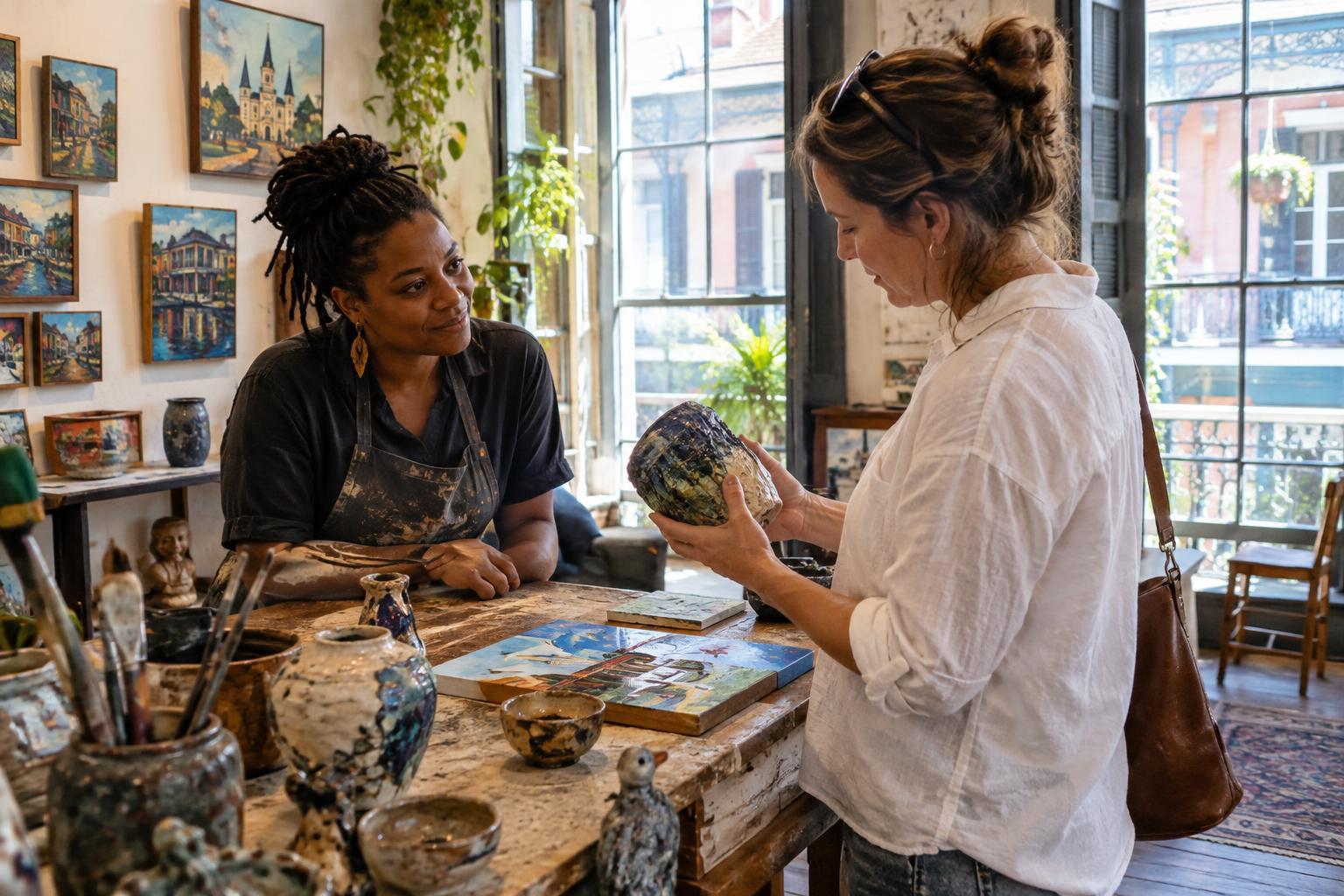
Consider what happens after you take the picture, too. A close-up of a person is different from a wide view of a street scene. If you plan to post an image with a name, story, or interpretation, check what you know rather than guessing. Supporting community-led cultural events, artists, and makers can be a more meaningful response than collecting images alone.
Plan to encounter a tradition, not a guaranteed spectacle
Masking happens in different settings across the city, and the details of any particular appearance can change. Before heading out, check information from event organizers or participating groups for the location, timing, and public nature of an event. Allow extra travel time around street celebrations, and be prepared to walk or adjust your plans.
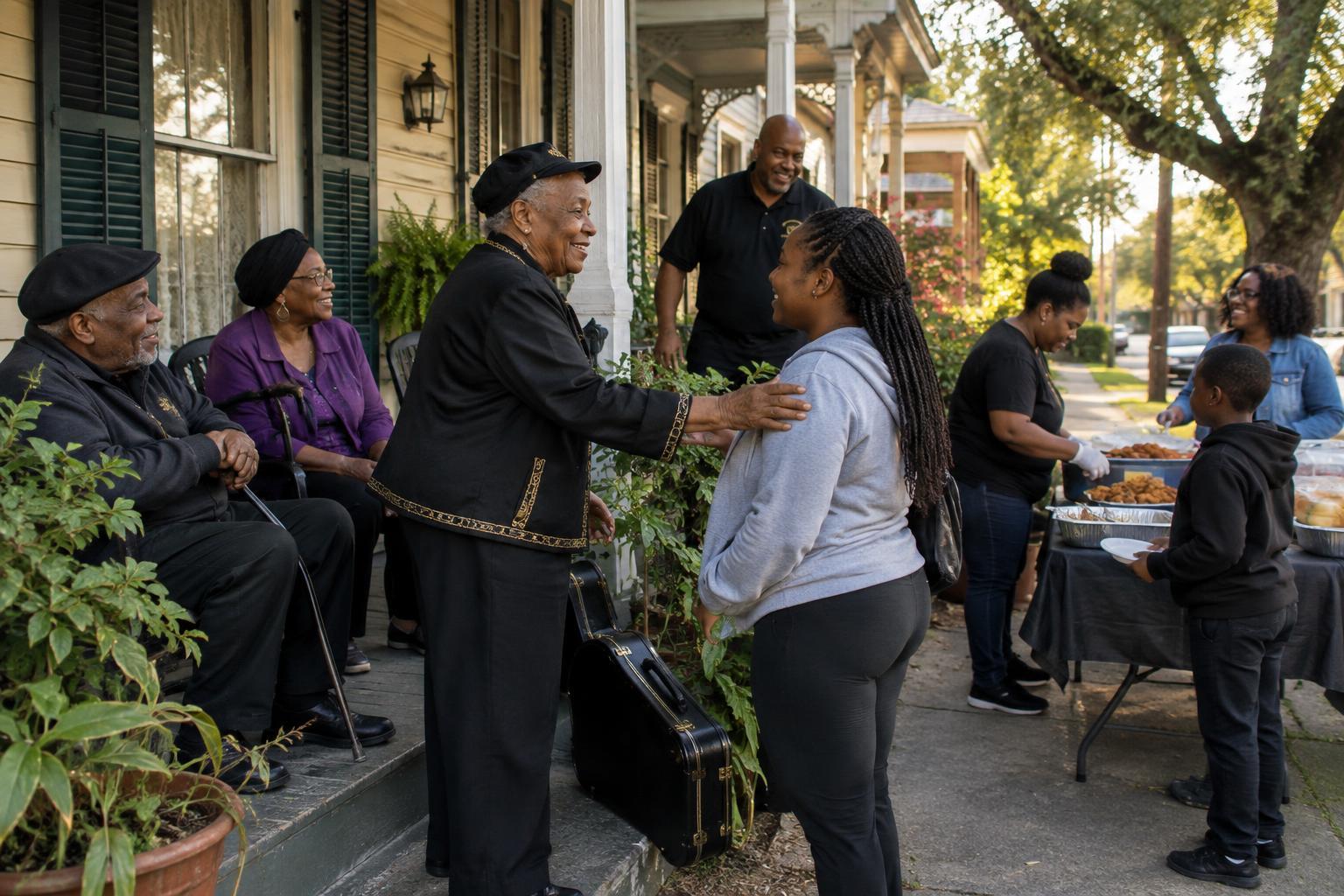
The best beginner’s approach is patient and observant. Listen before asking questions, follow the lead of the people who are there to participate, and remember that a neighborhood is not a stage set. You may leave with a favorite photograph, but the deeper reward is beginning to recognize how creativity, shared labor, and community presence shape New Orleans masking.