Start with a city of many artistic languages
New Orleans art is often introduced through familiar images: a brass band, a balcony, a mask or a streetcar. Those images can be inviting, but they are only a starting point. The city’s visual culture has grown through the work of Indigenous peoples, enslaved and free people of African descent, Creole communities, and immigrants from many places. Artists have responded to the city’s architecture, music, spiritual practices, celebrations and ordinary neighborhood life.
It helps to think of these influences as overlapping histories rather than separate styles. A painting of a parade, for example, might draw on a family’s experience, a particular neighborhood tradition and choices about color and form. Ask who made a work, what community or event it depicts, and whether its maker is telling a personal story. That approach reveals more than asking whether it looks distinctly “New Orleans.”
Understand what Creole can—and cannot—tell you
Creole has carried different meanings across New Orleans history. Depending on the speaker and context, it may refer to ancestry, language, culture or a sense of belonging. It is not a single racial identity or a tidy label for every old local tradition. In art, Creole influences may appear in subjects such as family life, religious practice and architecture, but no one set of images defines Creole work.
The city’s built environment offers one way to practice looking closely. Decorative ironwork, courtyards, painted signs and carefully crafted interiors speak to the skills and tastes of many people, including craftspeople whose names were not always preserved. Rather than crediting a whole streetscape to one European tradition, consider the labor and exchange behind it. The same curiosity applies inside a gallery: an artist’s own description is more useful than a label imposed from the outside.
See African American art as living work
African American artists and communities have been central to New Orleans culture, despite the barriers created by slavery and segregation. Their visual work cannot be reduced to a single subject or medium. It includes portraits, photography, sculpture, murals, textiles and designs made for public celebration. Some artists document neighborhood memory; others make abstract work, address injustice or pursue questions that have no obvious local symbol.
Black masking traditions are a vivid example of art made through community relationships. Intricately sewn suits can involve months of design, beadwork and collaboration. The names people use for these traditions vary, so follow the terms used by the makers and groups you are learning about. A suit is not simply a costume for a visitor photograph: its imagery, making and presentation carry meaning. If you encounter a public procession or display, give participants room, follow any posted photography guidance and seek out makers’ accounts of their work.
Look for immigrant influences beyond a single era
New Orleans has long been shaped by movement across the Gulf, the Caribbean and beyond. Immigrant artists and craftspeople have brought skills, materials and perspectives while also adapting to local conditions. More recent communities, including Vietnamese and Latin American New Orleanians, are part of that continuing story. Their contributions are not confined to art about migration; artists may work with family memory, faith, food, landscape, humor or any subject that matters to them.
This is another reason to avoid treating a neighborhood as an exhibit. A business sign, festival decoration or community mural can be meaningful visual culture, but it also belongs to people going about their lives. When a work catches your attention, look for a credit, an artist statement or information shared by its organizers. Notice what the work says before assuming it represents an entire community.
Explore with attention, not a checklist
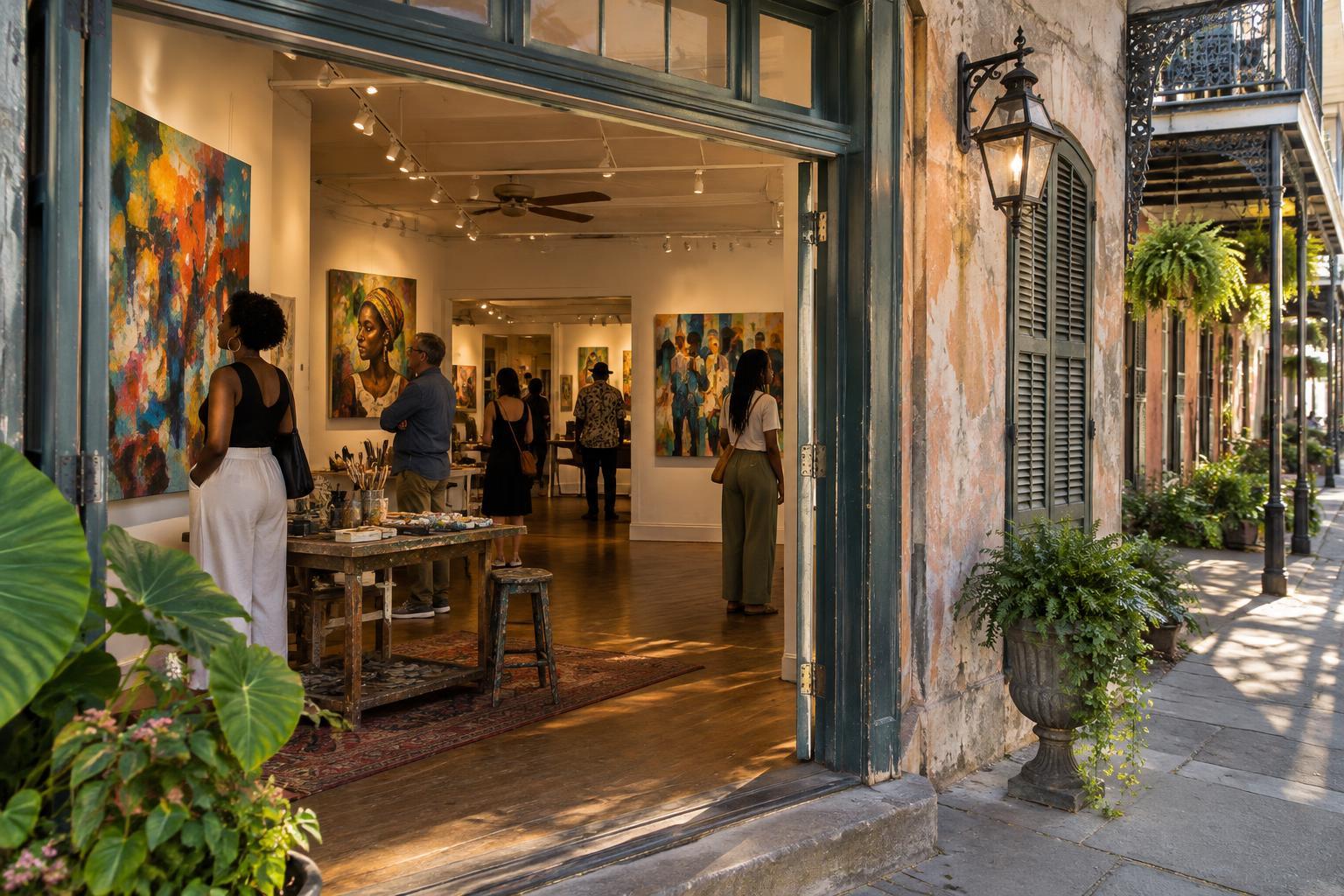
A good first visit might combine a museum or gallery with time spent noticing public art, architecture and neighborhood spaces. Read labels slowly. Compare how different artists depict a familiar subject, and make room for work that challenges your expectations of what local art should look like. Exhibitions, opening hours and access rules can change, so check directly with a venue before making a trip around a particular show.
If you want to support an artist, look for opportunities to buy directly or through a gallery that identifies the maker. Ask before photographing work in a shop or studio, and respect a no-photography request. Most of all, leave room for specificity: New Orleans art is not one story of cultural blending. It is the work of individual people, shaped by distinct histories and communities that continue to create on their own terms.