Pause before you rearrange the whole day
A rainy forecast and a rain-soaked afternoon are not always the same thing. If your plans are outdoors, first look at the conditions where you are, the forecast for the next few hours, and any messages from the place you intended to visit. A brief shower may call for a coffee stop; sustained heavy rain may call for a different day altogether. Keep reservations and timed tickets in mind before changing course.
Choose one or two priorities rather than trying to replace every missed stop. If hearing music matters most, look for an indoor performance later. If you came to explore a neighborhood, save the longer walk for better weather and spend the rainy hours nearby. This leaves room for the day to improve without sending you back and forth across the city.
Build an indoor plan around your interests
New Orleans offers more than one kind of rainy-day refuge. Museums and galleries can make a good anchor if you want time to look closely rather than rush between attractions. Bookshops, cultural spaces, and covered markets may suit a shorter stop. Check opening hours, admission requirements, and any event details directly before leaving; an indoor venue is only useful if it is open when you arrive.
Food can shape the day, too. A long lunch gives you a chance to try a dish you were already curious about, while a café break can help you wait out a passing shower. You do not need to treat a restaurant as a place to occupy indefinitely: order what you want, be considerate if people are waiting for tables, and ask before settling in for a long stay.
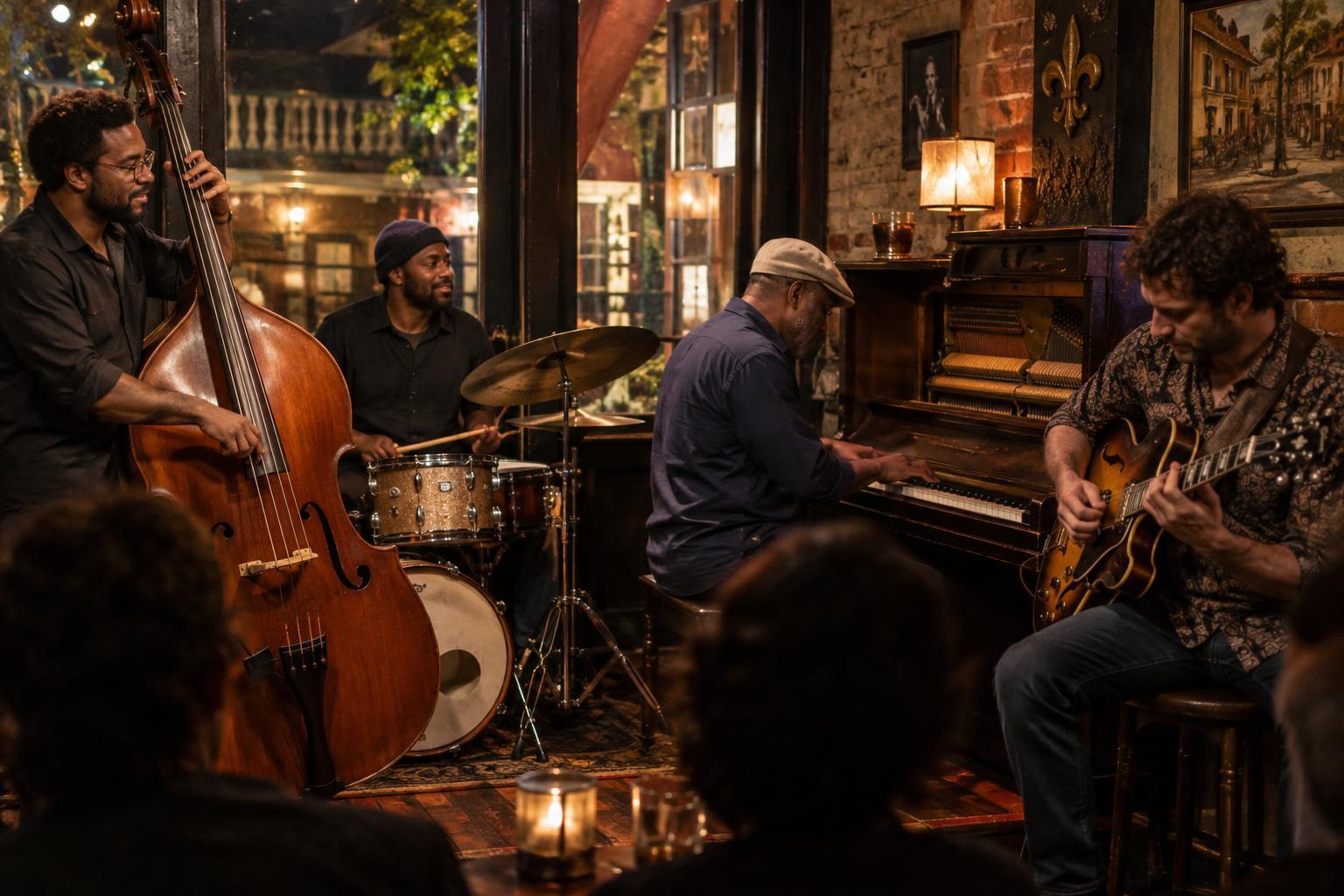
For an evening indoors, consider a music venue or theater rather than assuming rain has canceled nightlife. Performances and cover policies vary, and plans can change, so confirm the details with the venue. Arriving with a backup choice nearby is useful if your first stop is full or an event has changed.
Make shorter, easier trips
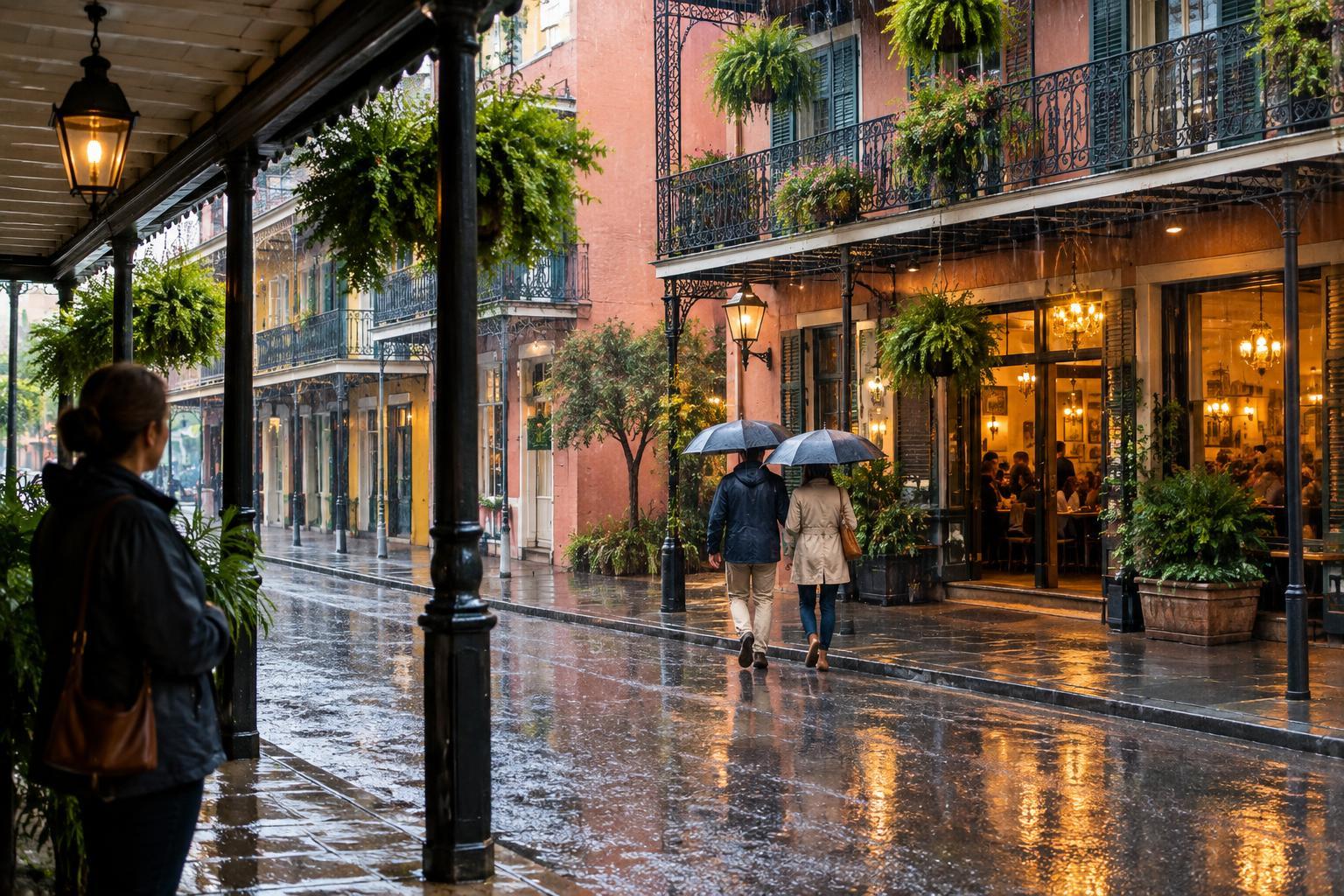
Rain changes the feel of a walk. Shoes with traction, a compact umbrella or light rain layer, and a dry bag for your phone can make a modest outing more comfortable. A spare pair of socks back at your lodging can be more valuable than a crowded itinerary. If you are walking, pick a small area with several possible stops instead of crossing multiple neighborhoods just to reach one place.
Allow extra travel time, especially if you have a reservation or a ticketed event. Transit and ride pickups can be less predictable in a downpour, and a route that looks straightforward on a map may be unpleasant on foot. Agree on a pickup point with your group before you need one. If visibility is poor or streets are holding water, waiting indoors may be the better choice.
Take heavy rain and street flooding seriously
A rainy day calls for flexibility; a severe storm calls for caution. Pay attention to local weather alerts and guidance from your lodging, event staff, or local authorities. Avoid walking or driving through standing water: its depth and what lies beneath it can be hard to judge. If thunder is close, move inside rather than continuing a sightseeing walk.
It is fine to let an outdoor reservation or ambitious route go when conditions are uncomfortable or unsafe. Contact the operator to ask about its weather policy, and check any transport changes before setting out. Staying somewhere dry for an hour is still a valid part of a vacation. You can use the pause to charge your phone, regroup, and decide what is worth doing next.
Keep a small backup plan ready
Before each day, identify one indoor option near your main activity, one place to eat, and a route back to your lodging. Save the addresses so you are not searching from a wet sidewalk. If you are traveling with others, discuss which plans are must-dos and which can move; that conversation is easier before everyone is tired and damp.
Rain may change the order of your New Orleans visit, but it need not turn the day into a race to salvage it. Give yourself time to enjoy the place you chose, check details before moving on, and leave the outdoor wandering for a clearer stretch.