Start with what makes you move
At a New Orleans show, a horn line or singer can command your attention. Underneath that lead, other musicians are deciding where the beat sits, when to leave space and how strongly to push forward. Listening for those choices can make a familiar song feel newly interesting. You do not need to identify every instrument or know music theory: begin by noticing what makes you nod your head, tap your foot or want to dance.
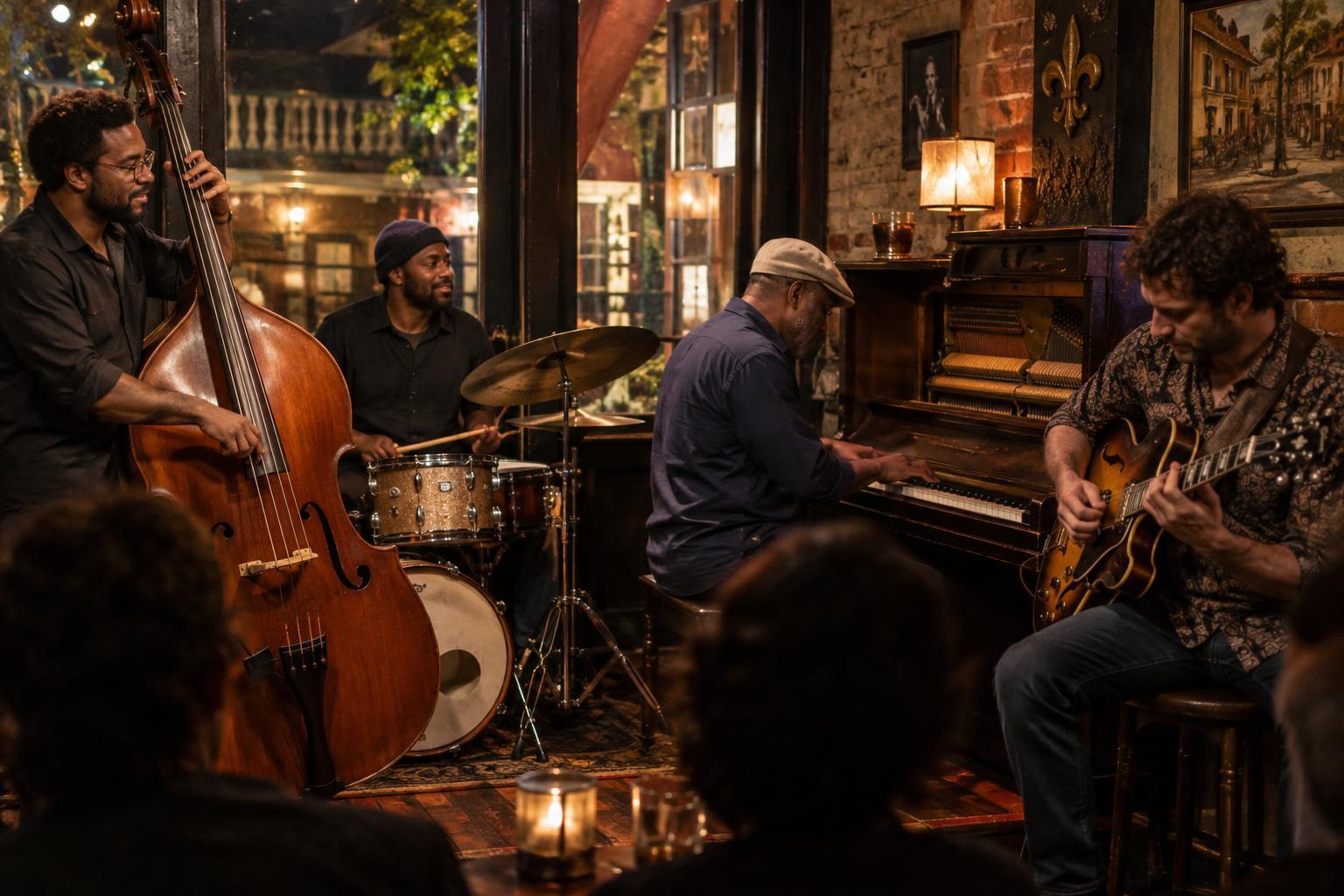
The rhythm section is not one fixed lineup. A small jazz group might use drums, string bass and piano. Another band might build its foundation with electric bass, guitar and keyboards. In a brass band, a sousaphone or tuba can carry the low notes while bass drum and snare drive the pulse. The instruments change with the band, but the listening question stays useful: who is keeping the music moving, and how?
Follow the low notes
Try listening to the lowest repeating sound for part of a song. A bass player might mark a steady sequence of notes, repeat a short pattern or leave gaps that make the next note land harder. In a brass band, the low brass may provide both a bass line and a rhythmic bounce. Rather than treating it as background, listen for how that line gives the rest of the group a place to land.
Now notice its relationship with the drums. Do the bass notes seem to meet the bass drum, or do they fall between its accents? Does the pattern stay steady while a soloist takes chances, or does it change with the soloist? These are questions, not a test with one right answer. A band can create a strong groove through close coordination, playful contrast or both.
Hear the space between drum hits
Drums do more than play loudly or quietly. A drummer may emphasize a backbeat, add a brief fill or keep time with lighter sounds that are easy to miss when horns are playing. If you cannot pick out each drum, listen for a change in texture: does the music feel more open when the drummer plays fewer notes? Does a burst of activity signal that the band is about to enter a new passage?
In a walking group, drum sounds can travel differently from those in a club, and the rhythm has to work in a shared outdoor space. In a small room, even a soft cymbal or snare accent may be clear. The setting affects what you hear, so avoid judging a band by whether every detail reaches you from your first standing spot. If it is appropriate to move, try listening from another place in the room and notice what comes forward.
Listen for conversation, not just timekeeping
Piano and guitar can help hold a groove without playing continuously. Short chords may answer a singer, reinforce a drum accent or leave room for a horn phrase. Listen during a solo: is another musician repeating the same pattern, changing it slightly or stepping back? Those small choices can make the solo feel supported without crowding it.
A useful listening exercise is to follow one instrument for a verse, then switch to another when the passage repeats. On the next song, listen to the whole group again. You may hear how a shared stop, a quiet entrance or a sudden return to the main groove depends on everyone paying attention. That exchange is part of the pleasure of live music, even when you cannot name what the players are doing.
Give yourself permission to stop analyzing, too. The point is not to turn a night out into homework. Following the rhythm section for a few moments can deepen your appreciation; letting the full sound take over is another way to enjoy the same performance.