Start with the event’s actual footprint
Before building an itinerary around a festival, find out whether it takes place inside a ticketed site, along public streets, at several venues or across an entire neighborhood. Those formats create different planning problems. A ticketed entrance may have bag rules and security lines; a street celebration may affect how you reach a nearby restaurant even if you never enter the event. Check the organizer’s official information for the location, hours, entry points and any changes close to your visit.
Look at a map rather than relying only on an address. Note where you expect to arrive, where you hope to leave and what lies between those points. If the festival spans multiple blocks, a short walk on a normal day may become a slow trip through a crowd. Give yourself generous time for meals, performances and reservations, especially when you must cross the event area.
Buy tickets with a clear plan
If admission is required, read what each ticket covers before purchasing. A general admission pass, a single-event ticket and a multi-day pass may have different entry privileges. Check whether you need to choose a date, whether re-entry is allowed, how tickets will be delivered and what happens if your plans change. The organizer’s official ticket link is the safest starting point; treat unfamiliar resale offers cautiously and review their terms before paying.
Save your confirmation where you can reach it without a reliable mobile connection. If tickets must be displayed on a phone, charge it before leaving and carry a backup power source if you have one. Also check the event’s bag, food, drink and accessibility policies before packing. Rules can vary widely, and discovering a prohibited item at the gate can turn a simple arrival into a long detour.
Choose transportation for the trip home, too
Walking, public transit, a taxi or a ride-hailing service may all be workable, depending on your lodging and the event location. Driving directly to a busy festival can be frustrating when streets are closed or parking is limited. If you do drive, check official closure information, choose legal parking and allow for a walk to the entrance. Never assume you will be able to leave by the same route you used to arrive.
Make your exit plan before the day gets loud and crowded. Pick a meeting point outside the busiest area if you are traveling with others, and decide what you will do if a pickup location is inaccessible. Transit routes and stops may change around major events, so check the relevant operator’s updates rather than relying on an ordinary route map alone. If walking is part of your plan, look at the full distance to your lodging, not just the distance to the festival gate.
Move through crowded streets with patience
Crowds are part of the atmosphere, but they also change the pace of an outing. Wear shoes suited to standing and uneven pavement, carry water when permitted and take breaks before you are exhausted. New Orleans weather can make an outdoor day feel very different from the forecast you saw while packing, so bring appropriate rain or sun protection and check the conditions again before heading out.
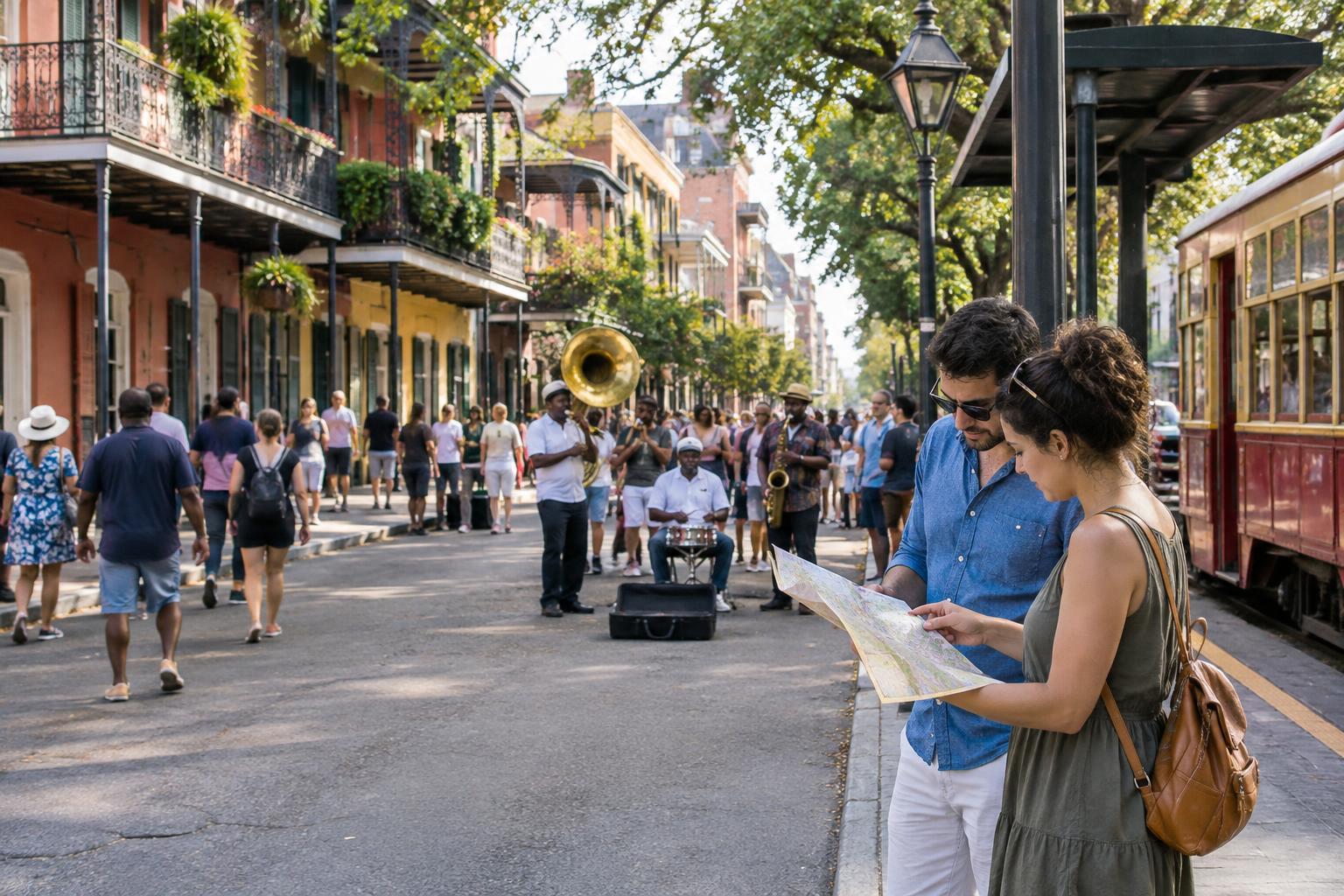
Keep sidewalks, doorways and accessible routes clear when stopping to check a map or take a photo. Follow posted directions and event staff guidance near entrances and street crossings. If you are attending with children or anyone who may need a quieter space, agree on a simple separation plan and identify a less crowded place to regroup. Accessibility needs are worth checking with the organizer in advance rather than assuming every entrance or viewing area works the same way.
Leave room for the neighborhood
A festival can be the centerpiece of a visit without filling every hour. Build in time to eat, rest and explore away from the busiest blocks. Nearby businesses may be busy too, and reaching them may take longer than expected. If you have a reservation, confirm that it still fits your transportation plan; if you do not, keep a flexible alternative in mind.
Remember that the streets surrounding an event are also part of a neighborhood where people live and work. Respect private property, dispose of trash properly and keep noise down when leaving late. The most comfortable festival plan is not the one that packs in the most stops. It is the one that gives you enough information and enough breathing room to enjoy the music, food and company without spending the day racing a clock.