Start with the people, not just the beat
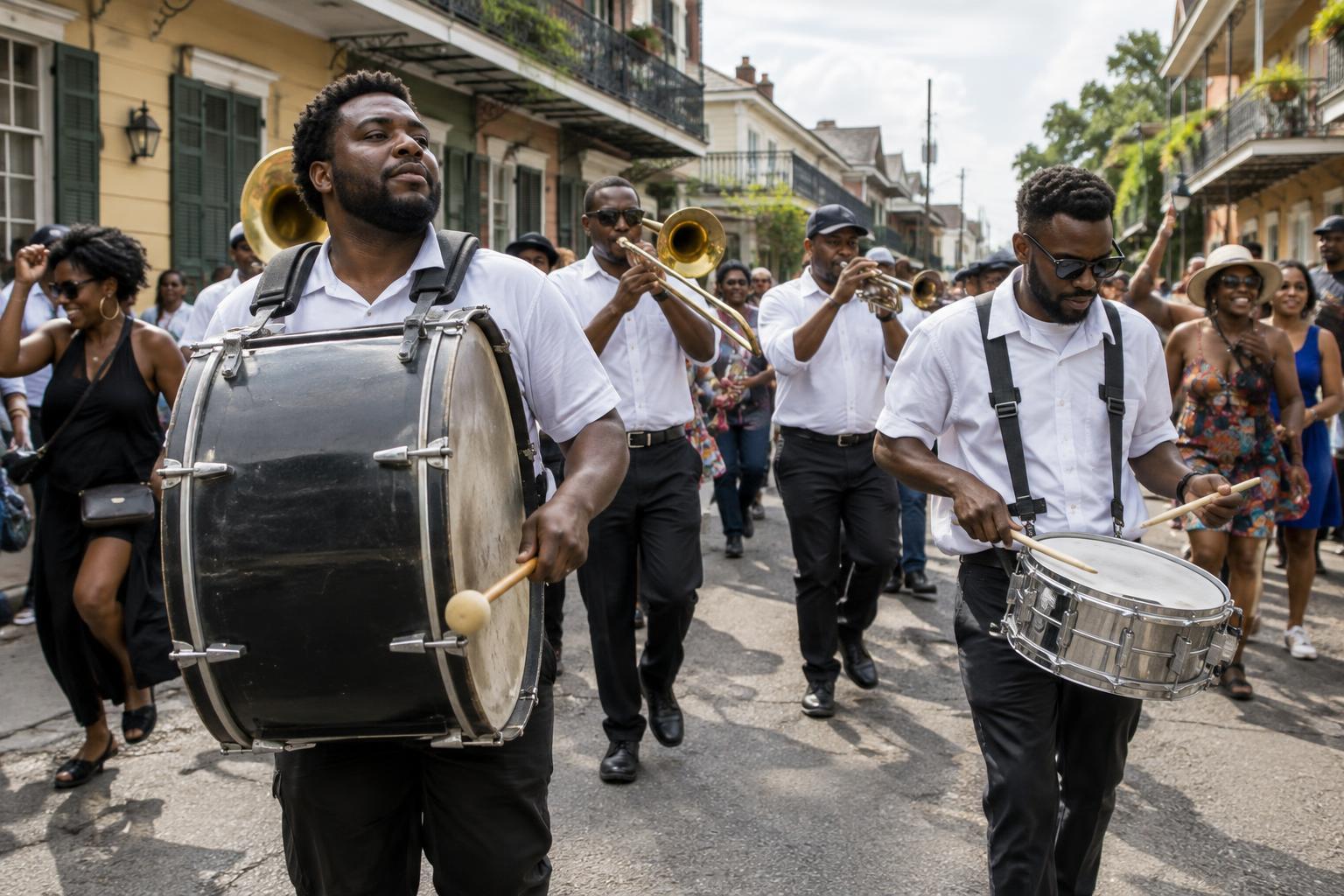
In New Orleans, a second line is not simply a style of drumming. The term also describes the people who follow a parade’s sponsoring group and band, dancing and moving through the streets. Social aid and pleasure clubs are central to this tradition. Their parades bring together music, dress, neighborhood ties and the pleasure of showing up for one another. The sound makes more sense when you remember that it is made for people in motion.
There is no single drum pattern that defines every second line. Bands draw on shared musical habits but respond to the route, the tune and the crowd. From one block to the next, a groove may feel spacious, driving or full of sudden accents. Rather than trying to identify a fixed formula, listen for how the bass drum, snare and brass leave room for one another while keeping everyone moving.
The bass drum gives the street a pulse
The bass drum is often the easiest part to feel before you can pick out a melody. Its low notes give dancers a point of return: a sturdy thump beneath all the motion above it. That pulse need not land with the identical weight on every beat. A drummer may emphasize a note, hold back for a moment or answer an accent from the horns. The result can feel both grounded and elastic.
Try listening for the space after each low hit. That space matters because it lets the rest of the band push and pull without losing the sense of forward travel. If you find yourself stepping comfortably while the rhythm seems to lean sideways, you are hearing one of the groove’s pleasures: steadiness that does not have to sound rigid.
The snare fills the spaces
Against the bass drum’s low pulse, the snare brings crisp attacks, rolls and quick changes in texture. It can mark time clearly, but it also comments on the beat: a little flurry before an expected landing, a sharp accent that catches a dancer’s foot, or a brief pause that makes the next strike feel bigger. Listen to the conversation between the two drums rather than treating the snare as decoration laid over the bass.
That conversation helps create syncopation, the feeling of emphasis falling somewhere other than the place you first expected. You do not need to count subdivisions to hear it. Walk an even pace in your mind, then notice which snare notes seem to nudge you ahead or invite a shoulder to move between steps. Players can vary these details throughout a parade; the groove stays alive because it is being played, not merely repeated.
Brass turns the pulse into a conversation
Horns give the rhythm a tune, but they also contribute to its timing. A sousaphone or other low brass voice may reinforce the bass drum with a moving bass line, while trombones, trumpets and saxophones shape melodies, harmonies and short answers. A phrase can stretch across the beat; a burst of notes can land right on a drum accent. Listen for moments when the horns leave a gap and the drums seem to speak, then return with an answer.
The whole band can change its emphasis together. A melody might be familiar enough for nearby dancers to anticipate its return, yet the way players enter, stop or repeat a phrase can make that return exciting. Street acoustics add another layer: as musicians pass, a horn part that was hidden may come forward, then blend back into the ensemble. Hearing the music from the sidewalk is different from hearing a balanced recording, and that shifting perspective is part of the experience.
How to listen while making room
If you encounter a second line, begin by listening to one layer at a time. Find the bass drum’s low pulse, then follow the snare’s accents. Finally, notice whether the horns sit squarely on that pulse or play around it. After a few moments, stop separating the parts and hear how they support the dancers’ pace. You may find that your sense of the beat changes as the band approaches, passes and recedes.
Remember that a parade is a community event, not a performance staged solely for visitors. Give marchers and musicians space, follow directions from people managing the route, and avoid blocking someone’s path for a photo. If you are planning to attend a particular parade, check its details through reliable local channels before setting out; routes and timing can change. Once there, the most useful listening skill is attention—to the band, to the people moving with it, and to the way the rhythm connects them.