Start by learning how the room works
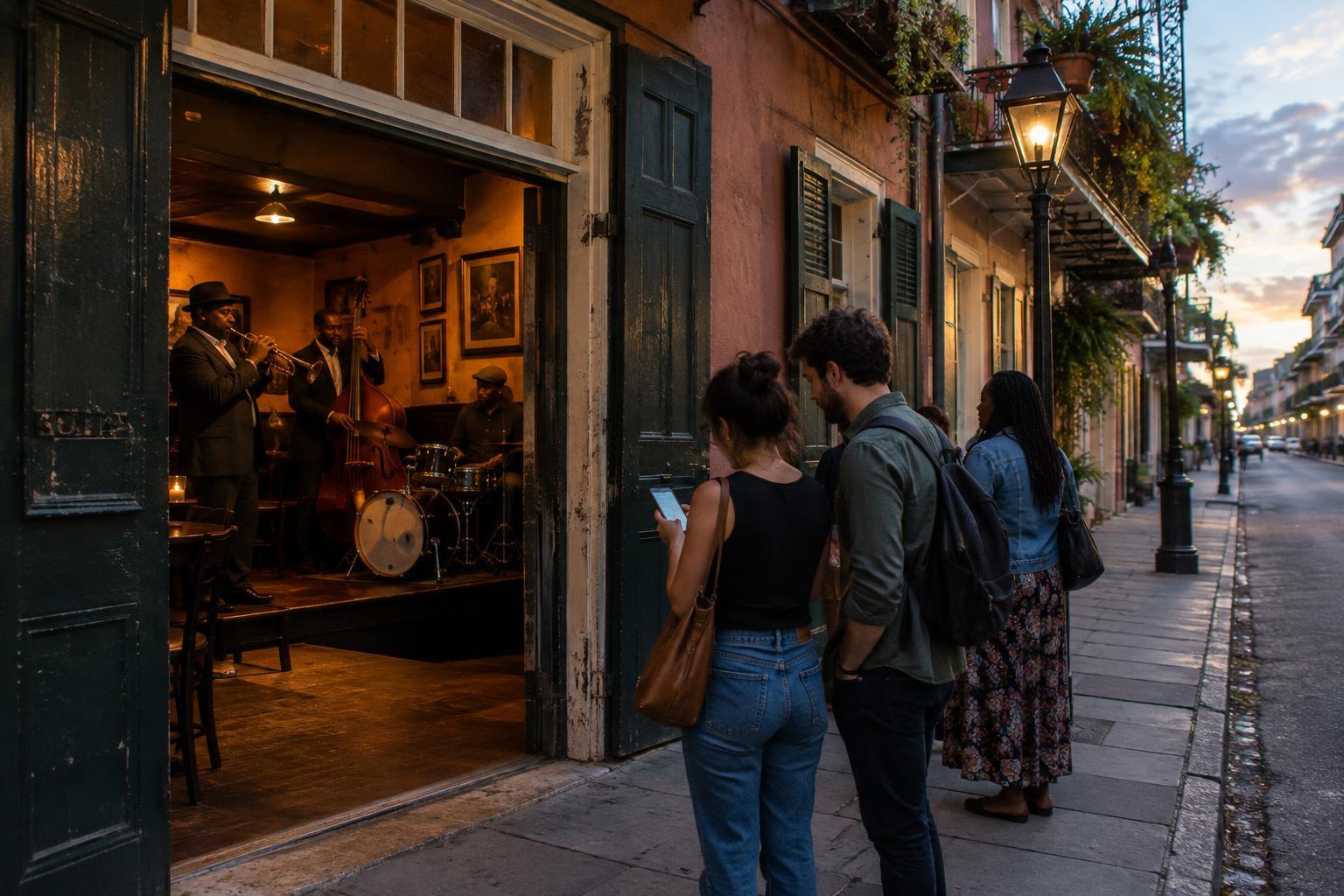
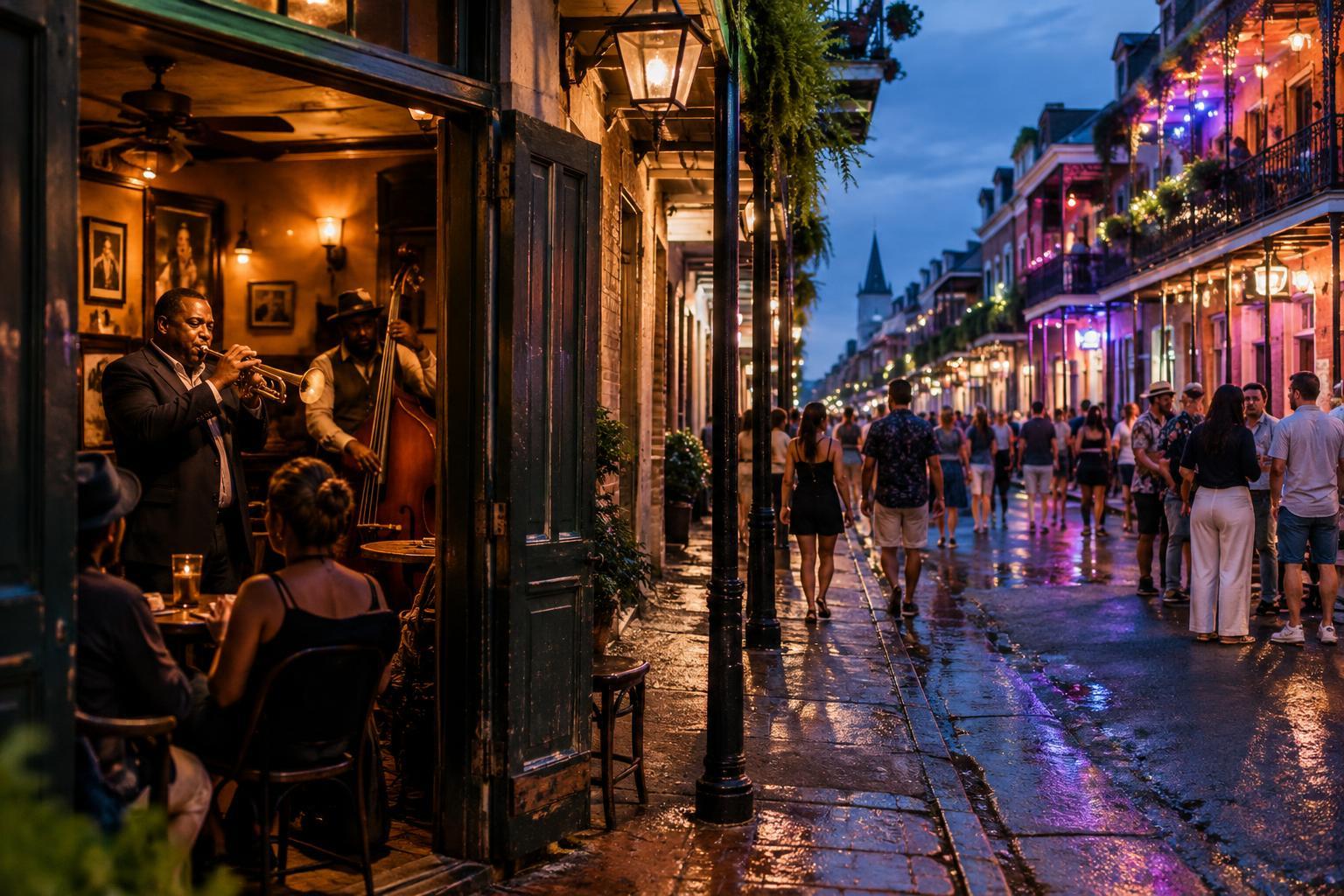
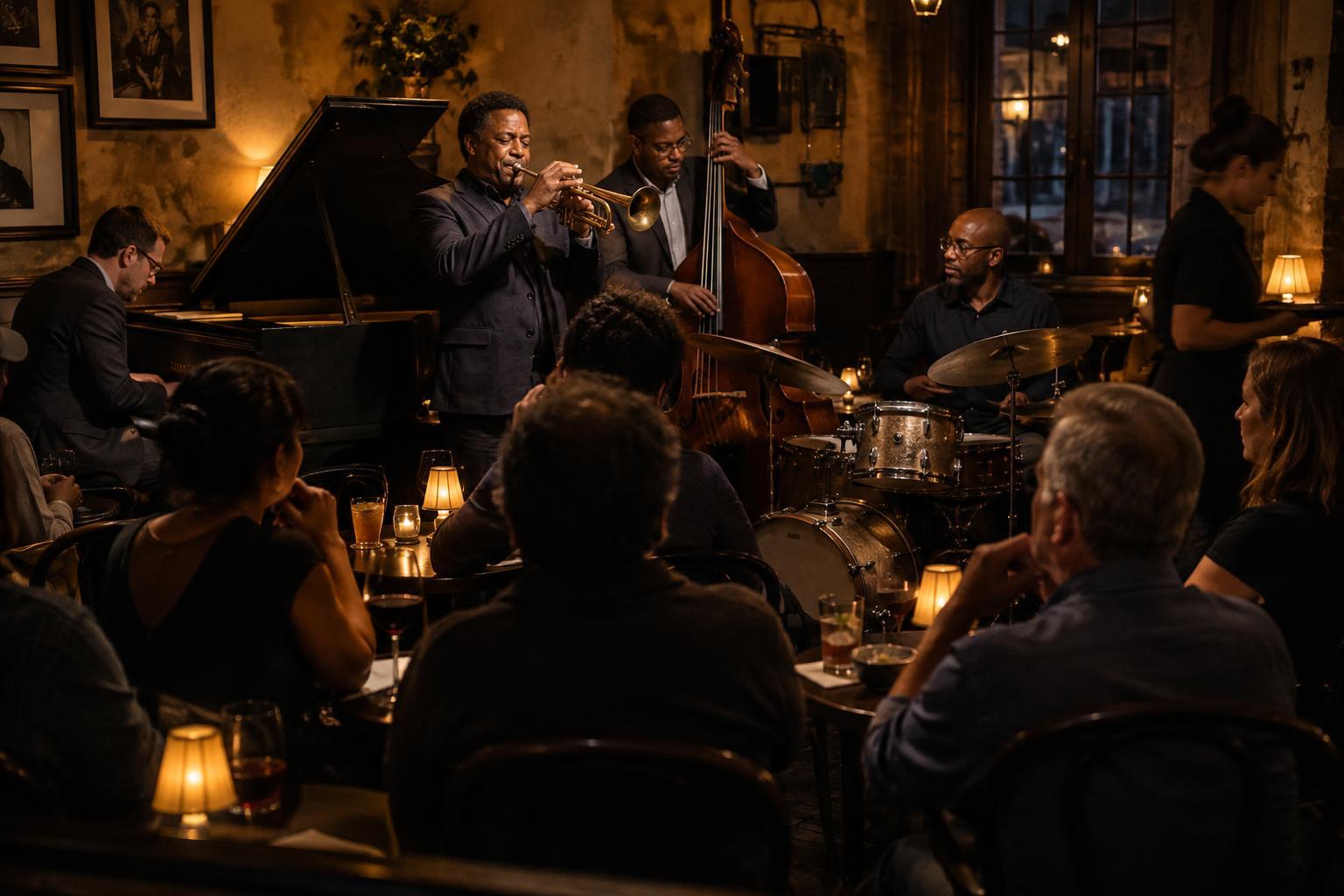
A New Orleans jazz club can be a listening room, a bar with a band, or something in between. That difference matters more than any single rule of etiquette. In a quiet room, guests may come primarily to hear every note. In a livelier bar, conversation may be part of the atmosphere. Take a moment when you arrive to notice how closely the audience is listening, where people are standing and whether staff are directing guests to seats.
Check a venue’s current information before you go, especially for admission, reservations, age policies and set times. Details can change, and a club’s own guidance is more useful than an old recommendation. If you are unsure what to do once you arrive, ask the door or floor staff. A brief question is kinder than assuming an open chair, table or patch of floor is available.
Understand the cover before you settle in
A cover is an admission charge, not necessarily a payment for food, drinks or a particular seat. Some places may also have a drink minimum, reserved seating or separate admission for different performances. Before paying, ask what the charge includes and whether you may stay for the next set. If you plan to leave and return, ask whether reentry is allowed rather than assuming your receipt will get you back in.
Paying a cover supports access to the performance, but it does not turn the musicians into background music on demand. Let the set unfold without calling out song requests unless performers invite them. Keep any discussion about a charge or seating policy with staff, away from the stage when possible. That lets the people working the room answer you without interrupting the music.
Treat seating as shared space
A table near the band may be reserved, assigned or intended for guests who are actively listening. Follow the host’s direction where there is one, and ask before joining a partly occupied table. If seating is first come, first served, avoid holding extra chairs for people who have not arrived, particularly when the room is filling up. Keep coats and bags out of walkways so staff and other guests can move safely.
If you need an accessible seat or a clear route through the room, contact the venue ahead of time when possible and speak with staff on arrival. Layouts vary, and they are best placed to explain the options. Once seated, try not to block anyone’s view while filming or taking a photo. If you must move during a song, use a natural pause when you can.
Let the music set the volume
The simplest conversation rule is to match the room. In a listening-focused club, even a quiet exchange can carry over an acoustic solo. Save longer conversations for a break, the bar or outside. In a louder room, talking may be welcome, but it is still courteous to lower your voice when the band plays softly or a musician introduces a tune. A short comment to a companion is different from a sustained conversation across the table.
Silence your phone before the set and keep its screen dim if you need to check it. Photography and recording policies differ, so look for posted guidance or ask staff. Avoid flash, and do not hold a phone above other people’s heads. Being present does not require sitting motionless; it means giving performers and nearby listeners room to enjoy the same performance.
Applaud with attention, not a script
Applause after a tune is always easy to understand. At many jazz performances, listeners also clap after a featured solo, even though the piece continues. If you are new to the setting, watch the musicians and audience for cues. You do not need to identify every soloist or clap at a precise moment. An attentive response is better than worrying about getting the timing perfect.
Between sets, applause is a welcome way to thank the band; tips may be another option when a venue or performer provides a way to give them. Neither replaces paying any required admission. As you leave, make space for the next guests and keep conversations away from the stage if music is still underway. Good etiquette is less about knowing an unwritten code than about noticing the people who make the night possible.