Start with a loop, not a checklist
The Garden District rewards an unhurried walk. Its appeal lies partly in the spaces between landmarks: deep porches, shaded yards, decorative ironwork and the changing feel of one block to the next. Rather than trying to identify every notable house, choose a simple loop and leave time to look closely from the public sidewalk.
One practical route begins near St. Charles Avenue and Washington Avenue. Walk along Washington toward Magazine Street, continue along Magazine to Jackson Avenue, then follow Jackson back toward St. Charles. Return along St. Charles if you want to finish where you began. These streets provide an easy framework, but you can shorten the walk by turning back early or add a nearby residential block when conditions are comfortable. Check a map before setting out, especially if you are arranging a ride or using public transit afterward.
St. Charles has a broad, active feel, while the side streets tend to be quieter. Magazine adds shops and places to take a break, though businesses and their hours can change. Treat the route as a way to orient yourself, not a promise that any particular stop will be open.
Notice the streetscape without entering it
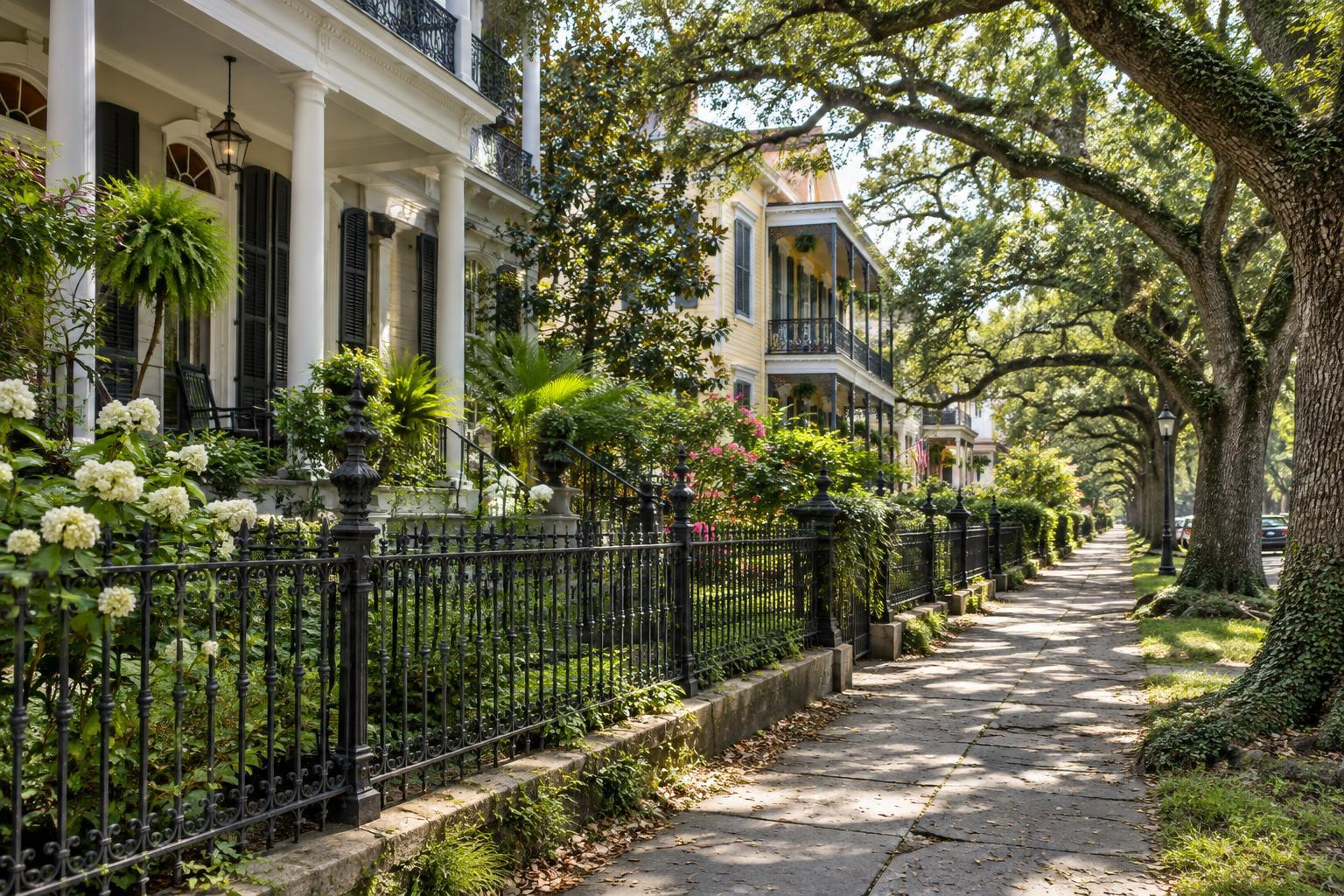
Many Garden District houses sit behind fences, gates and planted setbacks. Those boundaries are part of the neighborhood, not invitations to move closer for a better view. Look for architectural details you can see from the sidewalk: columns, balconies, shutters, rooflines and the way trees frame a façade. Styles and building histories vary, so resist assuming that every imposing house has the same age or story.
Washington Avenue also passes Lafayette Cemetery No. 1. It can be worth viewing from outside, but do not build your day around entering it; access rules may change. Gates, walls and posted notices should guide what you do on arrival. The same principle applies throughout the walk: a building that attracts visitors may still be a private home or a place with restricted access.
Make the walk comfortable and flexible
New Orleans walking conditions can be demanding, particularly when the air is hot or rain is approaching. Bring water, wear comfortable shoes and allow more time than a map’s shortest estimate. Sidewalks may be uneven, narrowed by tree roots or interrupted by construction. Watch your footing, use marked crossings where available and avoid stepping into the street simply to get a wider photograph.
A daytime walk makes it easier to appreciate architectural details and assess the route underfoot. If you would rather walk later, keep in mind that residential blocks may be dimmer and quieter than the larger avenues. Choose the length and timing that suit your group, and have a straightforward way back. Visitors with mobility needs may want to review recent route information in advance and be ready to change blocks when a sidewalk is difficult to use.
Be a considerate guest on residential blocks
Photographing a house from a public sidewalk is different from using its gate, steps or garden as a backdrop. Stay outside fences, keep doorways and driveways clear, and do not lean on railings or peer into windows. Give residents room to pass. If a group stops to listen to a guide or compare maps, move to a place where others can still use the sidewalk.
Keep voices at a conversational level, especially on quieter streets. Avoid photographing people in their yards or through their windows, and follow any signs asking visitors not to take pictures. These small choices help preserve the ordinary life of a neighborhood that also happens to be beautiful to explore.
The best Garden District walk need not cover every block. Follow the loop loosely, pause where public space allows, and let the streetscape set the pace. You will see more when you treat the area as a lived-in neighborhood rather than an outdoor museum.