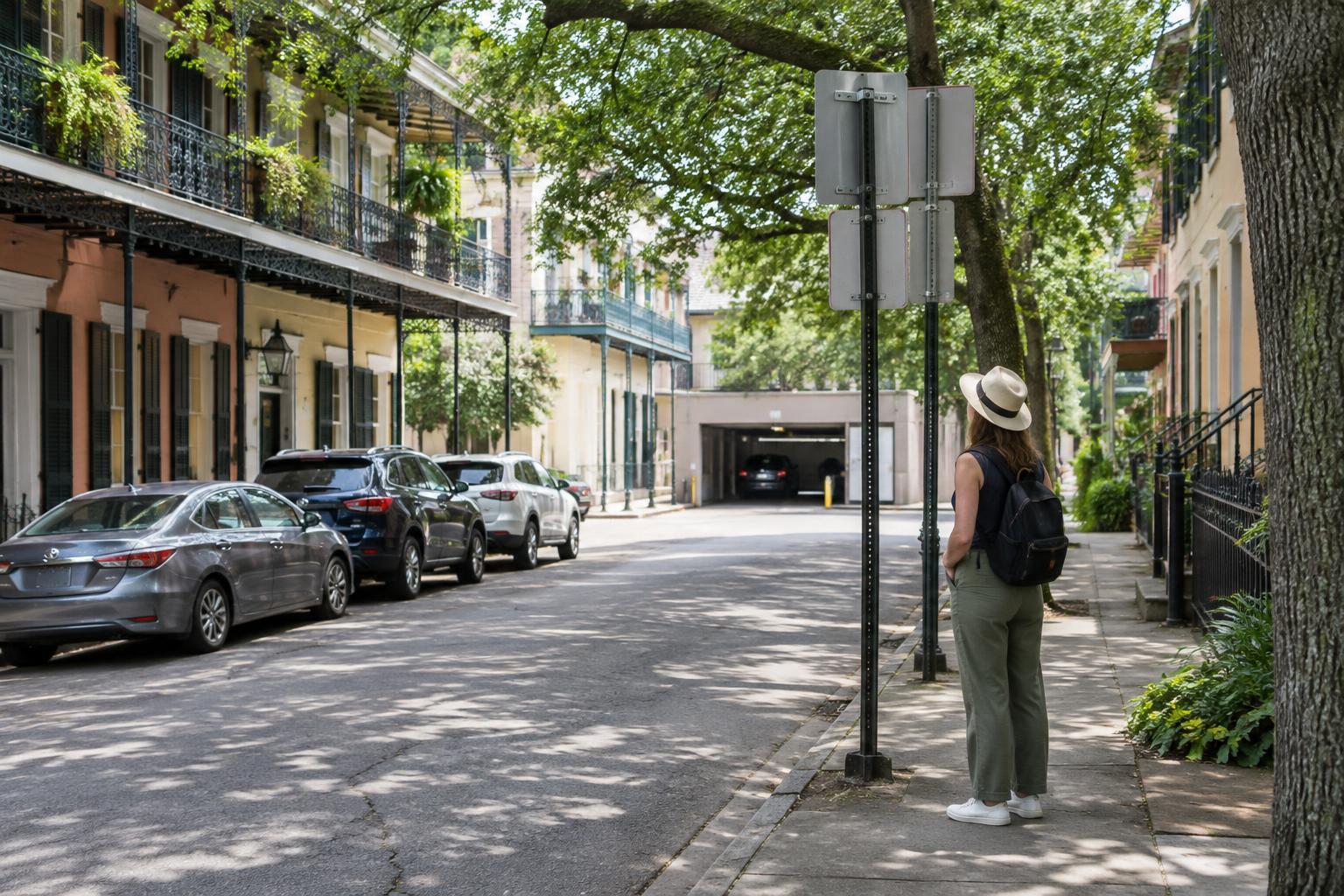
Decide whether you need the car that day
The easiest parking plan may be to leave the car where it is. If your day centers on walking through the French Quarter, eating nearby and hearing music after dinner, moving your car between stops can create more work than it saves. Before driving, look at the distance between your destinations and consider whether walking, transit or a ride service makes more sense for part of the trip.
If you do drive, choose a parking area near your final stop rather than circling for the closest possible space. A short, comfortable walk can be preferable to repeated turns through unfamiliar one-way streets. Check the walking route as well as the driving route: a garage that looks close on a map may have an entrance on a different block.
Read the entire block before using a street space
A vacant curb is not necessarily an available parking space. Look for signs governing the side of the street where you intend to park, and read all of them before paying a meter or leaving the car. Restrictions may concern payment, time limits, residential permits, loading, street cleaning or other uses. Pay particular attention to arrows and to signs posted farther along the block; the rule beside one space may not describe every space nearby.
Then check the curb and surroundings. Do not block a driveway, curb ramp, crosswalk, fire hydrant or access point, even if other cars appear to be doing so. Leave room for vehicles and pedestrians, and avoid treating an unmarked stretch of pavement as permission to park. The neutral ground—the median found on some New Orleans streets—is not a fallback parking spot.
Meter rules and enforcement details can vary by location. Use the instructions displayed at the meter, pay station or posted sign, and confirm that the space or zone shown in any payment app matches where you parked. Save the confirmation, but remember that paying does not override a separate restriction. If signs seem contradictory or you cannot tell where a rule begins, choose another space.
Know what a garage or lot is actually offering
A garage or staffed lot can reduce the time spent searching, especially when your plans run into the evening. It does not automatically mean unlimited access, a fixed total price or permission to leave and return. Before entering, check the posted rate structure, closing or retrieval arrangements, and whether the price changes with the length of your stay. If you expect to drive to another neighborhood and come back, ask whether re-entry is allowed.
Also check vehicle-height limits and any rules for oversized vehicles. In a surface lot, identify the correct payment method and the space number, if one is required. Keep your ticket or receipt where you can find it later. If you reserve ahead, confirm the actual entrance address and read the reservation terms; a booking confirmation is less useful if it leads you to the wrong side of the block.
Avoid the mistakes that complicate a night out
Visitors often underestimate how long an evening will take. Dinner may run late, or you may decide to stay for another set of music. Choose a parking option that covers a realistic return time instead of relying on a last-minute dash to the meter or garage. If you are parking near your lodging, ask about its parking arrangements before arrival rather than assuming a space will be available at the door.
Another common mistake is following the car ahead into a questionable space. Other drivers may have permits, may be stopping briefly or may simply be taking a risk. Read the rules for your own spot. Lock the vehicle and take valuables with you rather than leaving bags or purchases visible. No parking choice guarantees security, but keeping the interior clear is a sensible precaution.
Finally, note where you parked. Save the location on your phone or record the nearest intersection and garage entrance. This is particularly helpful after dark, when similar-looking blocks and a different walking route can make the return trip confusing.
Make a flexible plan before you arrive
Look up a primary parking choice and a backup near your destination, then allow time to read signs or lot terms once you get there. For a short stop, a clearly permitted street space may be convenient. For a longer visit or an uncertain return time, a garage or lot may be simpler, provided its access rules fit your plans.
Parking rules, prices and availability can change, particularly around events. Treat advance information as a starting point and follow the signs and instructions you encounter on arrival. If a space requires guesswork, passing it by is usually the more relaxed way to begin your visit.