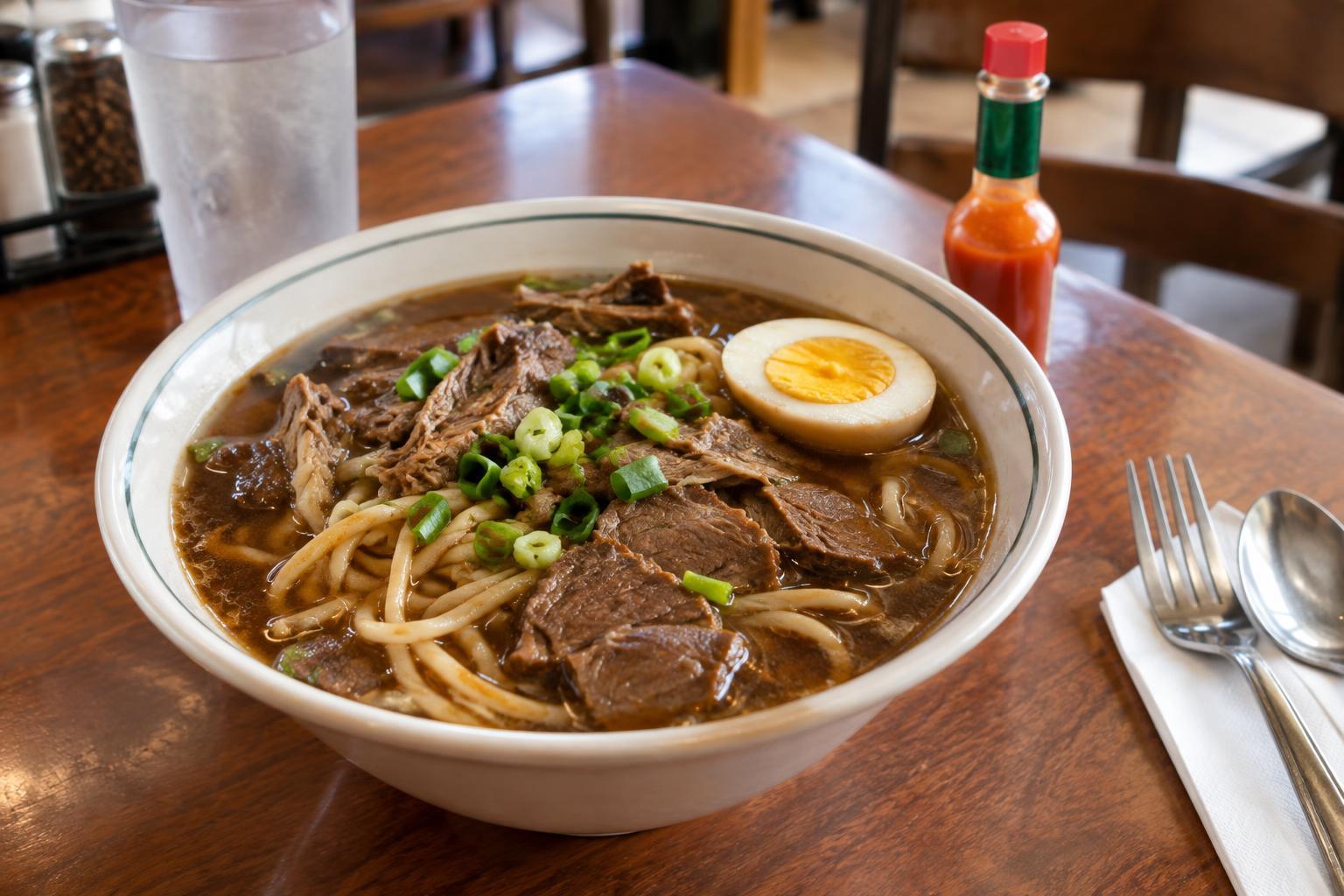
A noodle dish with room for variation
Yakamein is a New Orleans noodle dish commonly built around a seasoned broth, noodles, protein, and toppings such as a hard-boiled egg and green onion. Spaghetti is a familiar choice for the noodles, but the defining experience is the combination: a hot, savory bowl that can be eaten as a meal rather than a small starter. You may also see its name spelled differently. If you are unsure how to say it, pointing to the menu is perfectly fine.
There is no single bowl that every cook makes. Beef is common, while other versions may use shrimp, pork, chicken, or a combination. Some broths are light enough to sip easily; others taste more deeply seasoned. Chili sauce or another hot condiment may come on the side, letting you adjust the heat yourself. That flexibility is part of what makes yakamein interesting to try, but it also means a description from one counter may not predict what arrives at another.
What gives a bowl its flavor
Yakamein gets much of its character from the broth. Depending on the cook, it may bring together a meat or seafood base with seasonings that add saltiness, warmth, and a little tang. Soy sauce and Worcestershire sauce appear in some preparations, though neither should be assumed to be in every bowl. The noodles absorb some of that liquid while remaining substantial enough to lift with a fork.
The toppings change the way the dish eats. Sliced or chopped protein makes it filling, green onion adds a fresh bite, and a halved hard-boiled egg offers a milder contrast to the broth. A cook might finish the bowl with other garnishes or serve condiments alongside it. Before adding extra sauce, taste the broth on its own: it may already have plenty of seasoning.
Yakamein is sometimes described through its resemblance to other noodle soups. Comparisons can help a newcomer picture the bowl, but they should not replace its name or flatten the different ways New Orleans cooks prepare it. The most useful expectation is simple: anticipate a savory noodle dish, then let the particular cook’s version speak for itself.
How to order without guessing
Start with the protein and the broth. If a menu lists several versions, ask which one is made with the base you prefer and whether the heat is cooked in or added afterward. This is especially useful if you want a mild bowl: leaving off a hot sauce may help, but it will not change a broth that is already spicy. If you have an allergy or dietary restriction, ask about the broth, sauces, noodles, and garnishes rather than judging by the protein named on the menu.
It is also worth checking what comes with the order. An egg may be standard, optional, or absent; condiments may be provided separately. If you dislike a topping, ask whether it can be left off. For takeout, broth and noodles may be packed together or separately. When they are separate, combine them when you are ready to eat so the noodles spend less time soaking.
A first order does not need elaborate customization. Choosing a listed version and trying a spoonful before adjusting it gives you a clearer sense of that cook’s approach. If the menu is brief, one or two specific questions will usually be more helpful than asking for a definitive explanation of what yakamein is supposed to be.
Enjoying the dish on its own terms
Yakamein is often talked about as a late-night comfort food, and you may hear it described as a hangover remedy. Treat that last description as a familiar nickname, not a health promise. A warm, filling bowl can be appealing after a long evening, but it cannot undo the effects of drinking. You do not need a night out to appreciate it, either; it works just as well when you simply want noodles and broth.
For a visitor, the best way to approach yakamein is with curiosity rather than a checklist. Read the description, ask what is in the bowl if something is unclear, and expect the recipe to reflect the person making it. One bowl may become your favorite because of its broth, another because of its toppings or texture. That range is a reason to keep exploring, not a sign that one of them got the dish wrong.