Think in corridors, not a single destination
Mid-City covers enough ground that “let’s walk around Mid-City” is not much of a plan. Its boundaries can vary depending on who is describing it, and familiar places such as Bayou St. John and City Park sit near areas visitors may think of as part of the same outing. Without a car, the useful question is not whether the neighborhood is walkable. It is which part you want to reach first, and how far you want to go once you arrive.
Canal Street is a strong starting point for orientation. It runs between downtown and the Mid-City area, with streetcar service along the corridor. North Carrollton Avenue provides another recognizable line through the neighborhood and helps locate the City Park side of a trip. Between those larger streets, blocks of homes, businesses, and smaller gathering places reward a slower pace. They do not always form a compact visitor district, though, so check the distance between two stops before assuming they make an easy stroll.
Use transit to cover the long stretches
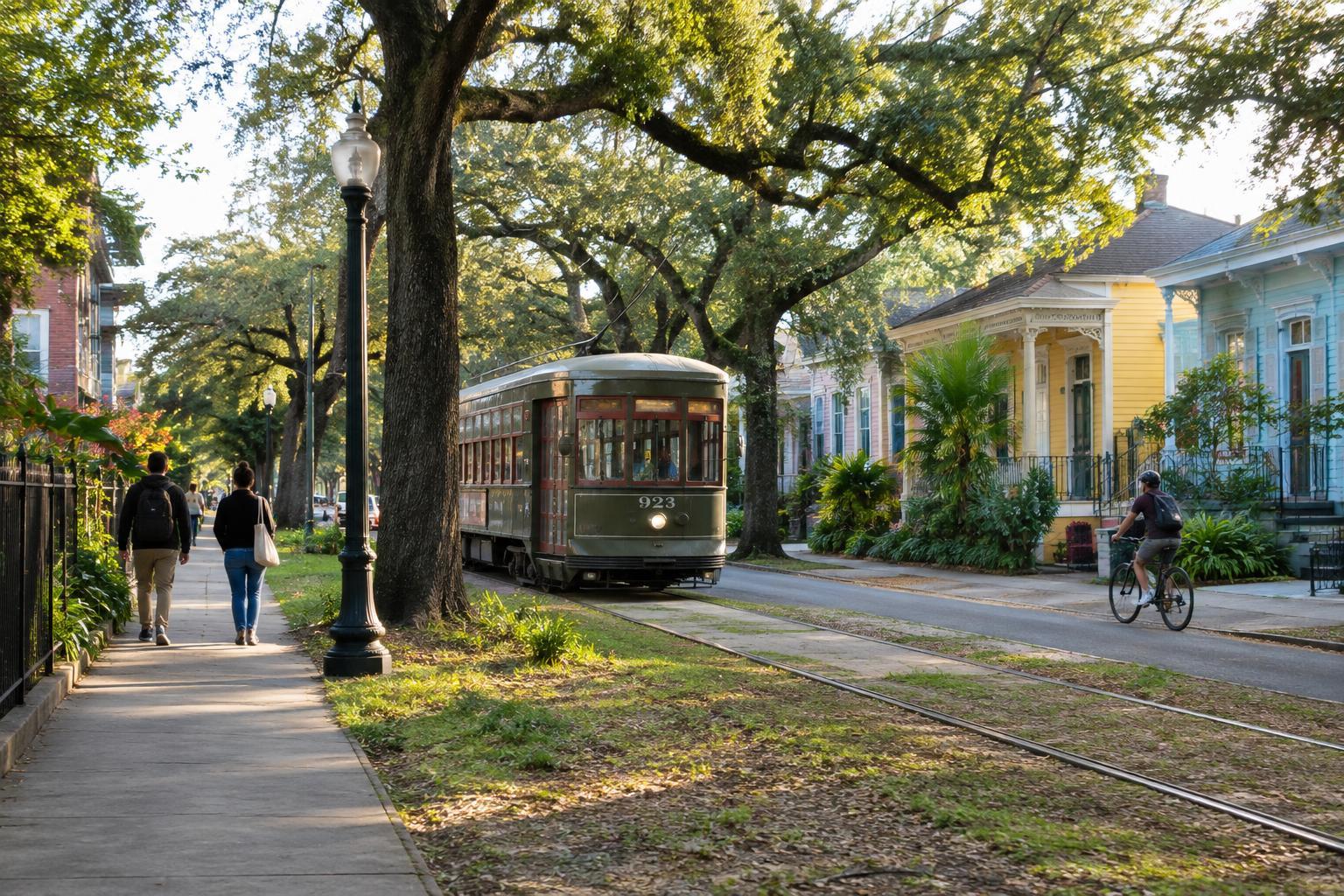
The Canal streetcar is a useful connection from downtown toward Mid-City. Pay attention to the destination shown on the car: Canal service has different branches, and a streetcar heading toward the cemeteries is not the same choice as one heading toward City Park. If your destination lies beyond the stop, allow for a walk at the end rather than expecting the streetcar to deliver you to the door.
Buses can fill gaps between corridors or spare you a long walk across the neighborhood. A route that looks direct on a map may still require a transfer, and the best choice depends on where you start. Before leaving, check the transit agency’s current map, service notices, fares, and arrival information. That matters particularly if you plan to return after dinner or a performance, when a missed connection can feel much longer than it did in the afternoon.
Keep a backup plan for the trip home. That might mean knowing a second transit route, setting a comfortable walking limit, or budgeting for a ride if service no longer fits your plans. Transit is a good way to explore Mid-City, but it works best when you treat schedules and detours as details to confirm, not assumptions.
Build a walk around one area
For a first visit, choose one anchor and let nearby streets shape the rest of the outing. Around Canal Street, you can combine a transit ride with food or a neighborhood walk without crossing all of Mid-City. Near North Carrollton Avenue, you can make City Park the main destination and leave time to wander once you get there. The park is large, so arriving at its edge is only the beginning of a visit.
The Lafitte Greenway offers another way to understand the area on foot or by bicycle. This shared-use path links neighborhoods between the French Quarter side of town and the City Park area, crossing the Mid-City landscape along the way. It can make a cross-neighborhood trip more pleasant than following busy roads for the entire distance. Give other users room, watch at street crossings, and check where you will leave the path for your actual destination.
Bayou St. John makes a quieter anchor for an outing. Its banks invite a slower walk, but a bayou visit and a City Park visit together can add up to more distance than they appear to on a small map. Pick a turnaround point in advance if anyone in your group has limited walking time or energy.
Make the last few blocks comfortable
New Orleans walking conditions can change from block to block. Sidewalks may be uneven, shade is inconsistent, and wide intersections deserve extra time and attention. In warm or rainy weather, a short walk can feel longer than the map suggests. Comfortable shoes, water, and a little flexibility do more for a Mid-City day than an ambitious list of stops.
If you are cycling, take care where streets cross streetcar tracks: wheels can catch in the grooves if you approach them at a shallow angle. If you are walking at night, choose a return route you understand rather than improvising a long cut between corridors. Mid-City is well suited to an unhurried visit without a car, especially when you use transit for the broad strokes and save your energy for the places you came to see.