Where the Lower Garden District begins and ends
For a useful neighborhood outline, picture the Lower Garden District between St. Charles Avenue and the Mississippi River, with Jackson Avenue on its upriver side and the Pontchartrain Expressway on its downriver side. Boundaries can vary slightly by map or by how residents describe a place, but these landmarks give visitors a reliable starting point. “Lower” refers to its position downriver from the Garden District, not to its elevation or its place in a ranking.
St. Charles Avenue and Magazine Street are helpful orientation lines. St. Charles runs along the inland edge of the Lower Garden District, while Magazine passes through it on the way toward neighborhoods farther upriver. The river is a boundary on a map, but it is not necessarily an easy waterfront stroll from every block. Roads, buildings and other barriers shape access, so use an established public route rather than assuming a street will lead directly to the water.
How it differs from the Garden District
The names are often used loosely, particularly when describing a walk along Magazine Street. The Garden District proper sits on the other side of Jackson Avenue, roughly between Jackson and Louisiana avenues, with St. Charles Avenue and Magazine Street as its other familiar edges. Cross Jackson Avenue heading upriver from the Lower Garden District and you are moving toward the Garden District.
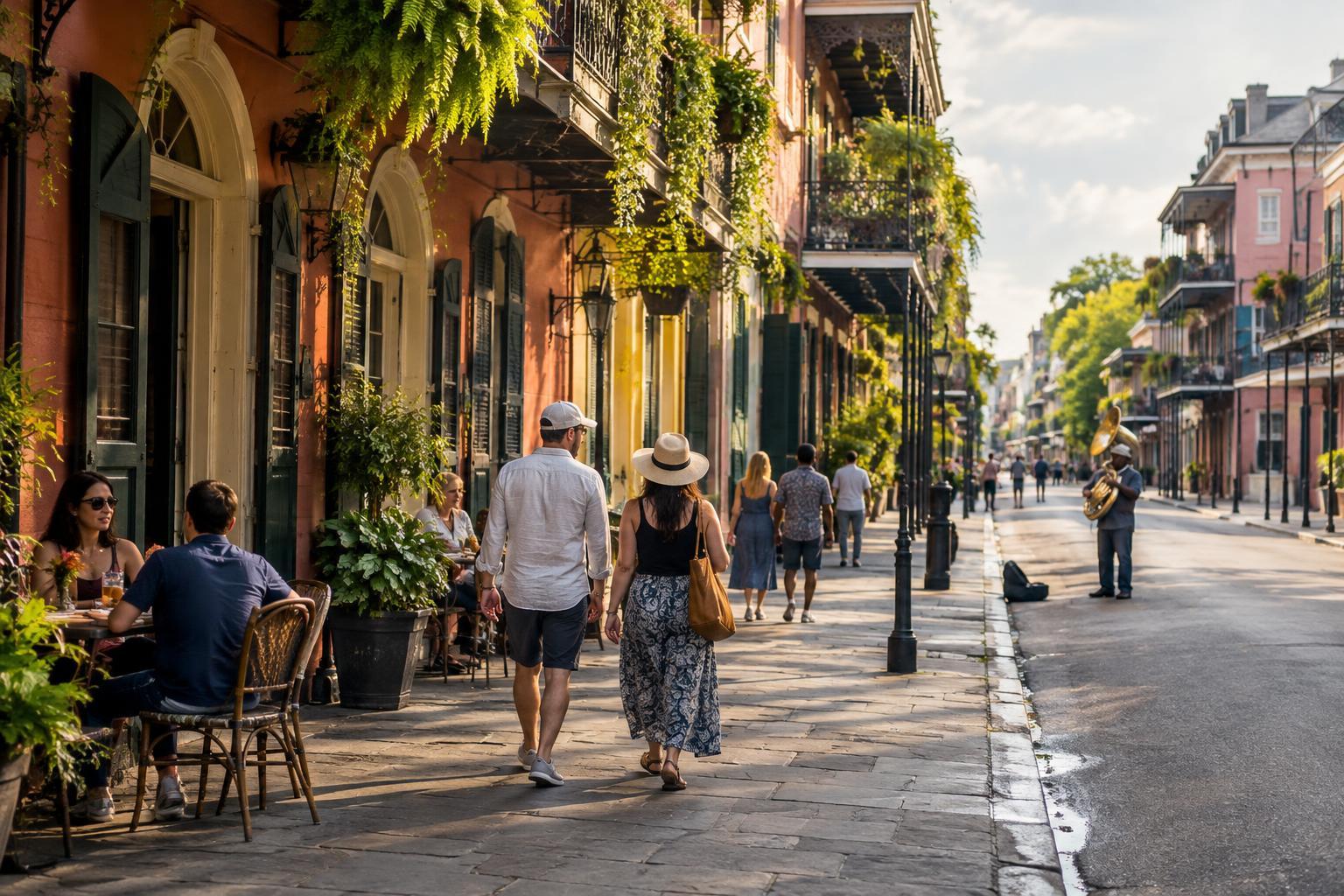
Both areas reward a slow walk past historic homes, but they need not be treated as one continuous attraction. The Garden District is especially associated with grand residential blocks and formal streetscapes. In the Lower Garden District, visitors encounter a more varied mix: houses, smaller commercial stretches, churches, apartments and busy corridors. Neither neighborhood is a museum. People live, work and travel through these streets, and the character can change within a block or two.
A practical way to keep the distinction straight is to pick Jackson Avenue as your reference point rather than relying on a business name or tour description. If your plans include a specific building, check its street address on a map before setting out. That small step can save a longer walk than expected, especially in warm or wet weather.
Public places to pause and what to expect
Coliseum Square is a useful public-space anchor within the Lower Garden District. It offers a place to slow down and take in the surrounding streetscape without treating someone’s front steps or garden as a rest stop. Its paths and green space make it a natural pause on a neighborhood walk. As with any urban park, conditions and access can change; check locally if a particular feature matters to your visit.
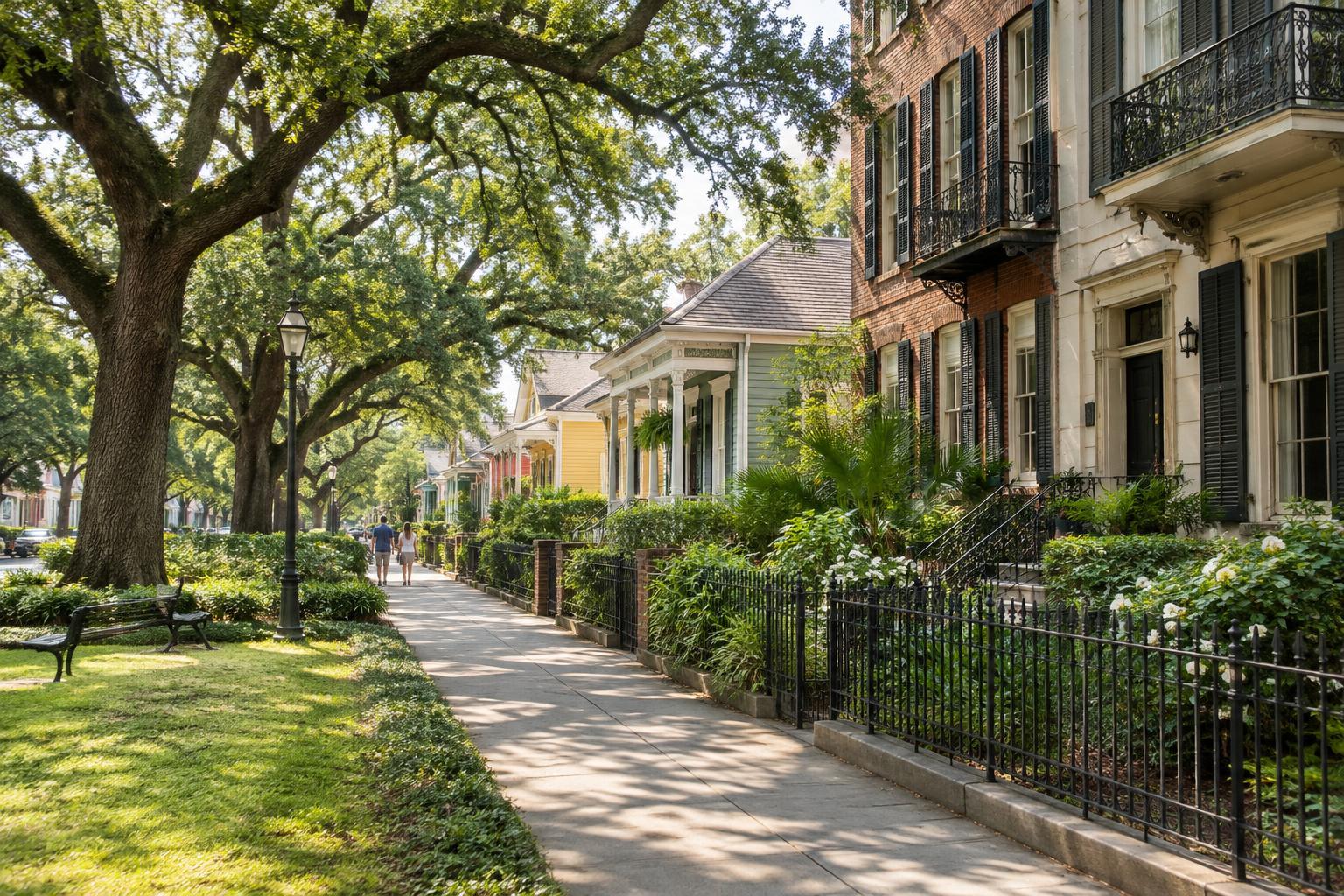
Much of the neighborhood’s appeal is visible from public sidewalks. You can notice architectural details, mature trees and changes in building scale without entering private property. Leave gates and porches alone, give residents room to pass and keep voices down near homes, particularly in the evening. For a longer break, choose a public square or an open business rather than blocking a narrow sidewalk.
Do not confuse a nearby landmark with an always-open public space. Lafayette Cemetery No. 1, for example, is in the Garden District rather than the Lower Garden District, and access should not be assumed. If a cemetery visit is important to your plans, verify its current entry rules before you go.
A simple way to explore on foot
Start with one corridor and one quieter detour. You might orient yourself along St. Charles Avenue or Magazine Street, then turn onto residential blocks toward Coliseum Square. This makes the neighborhood easier to read than trying to cover every boundary in a single outing. If you want to compare it with the Garden District, continue toward Jackson Avenue and note how the streetscape changes after you cross.
Allow extra time for intersections, uneven pavement and the distance between landmarks. Shade and seating are not guaranteed on every stretch, so carry water and choose a route that suits your comfort and mobility needs. Transit can help with a longer day, but check current routes, stops and service before relying on a particular connection.
The best plan leaves room to change course. The Lower Garden District is worth visiting for its everyday street life as much as for any single sight. Know the broad boundaries, use public spaces thoughtfully and let the difference between its busy corridors and residential blocks guide your walk.