Start with the Quarter’s edges
The French Quarter is easier to understand as a compact street grid than as a list of attractions. The Mississippi River forms one edge, North Rampart Street runs along the opposite side, Canal Street marks the upriver end, and Esplanade Avenue marks the downriver end. You do not need to memorize every street before setting out. Knowing those four edges gives you a way to check where you are when a walk takes an unexpected turn.
New Orleans directions can sound unfamiliar: locals may say “riverside” or “lakeside” rather than relying on compass points. In the Quarter, walking from Rampart toward Decatur generally brings you closer to the river. Walking from Canal toward Esplanade generally takes you farther downriver. The river bends, so these terms are often more useful on the ground than assuming every street runs neatly north or south.
Learn a few parallel streets
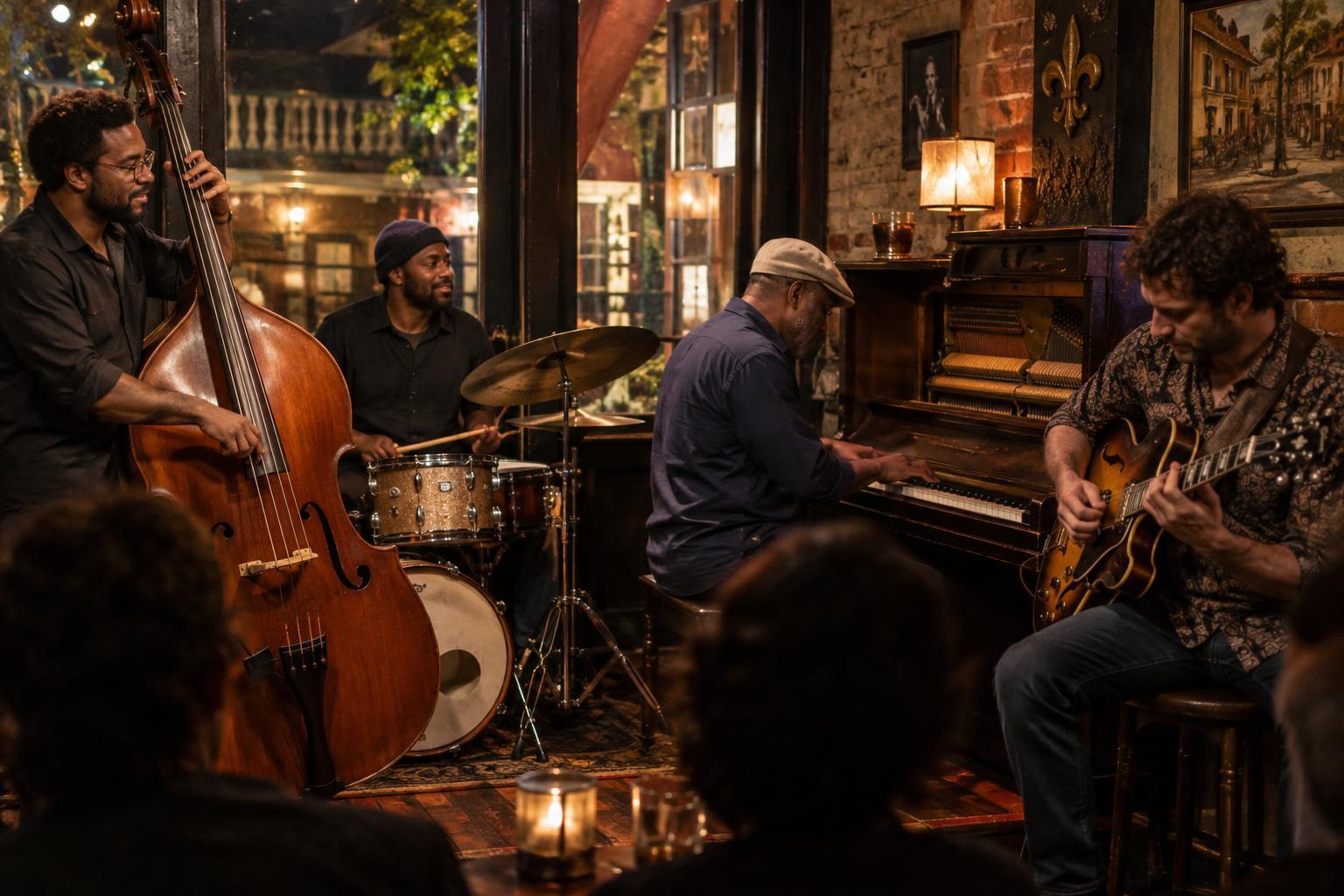
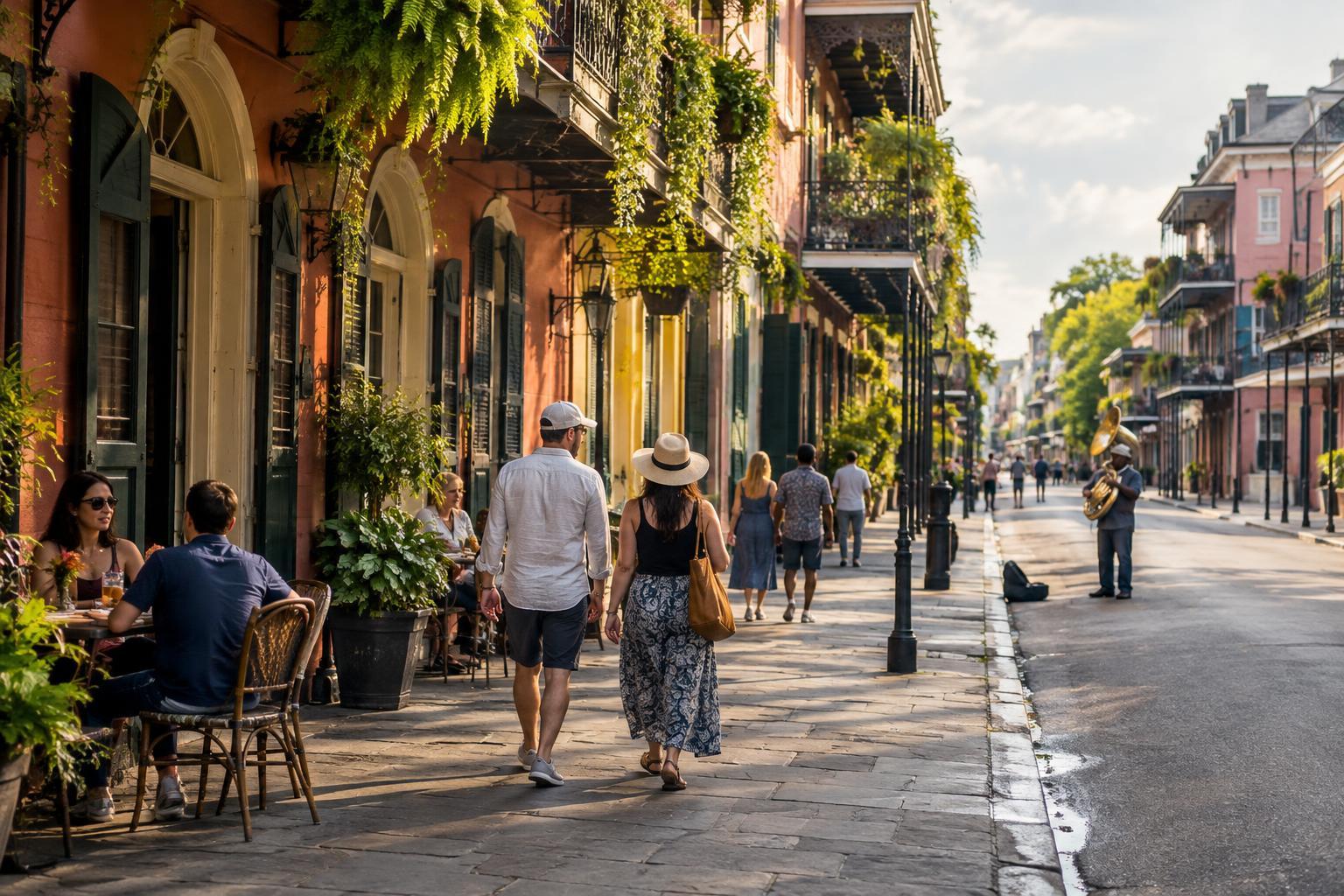
Bourbon Street is the best-known nightlife corridor, but it is only one of several streets running through the Quarter. Royal Street offers a different walking experience, with galleries, shops and architectural details that reward a slower pace. Chartres Street runs closer to the river and passes through a mix of visitor destinations and everyday street life. Decatur Street follows the river-facing side of the neighborhood, where traffic and visitor activity can make it feel busier than it looks on a map.
The cross streets help break a walk into manageable pieces. St. Louis, Toulouse, St. Peter and St. Ann are among the names you will encounter as you move through the grid. If you lose your bearings, look for the nearest street sign and choose an edge—Canal, Esplanade, Rampart or the river—to work toward. That is often simpler than trying to retrace every turn.
Use the riverfront as a reset point
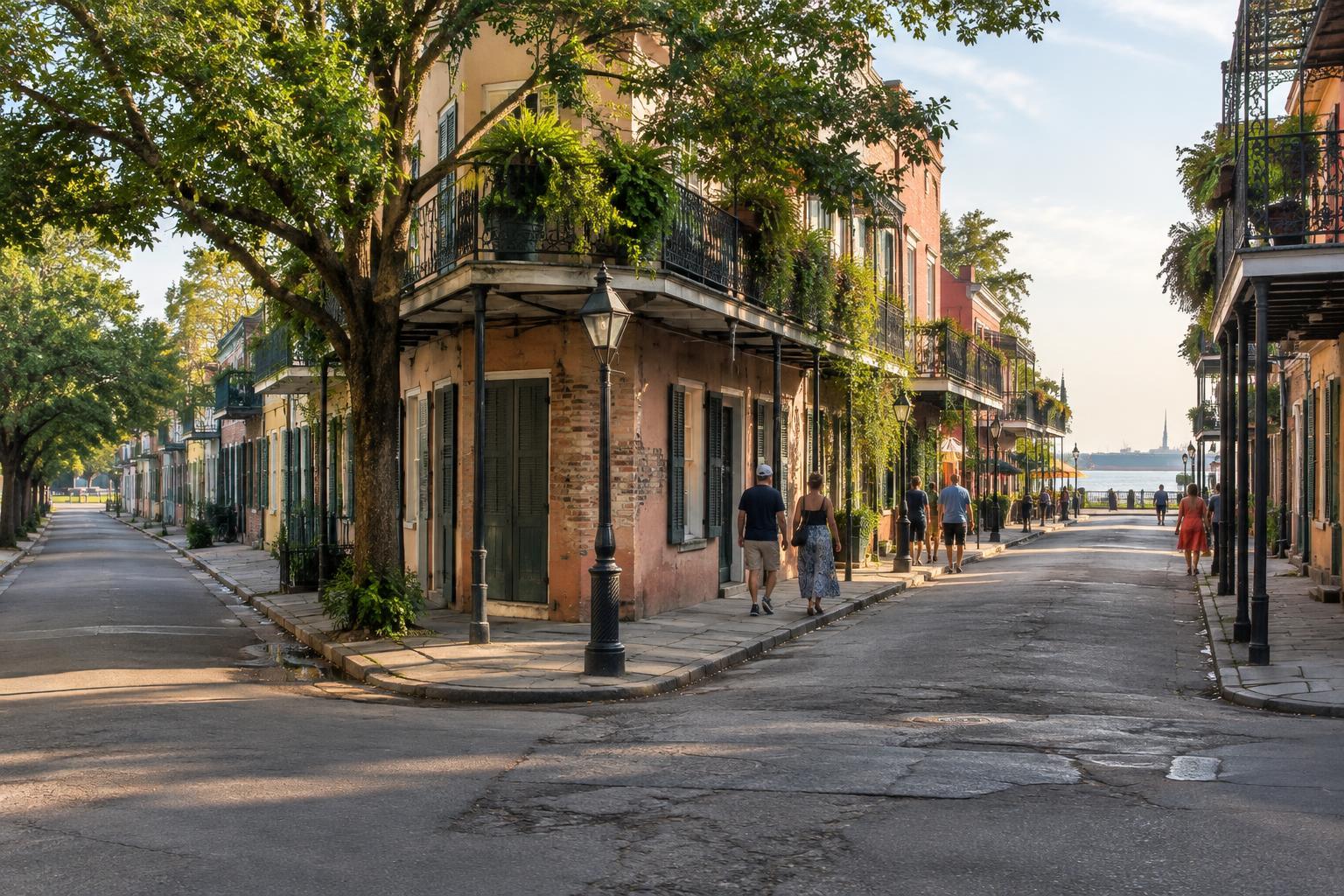
The riverfront is a useful place to pause and get oriented, especially after winding through narrow streets. Jackson Square and the surrounding blocks provide an easy landmark near the river side of the Quarter. From there, you can head inland toward Chartres, Royal and Bourbon, or walk toward Decatur and the riverfront paths. Access points, crowds and construction can change, so follow posted signs rather than assuming every stretch is open in the same way.
Give yourself time to notice the difference between the riverfront and the interior streets. The Quarter is small enough that a route need not be efficient to be enjoyable. A short loop—riverfront, an inland street, then a different cross street back—can teach you more about the neighborhood than rushing from one famous address to another.
Find quieter blocks without expecting silence
For a break from the busiest stretches, step away from Bourbon and explore side streets or blocks farther toward Esplanade. Parts of the lower Quarter feel more residential, and the pace may ease even a block or two from a crowded corridor. Quiet is relative, though: music, deliveries, tours and nightlife can spill across the neighborhood, and the feel of a block changes by time of day.
Treat these streets as a neighborhood, not an outdoor stage set. Keep doorways clear, lower your voice near homes at night and ask before photographing people. If you want to stop and study a balcony or courtyard, make room for others to pass. Courtyards visible through gates are often private, even when they look inviting.
Plan a walk that leaves room to wander
A comfortable first visit might begin near Jackson Square, follow one street toward Canal or Esplanade, cross over by a block or two, and return on a parallel street. That simple pattern lets you compare busy and calmer stretches while keeping your starting point easy to find. Wear shoes suited to uneven paving, watch for vehicles at intersections and carry water when the weather calls for it.
At night, choose a route that feels comfortable for your group rather than seeking out an empty street just because it looks peaceful on a map. Stay aware of your surroundings and use a main, well-traveled route when you want a straightforward walk back. The best orientation tool is not a perfect itinerary: it is a sense of the Quarter’s edges, a few familiar street names and permission to slow down.