Louisiana sounds, different home ground
Visitors often arrive in New Orleans expecting to hear every kind of Louisiana music on the same block. The city is a crossroads for musicians and audiences, but Cajun and zydeco music are most closely associated with southwestern Louisiana. Both have a place in New Orleans: touring bands play here, local musicians draw on the traditions, and dancers seek out shows. Neither, though, should be treated as the default soundtrack of a New Orleans night out.
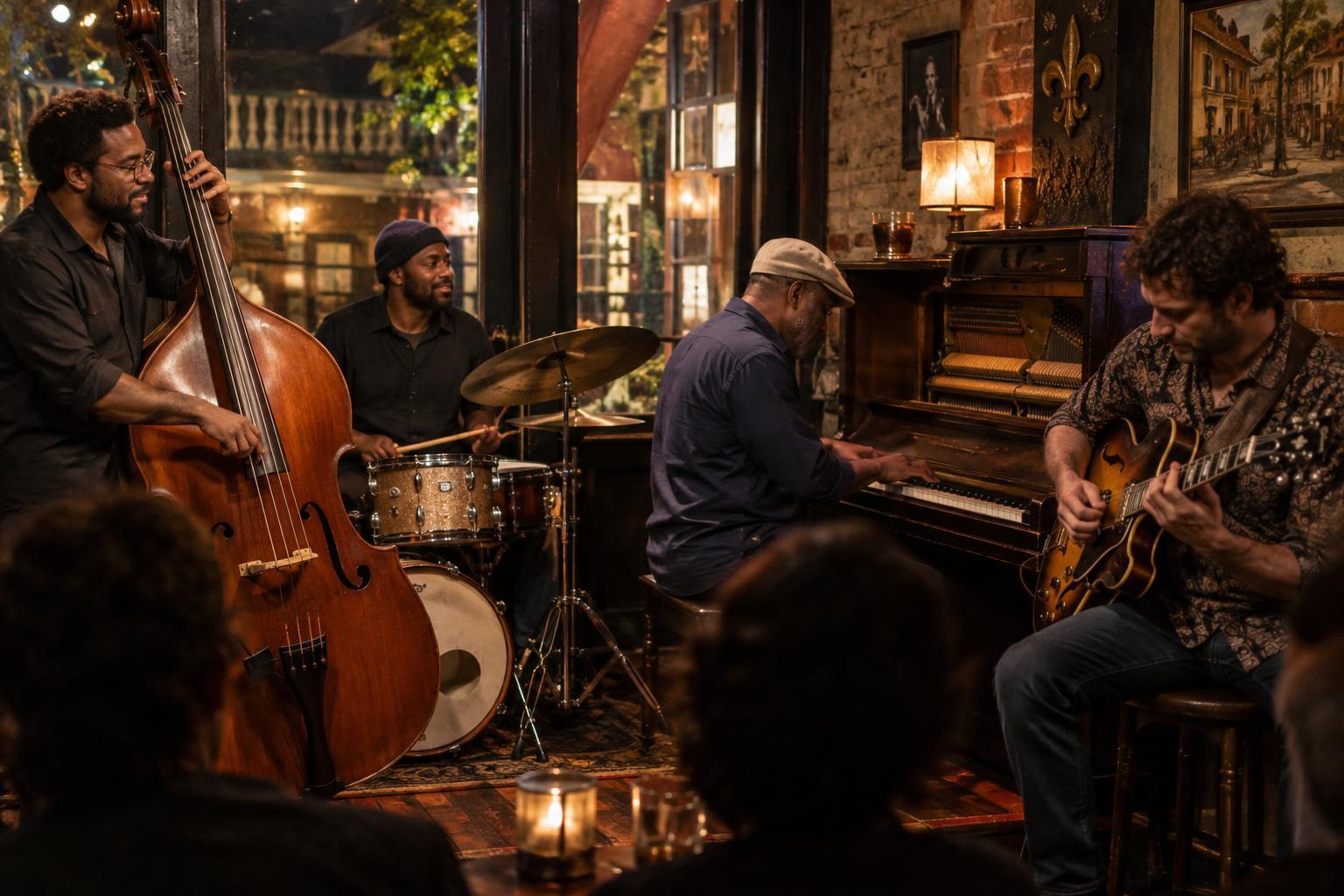
The distinction matters because Louisiana’s music is not one interchangeable style. New Orleans is strongly associated with jazz, brass bands, rhythm and blues, funk, and bounce, among other sounds. Cajun and zydeco bring different regional histories into that mix. Hearing them in the city can be a chance to enjoy those connections while recognizing where the music’s roots lie.
What makes a Cajun band sound Cajun?
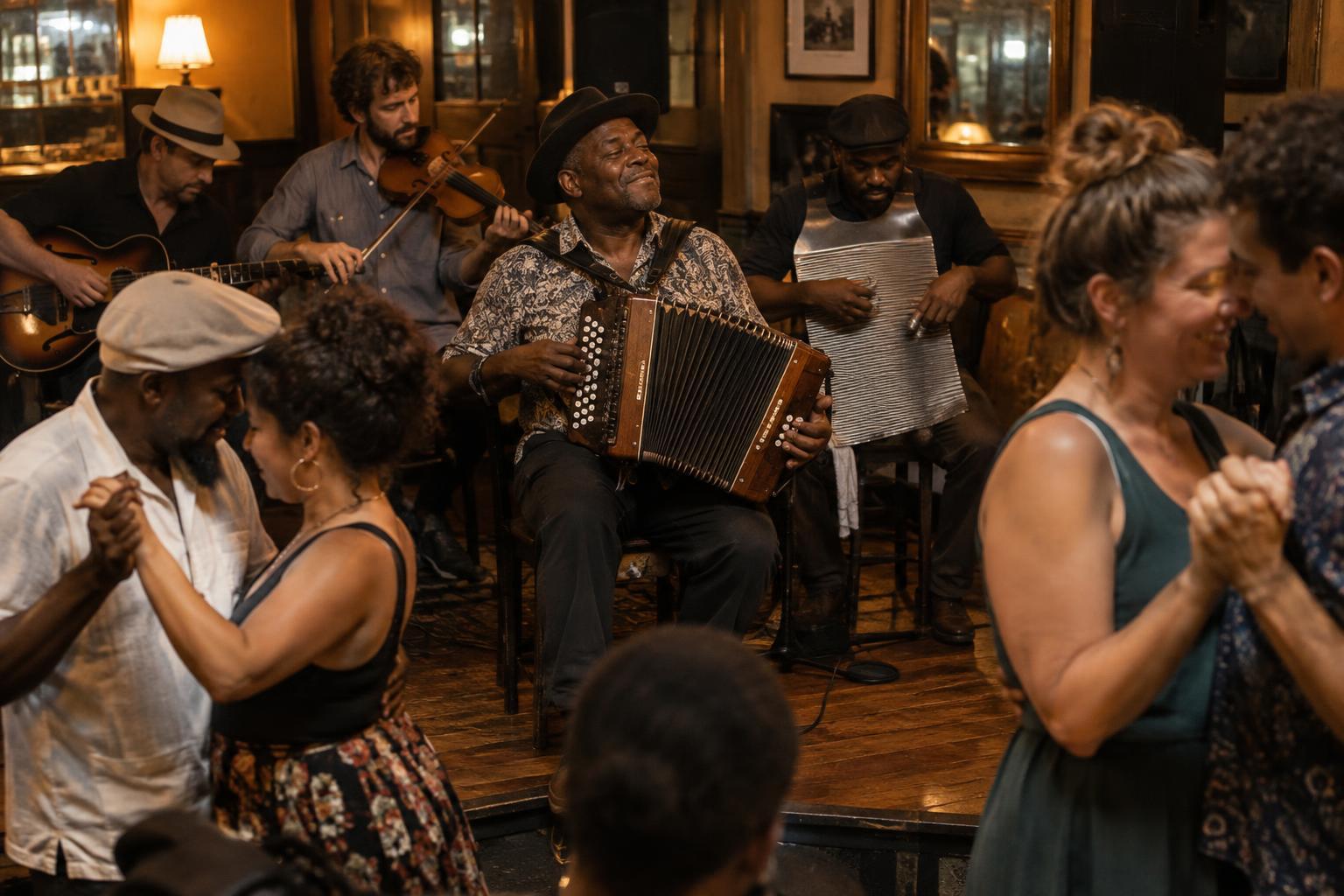
Cajun music grew within the French-speaking communities of southwestern Louisiana. At a dance, you may hear accordion, fiddle, guitar, and a driving rhythm section. Some bands lean toward older dance-hall sounds; others bring in country, rock, or other influences. Songs may be sung in Louisiana French or English, and the repertoire often includes waltzes and two-steps.
For a first-time listener, the fiddle can be a useful clue, especially when it carries the melody or answers the accordion. Listen, too, for the feel of the dance: a waltz turns in three beats, while a two-step offers a steadier forward pulse. These are listening aids, not rules for identifying every band. Musicians choose different lineups and borrow freely across styles.
Zydeco’s Black Creole roots and dance-floor drive
Zydeco developed in the Black Creole communities of southwestern Louisiana. Accordion is often central, and the textured scrape of the rubboard, also called a frottoir, is one of its most recognizable sounds. Bass and drums can give the music a powerful dance-floor momentum. Depending on the band, you may also hear guitar, horns, or influences from blues, rhythm and blues, and funk.
It is tempting to define zydeco simply as a faster or more amplified version of Cajun music, but that misses the distinct communities and histories behind it. The traditions have long influenced each other, and no brief description captures every performer. If you are curious, pay attention to how a band identifies its own music, then listen for the choices its players make rather than trying to force each song into a rigid category.
Where the music fits in a New Orleans night
In New Orleans, Cajun and zydeco are better understood as parts of a varied live-music calendar than as guaranteed nightly offerings. A dance night, festival program, neighborhood event, or visiting band may bring either style to the stage. Some performances invite close listening; others are built around a crowded dance floor. Venue schedules, band lineups, and event formats change, so check an organizer’s or venue’s current listing before planning an evening around a particular show.
A listing may say “Cajun,” “zydeco,” “Louisiana dance music,” or something broader. If dancing is your goal, look for clues such as a dance lesson, an open floor, or a band described as playing two-steps and waltzes. If you have a specific sound in mind, listen to a sample from the advertised band when one is available. The label on a calendar is a starting point, not a promise that every tune will sound alike.
How to join in respectfully
You do not need to know the steps to enjoy the show. If there is a dance floor, watch for a song and notice how people move around the room before stepping in. Keep drinks off the floor, give other dancers space, and follow any guidance offered by the host. If you want to dance with someone, ask; if they decline, accept it easily. A beginner-friendly lesson, when one is offered, is a good way to learn the basic rhythm without expecting a stranger to teach you mid-song.
Most of all, let the band be more than a checklist item on a Louisiana trip. Notice the accordion’s phrasing, the rhythmic conversation among players, and how dancers respond when a tune changes. Cajun and zydeco music can make for a memorable New Orleans night precisely because they connect the city to a wider Louisiana musical landscape—one worth hearing on its own terms.