Start with a flexible route
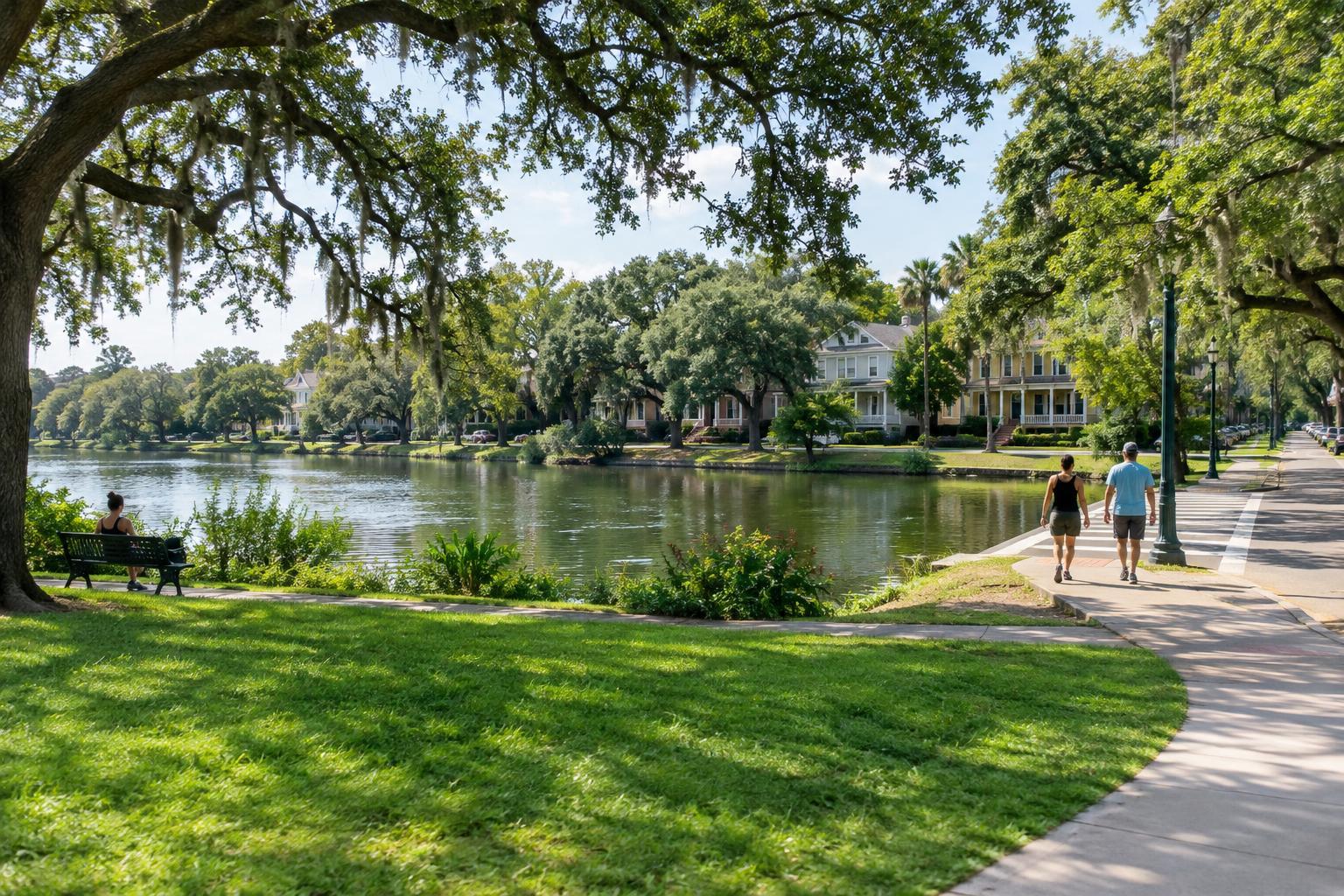
Bayou St. John is a distinctive place to explore on foot: water runs through a residential landscape, with bridges offering changing views of the banks. The best approach is an unhurried out-and-back walk rather than a route that depends on finding an uninterrupted waterside trail. Sidewalks, grassy edges and street crossings vary from block to block, so let conditions on the ground shape the walk.
For a manageable first visit, begin near the Esplanade Avenue bridge and follow the public sidewalk along Moss Street toward Orleans Avenue. Turn around whenever you like, or cross at a suitable bridge to see the bayou from the other side. This keeps the route simple and makes it easier to adjust for heat, uneven pavement or a busy crossing. If you want a longer outing, extend your walk in either direction only after checking that the next stretch has a comfortable pedestrian route.
Understand what public access means
A view of the water does not mean every spot beside it is open for public use. Stay on public sidewalks, clearly accessible paths and other areas open to visitors. Homes and private properties sit close to the bayou; a lawn, dock, gate or path leading toward the water may belong to someone who lives there. When a boundary is unclear, remain on the sidewalk rather than treating an unmarked opening as an invitation.
Expect the closest safe view of the water to change as you walk. Vegetation, sloped banks and the layout of nearby property can make some stretches better for looking than for sitting. Avoid climbing down a bank for a photograph or assuming that a calm-looking edge is a safe place to wade. If you are planning to paddle or fish rather than walk, check the applicable access points and rules separately; a pleasant walking route is not necessarily a suitable place to enter the water.
Make street crossings part of the plan
The bridges are useful landmarks, but they also bring cars, cyclists and pedestrians together. Cross where there is a legal, visible pedestrian crossing, and allow extra time rather than stepping into traffic to complete a loop. If a sidewalk narrows or feels uncomfortable, turning back is a sensible choice. A short walk with room to look around is more enjoyable than pressing on simply to reach the next bridge.
New Orleans weather can change how a route feels. Shade may be intermittent, and rain can leave low spots wet or slippery. Bring water, wear shoes suited to imperfect sidewalks and consider walking when the temperature feels comfortable to you. Before setting out, check the weather and any posted notices that could affect access. For an evening walk, choose a route you can navigate confidently after dark and remain aware of traffic at crossings.
Share the banks with care
Bayou St. John is a neighborhood setting, not just a scenic stop. Keep conversations and music at a level that respects nearby homes, leave driveways clear and carry out everything you bring. Give other walkers space on narrow sidewalks, and keep dogs under control and away from wildlife. Feeding birds or other animals can alter their behavior and leave food or packaging behind, so enjoy them from a distance instead.
The bayou is also a place where people pause, paddle, exercise and spend time with friends. Make room for those different uses without assuming the bank is yours to occupy. A good walking visit can be as simple as choosing a bridge as your starting point, following the public route for a while and stopping where there is room to do so. Paying attention to the water, the streets and the people who live alongside both is what makes the walk worthwhile.