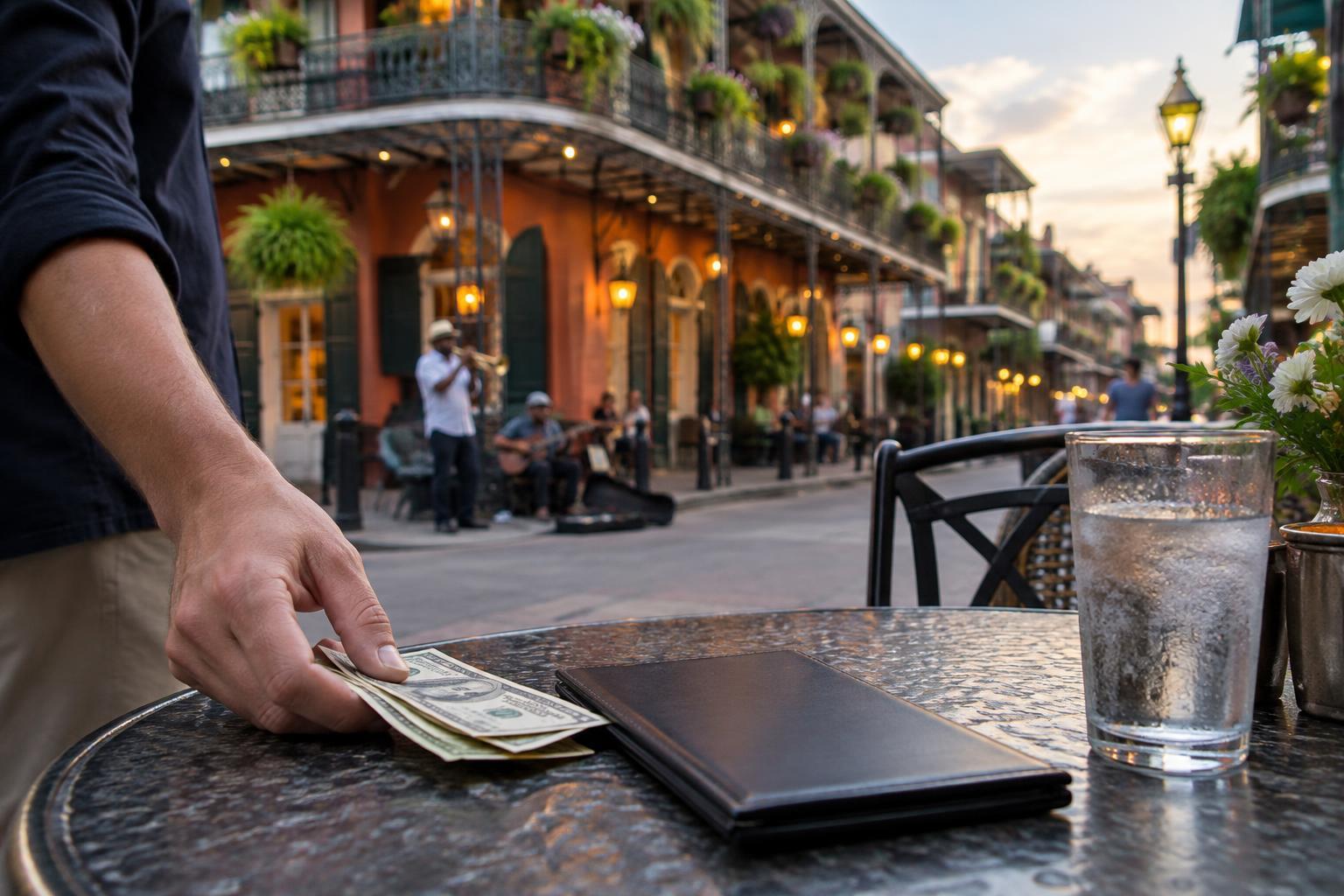
Start with the bill, not a fixed rule
New Orleans has many ways to eat, drink and get around: a seated dinner, a drink at a neighborhood bar, a quick café stop or a ride back to your hotel. Tipping customs differ among them. The amounts below are common U.S. reference points, not requirements or guarantees about what any particular business expects. Check the bill and follow any clearly stated policy.
At a full-service restaurant, a tip of about 15% to 20% of the pre-tax bill is a familiar range for satisfactory service. Some diners leave more for particularly attentive service. If you need a quick estimate, use the subtotal before tax; the receipt may also show suggested amounts, which are worth checking rather than accepting automatically. For a large party, look for an automatic gratuity before adding another tip.
A service charge and a tip may appear as separate things on a receipt. If a charge is unclear, ask what it covers and whether an additional tip is customary there. That is especially useful when a bill includes an event fee, a large-party charge or a line you did not expect. You do not need to guess.
Restaurants, cafés and takeout
For table service, tip on the food and drinks you ordered, taking any included gratuity into account. If you split the bill, each person can tip on their portion, or one person can settle the total and collect contributions from the group. Before leaving, make sure the combined tips match what you intended; separate payments make it easy to overlook a shared appetizer or round of drinks.
Counter-service cafés, bakeries and takeout spots often present a tip screen or jar. Leaving something is appreciated by many workers, particularly for a complicated order or extra help, but the custom is more flexible than at a full-service table. You can choose an amount that reflects the service and your budget. A suggested percentage on a payment screen is a prompt, not an obligation.
If you order delivery, consider a tip for the person bringing the food, especially if the trip is long, the weather is difficult or the order is large. Check any delivery or service fees separately; their names alone do not tell you whether they go to the driver.
Bars: keep track of each round
At a bar, a common approach is to leave roughly $1 to $2 per straightforward drink, or around 15% to 20% of a tab when you are ordering cocktails, food or several rounds. Neither method fits every order. A small tab with time-consuming drinks may call for a different judgment than a quick purchase of bottled water.
If you open a tab, check the final receipt for any included gratuity before signing. If you pay for each round, tipping as you go can be easier than trying to remember everything at the end. When friends take turns buying, decide whether each buyer will handle the tip for their round. A little coordination keeps the bartender from being missed in the handoff.
Taxis and rideshares
For a taxi or rideshare trip, about 10% to 20% of the fare is a useful customary range, with room to adjust for help with luggage, a difficult pickup or a short trip. Check the fare summary before adding a tip so you understand what you are paying. For rideshares, the app may offer a tipping option after the ride; for taxis, ask about payment options if you are unsure.
When several people share a car, settle both the fare and the tip together rather than assuming the person who booked it will cover everything. If a driver helps load multiple heavy bags, you may want to account for that effort. Tips should reflect the service you received, not pressure to give a particular amount.
Hotels and an easy tipping plan
Hotel tipping depends on which services you use. For housekeeping, some guests leave a few dollars per room per day, ideally with a clear note so it is understood as a tip. For someone who carries bags to your room, a few dollars per bag is a common reference point. If a valet parks or retrieves your car, a few dollars when the car is returned is customary. These are guidelines, not fees; hotel practices and staffing arrangements vary.
A concierge who gives directions or answers a simple question does not generally call for a tip. If someone spends significant time arranging a special request, you can decide whether a tip is appropriate. Before using a service, check whether a handling or service charge is already included.
The simplest plan is to budget for tips alongside meals, drinks, rides and hotel costs. Keep a few small bills if you expect to use cash-based services, and review card receipts for charges already added. You do not need to master every custom before arriving: reading the bill, asking a polite question when something is unclear and tipping deliberately will carry you through most situations.